2009 - Switzerland & Austria – Calling Us Back
2009 - Switzerland & Austria – Calling Us Back
1996 - SCOTLAND & IRELAND
Go to Table of Contents
Go to Table of Contents
2009 - Switzerland & Austria – Calling Us Back
2009 - Switzerland & Austria – Calling Us Back
with Ken & Marilyn Sanner

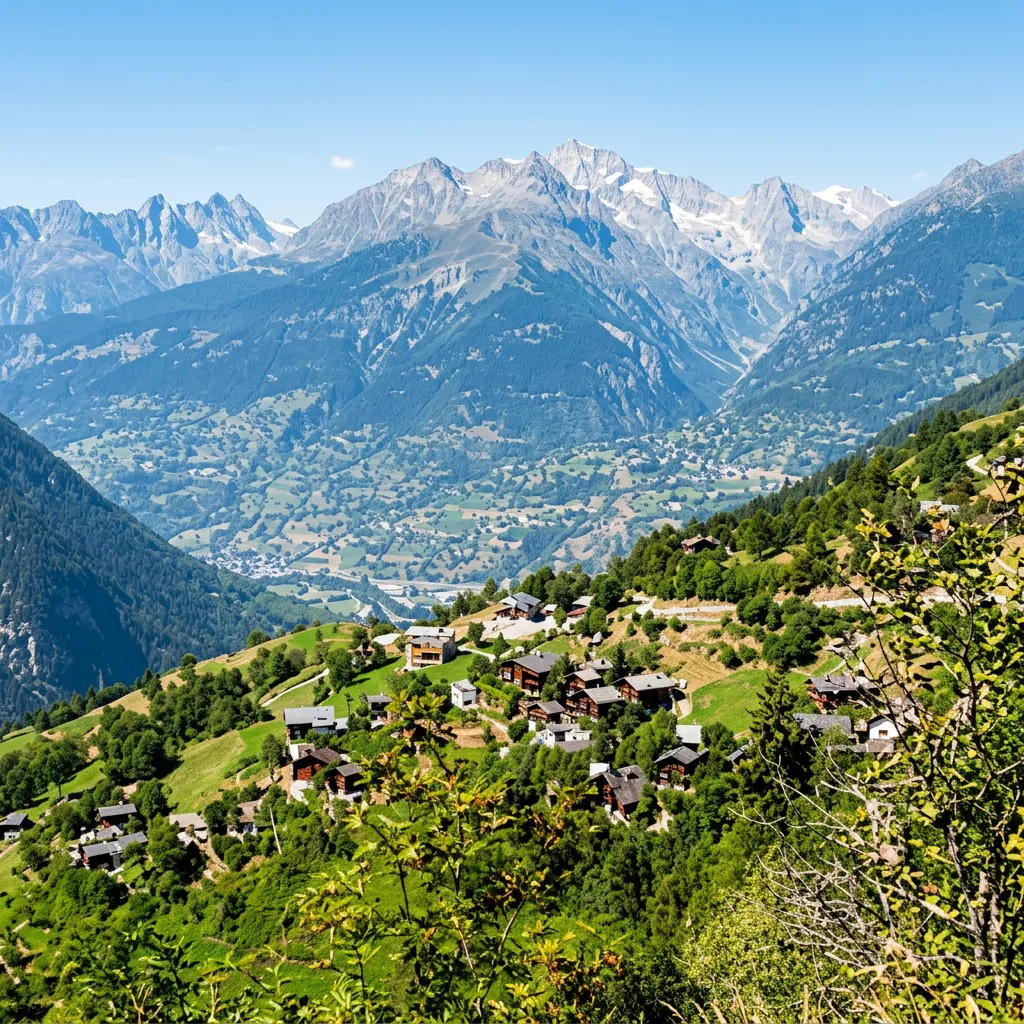
ARRIVAL
We validated our train passes, and soon we were gliding through the beautiful Swiss countryside. We had traveled this route before and were looking forward to the moment when the train emerged above the Rhône Valley. The magnificent mountain views usually appear as the train winds its way down to the valley floor and arrives in Brig.
We were greatly surprised when the train entered a long new tunnel under the mountains, and suddenly we were at Visp, our destination. We had missed all the scenery.
We stopped at an ATM to withdraw some Swiss francs and were surprised to find that we could take out only $100 from our hometown bank account. We had previously arranged for our limit to be raised to $500. We mentioned our frustration to our landlady, and she kindly offered to let us use her phone to call the bank. Unfortunately, we couldn’t remember the number. It was an easy number, so we took a guess, wrong number. But the person who answered quickly gave us the correct bank number. Thank you, small-town USA. The money problem was quickly solved.
SAAS FEE
We had heard that this was a favorite ski resort for the rich and famous, so we decided to check it out. Access to the resort was by bus, and it was a heart-stopping ride with a new vista at every turn. The bus maneuvered around many curves and switchbacks, with the horn blowing at every blind curve. At the top was an assortment of expensive shops, hotels, and chalets.
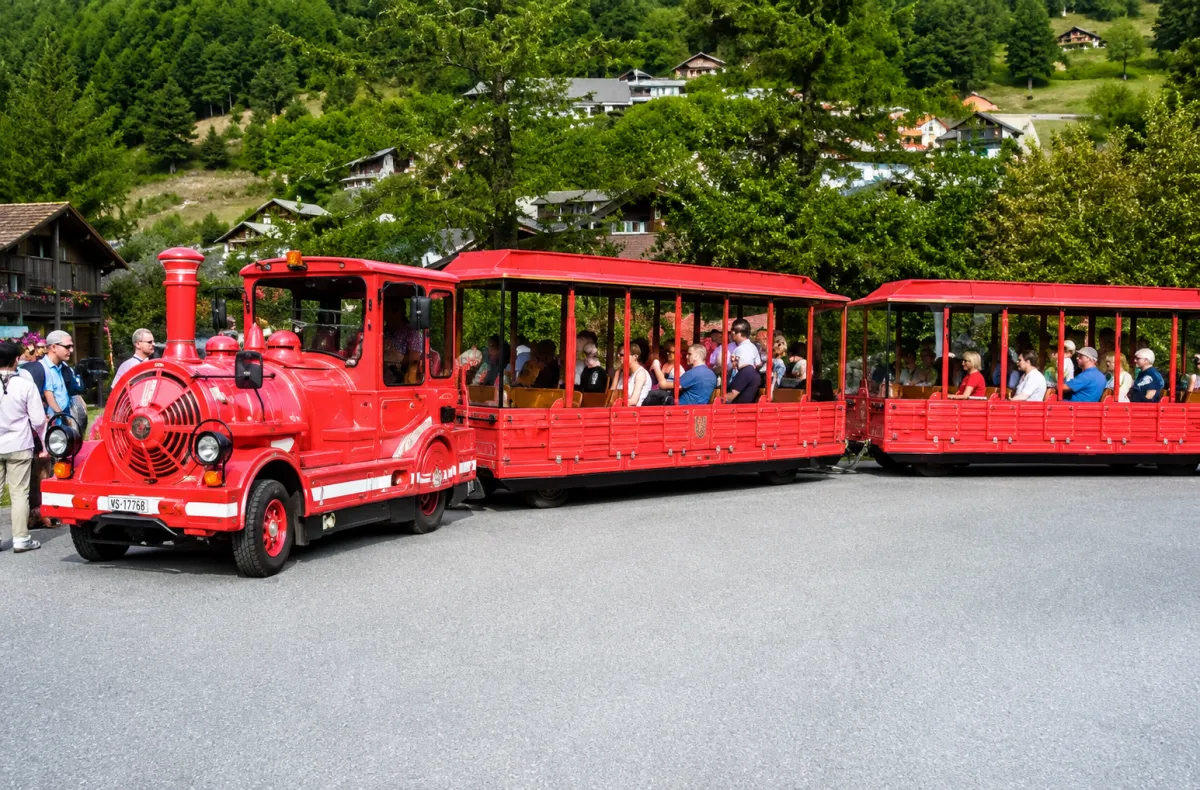
A little red train with open seating took us on a 45-minute narrated tour. We traveled up and down the narrow streets past old, black, weathered buildings, modern hotels, and many chalets. We saw lots of people trudging toward the ski lifts carrying skis and snowboards. High above us, there was snow.
BETTMERALP
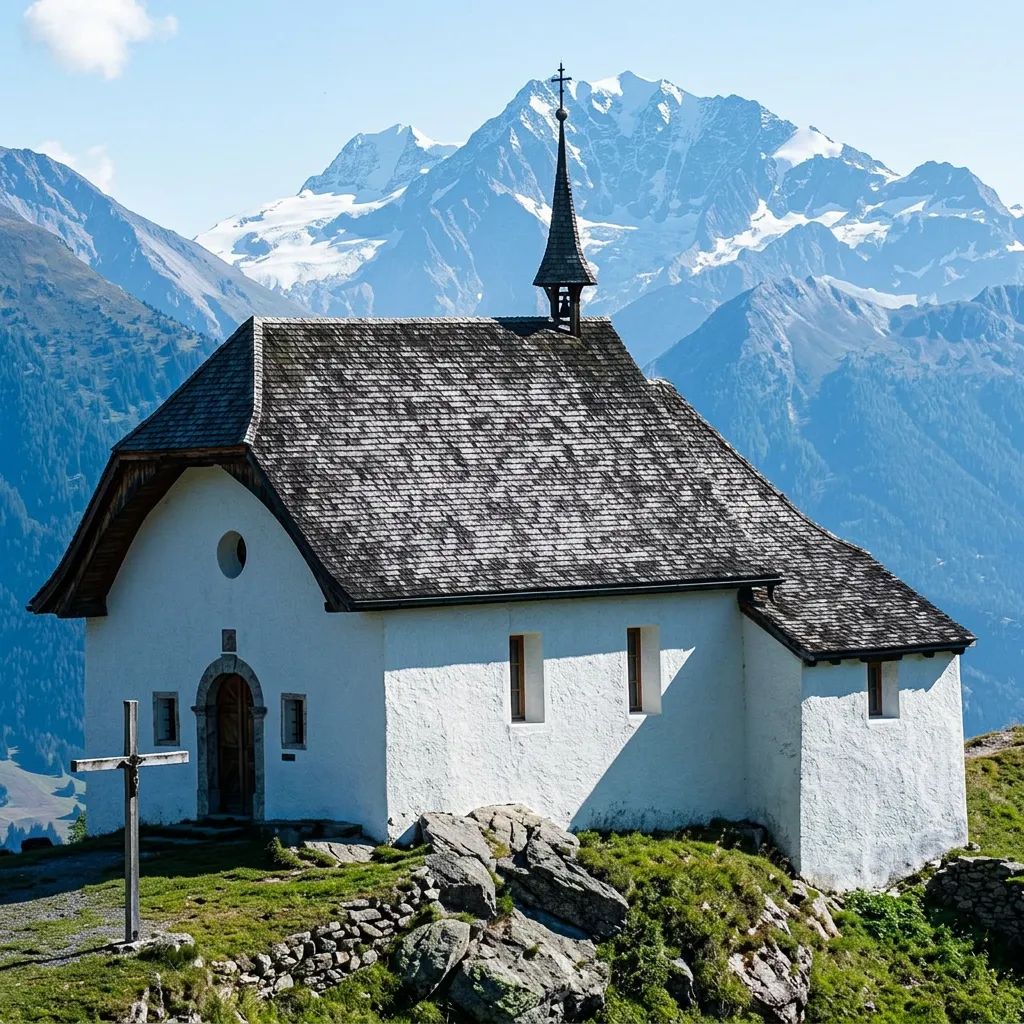
We had discovered Bettmeralp on a previous trip and looked forward to seeing it again. It wasn’t far from where we were staying. The ride on the large cable car was thrilling as it swung high above the valley toward the village. And there was the little white church again with the mountain backdrop.
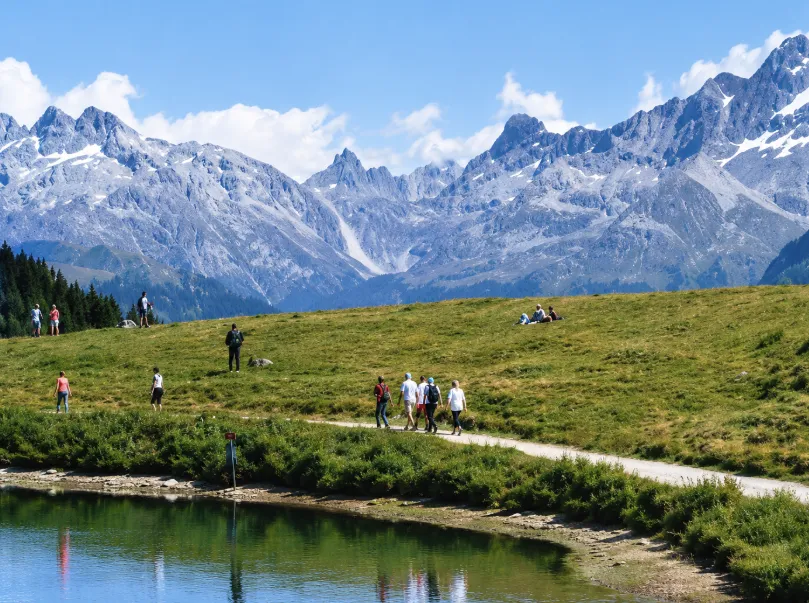
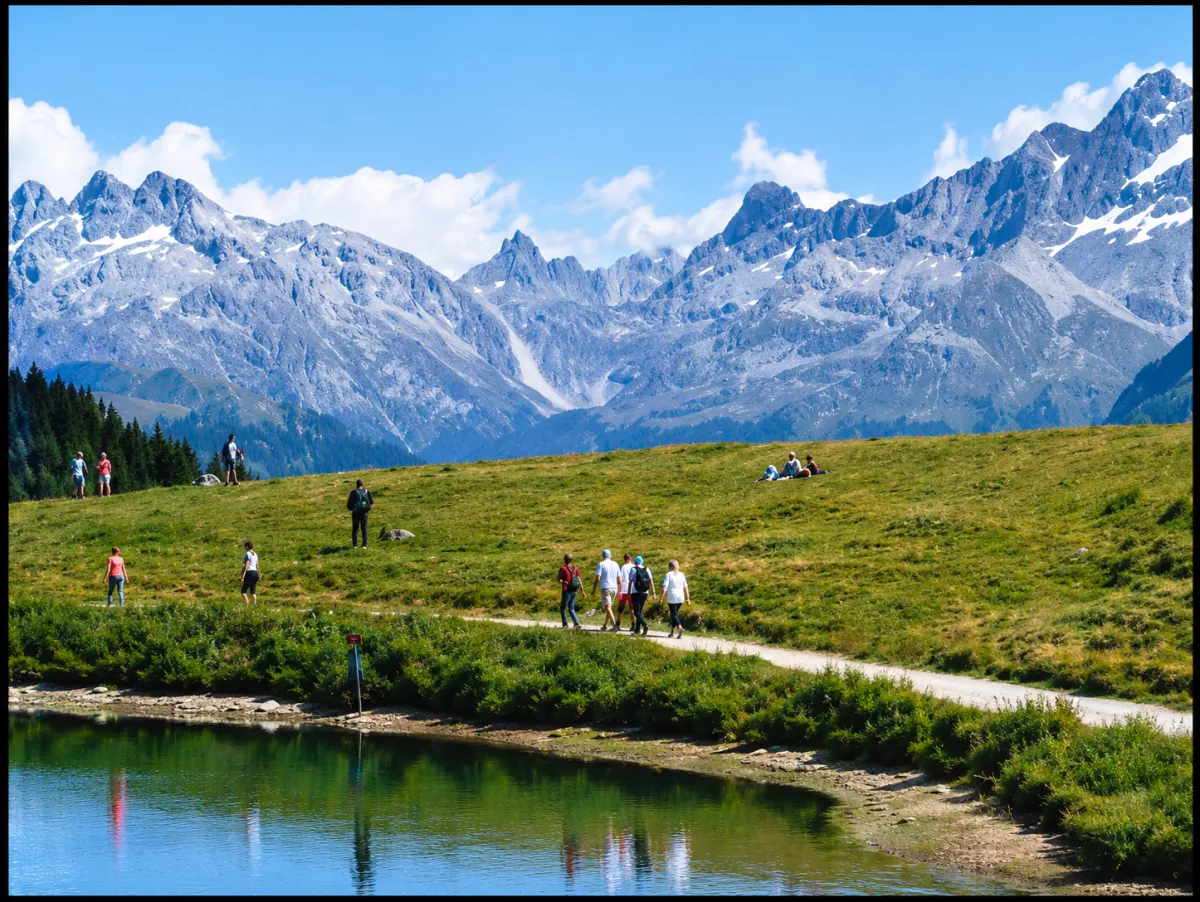
This time, we decided to hike past the little lake where we had stopped before and continue following the trail ever upward.
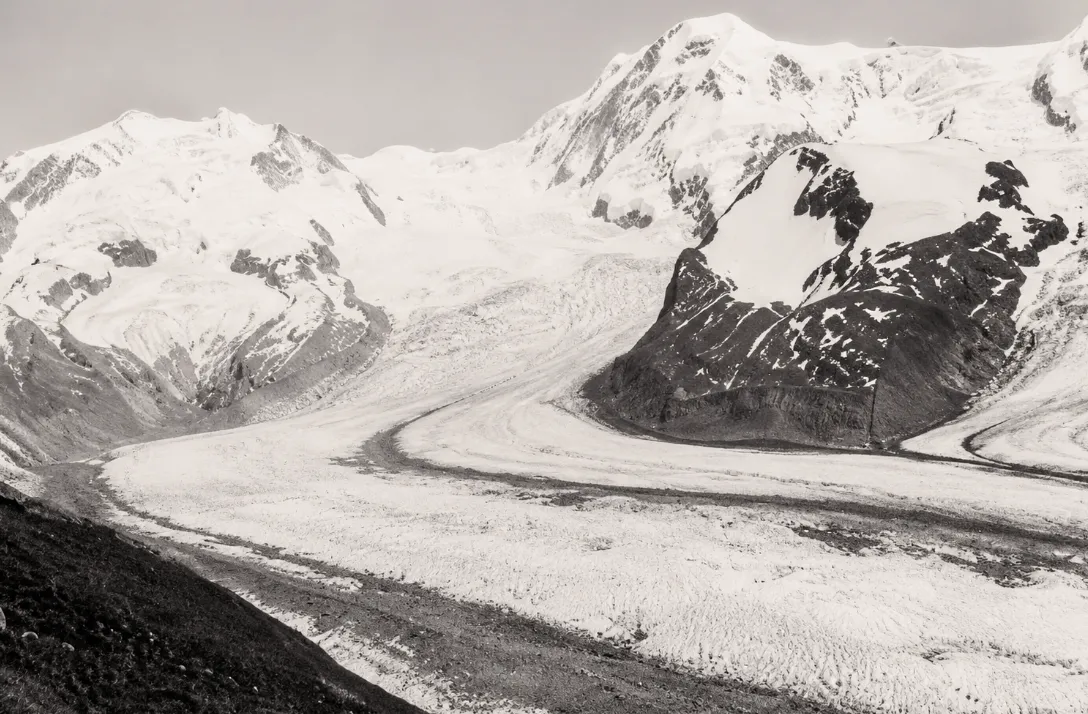
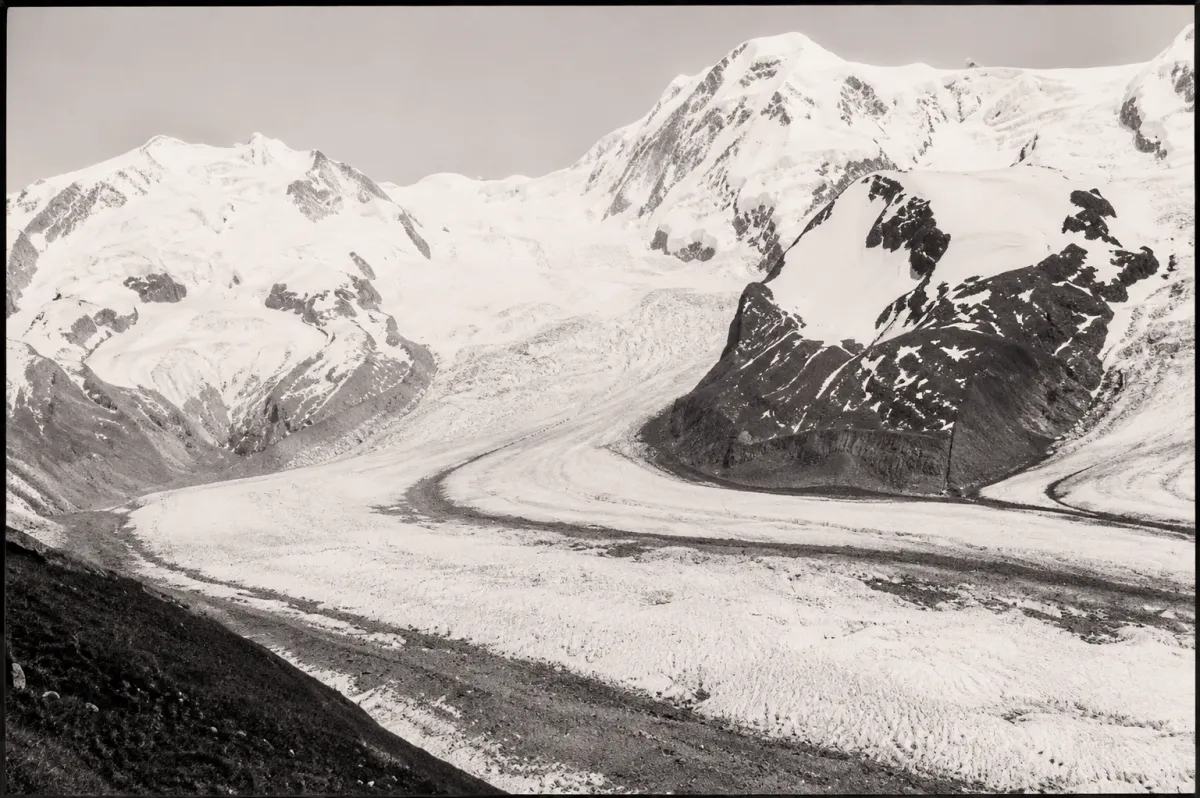
We hiked for two strenuous hours past sparkling blue glacier lakes reflecting the white mountain peaks, grazing cows, and clusters of wildflowers. When we learned that it was only 30 more minutes of climbing to reach the viewpoint of the Aletsch Glacier, we pressed on. We felt like mountain climbers.
Finally, we reached the top of the ridge, and there below us stretched the icy Aletsch Glacier. It is 23 kilometers long and is the largest glacier in Switzerland. It was the same glacier we had previously seen from the Jungfrau. As we stood there, awestruck by the beauty, two jet planes streaked by below us, barely skimming the top of the glacier. It scared the daylights out of us! The hike up took three hours, while the hike back down took only 45 minutes, leaving us with wobbly knees.
ZERMATT
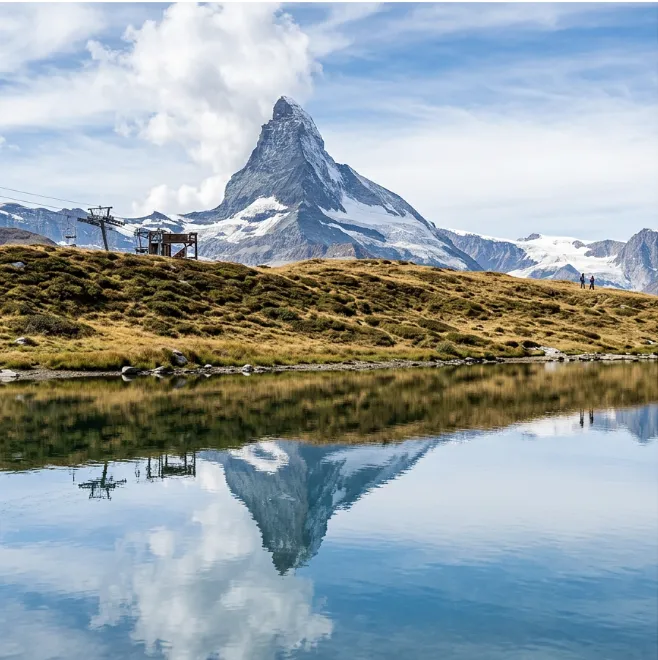
Now it was time to meet our friends, Ken and Marilyn Sanner, at our rendezvous spot, McDonald’s at the airport. It was their first time in Switzerland, so they were thrilled by the scenery as we rode the train all the way to Zermatt. We checked into Hotel Testa Grigia and got the adjacent corner rooms I had reserved. We shared a large balcony with a view of the Matterhorn. Sitting on the balcony, we ate our picnic lunch while watching wispy clouds drift across the Matterhorn. Then, taking care of more mundane matters, I washed our four L.L. Bean shirts, and they dried quickly in the pleasant breeze. Our adventure for the day was Sunnegga, a little lake on a plateau just above Zermatt. We reached it by an underground funicular in just five minutes. Then we stepped out into a sparkling scene of mountains and glaciers, blue skies and clouds, and in the middle, the little lake called Blausee. The reflection of the Matterhorn and the surrounding mountains was almost perfect. We took turns hiking to the far side of the lake and having our picture taken. (We are in the picture.)
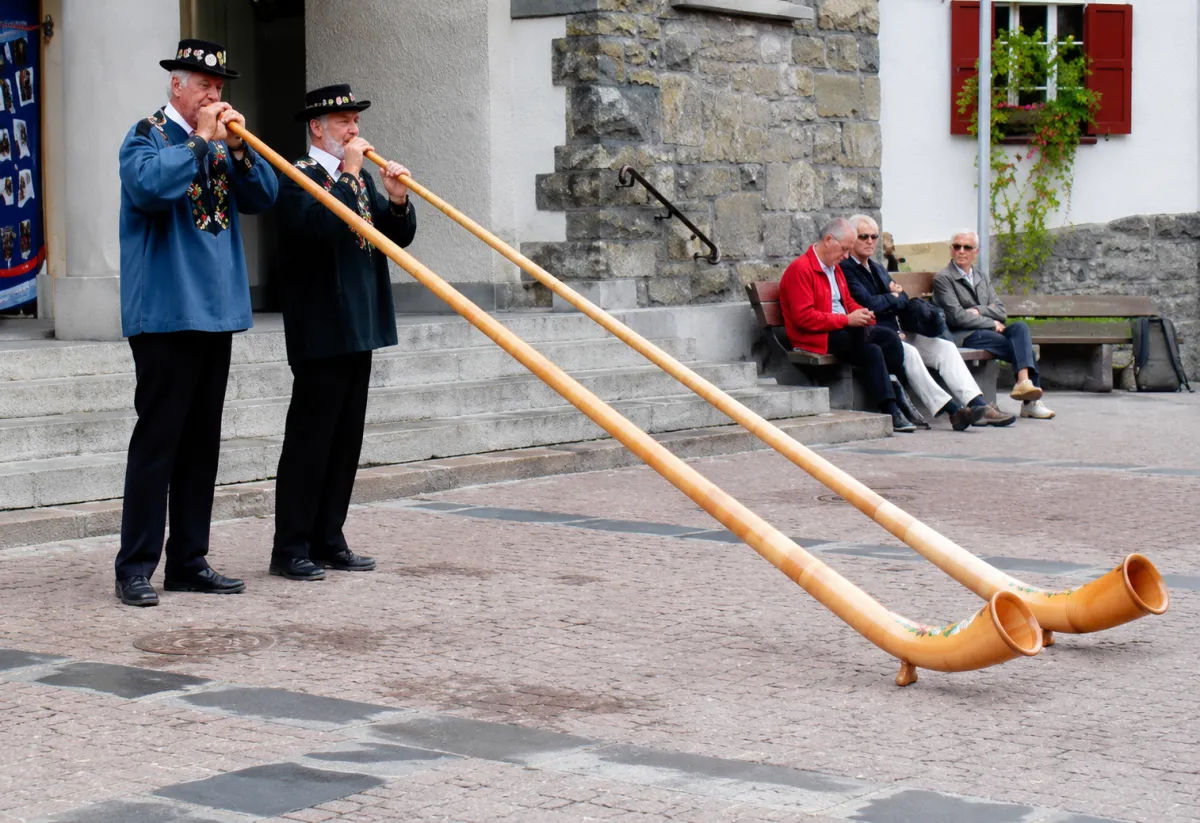
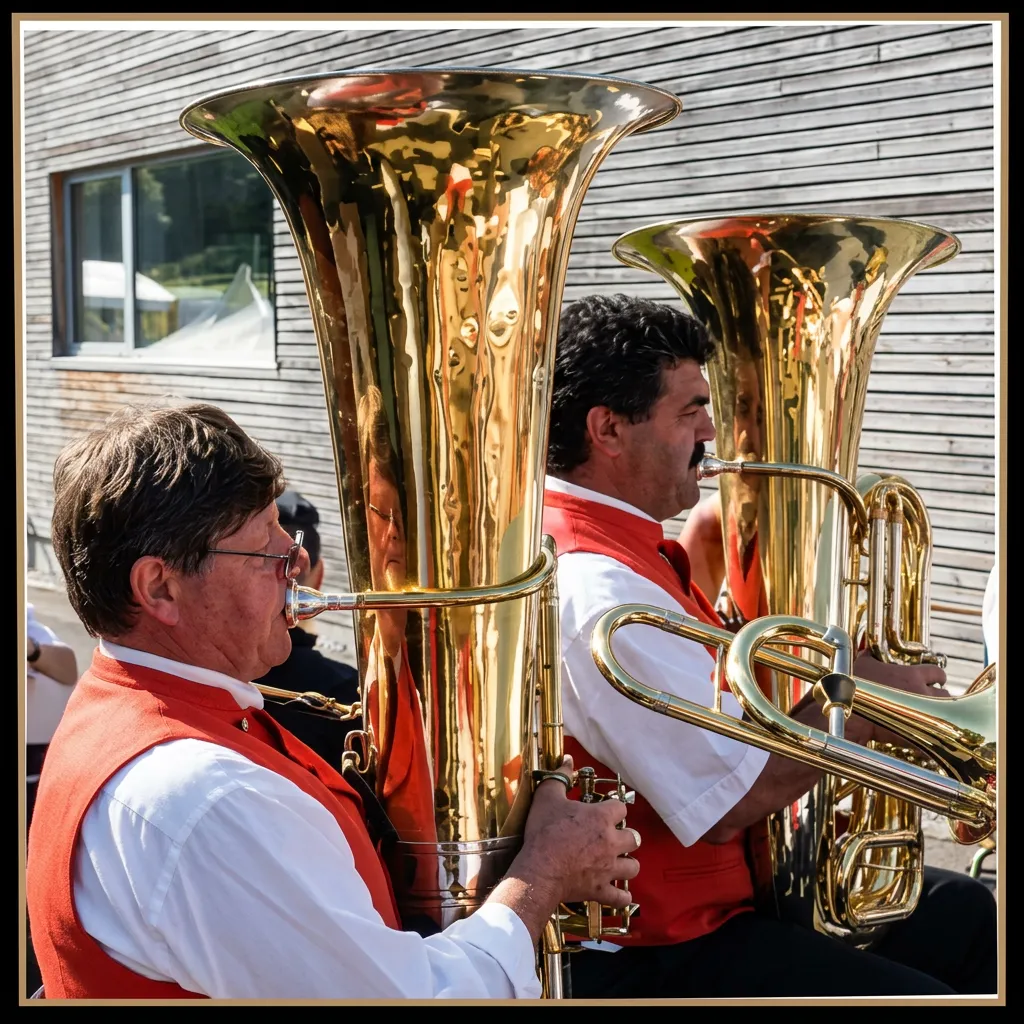
Back in the village, we heard alphorns playing, so we followed the music. We found two men performing in front of the church. Heavenly music!
BERN
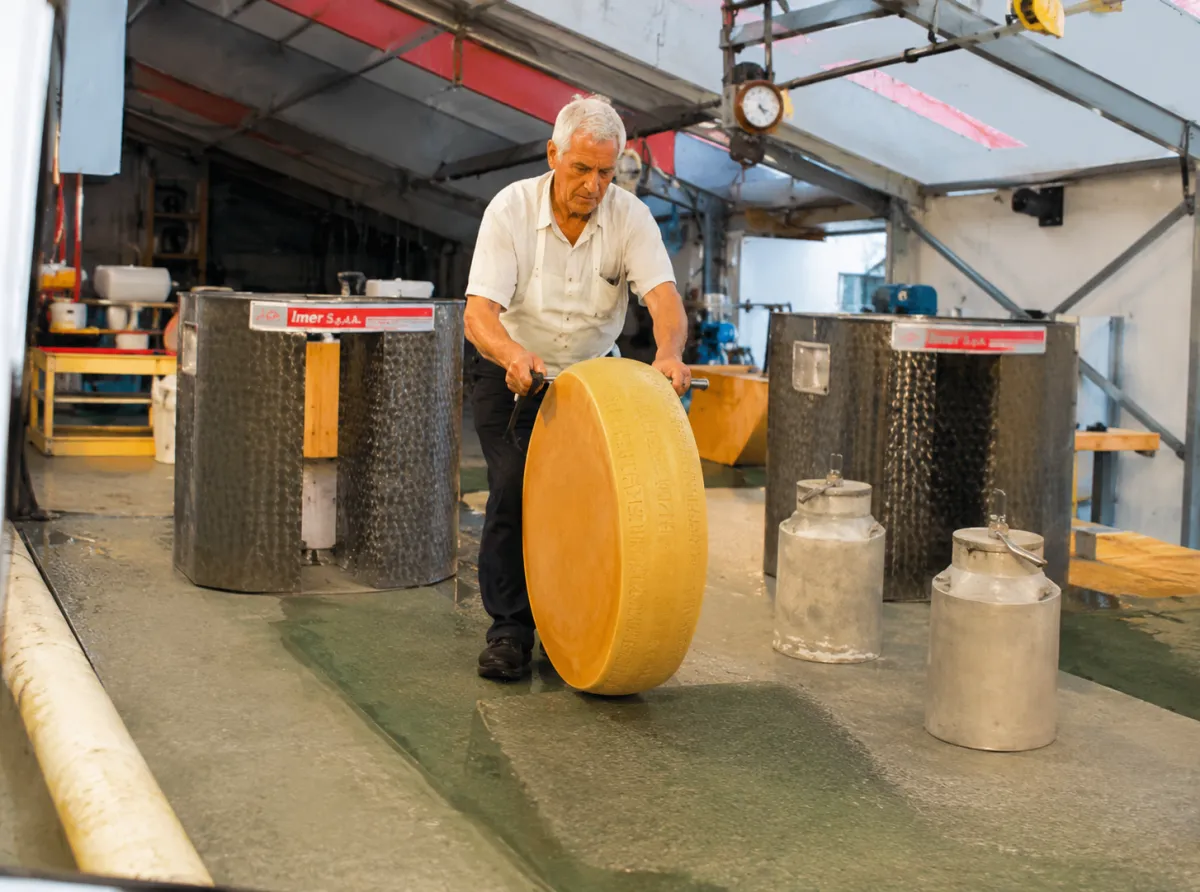
The main event here was the Farmer’s Market, filled with flowers, crafts, vegetables, and clothing. We were especially fascinated by the cheese tent and the Emmentaler demonstration. The biggest attraction was the contest to roll a 90-kilo (almost 200-pound) wheel of cheese around an obstacle course. The contestants had to roll the cheese over bumps, around obstacles, and through a narrow slot, then return and place it back on the starting stand. Only big, burly, strong men competed.
MÜRREN
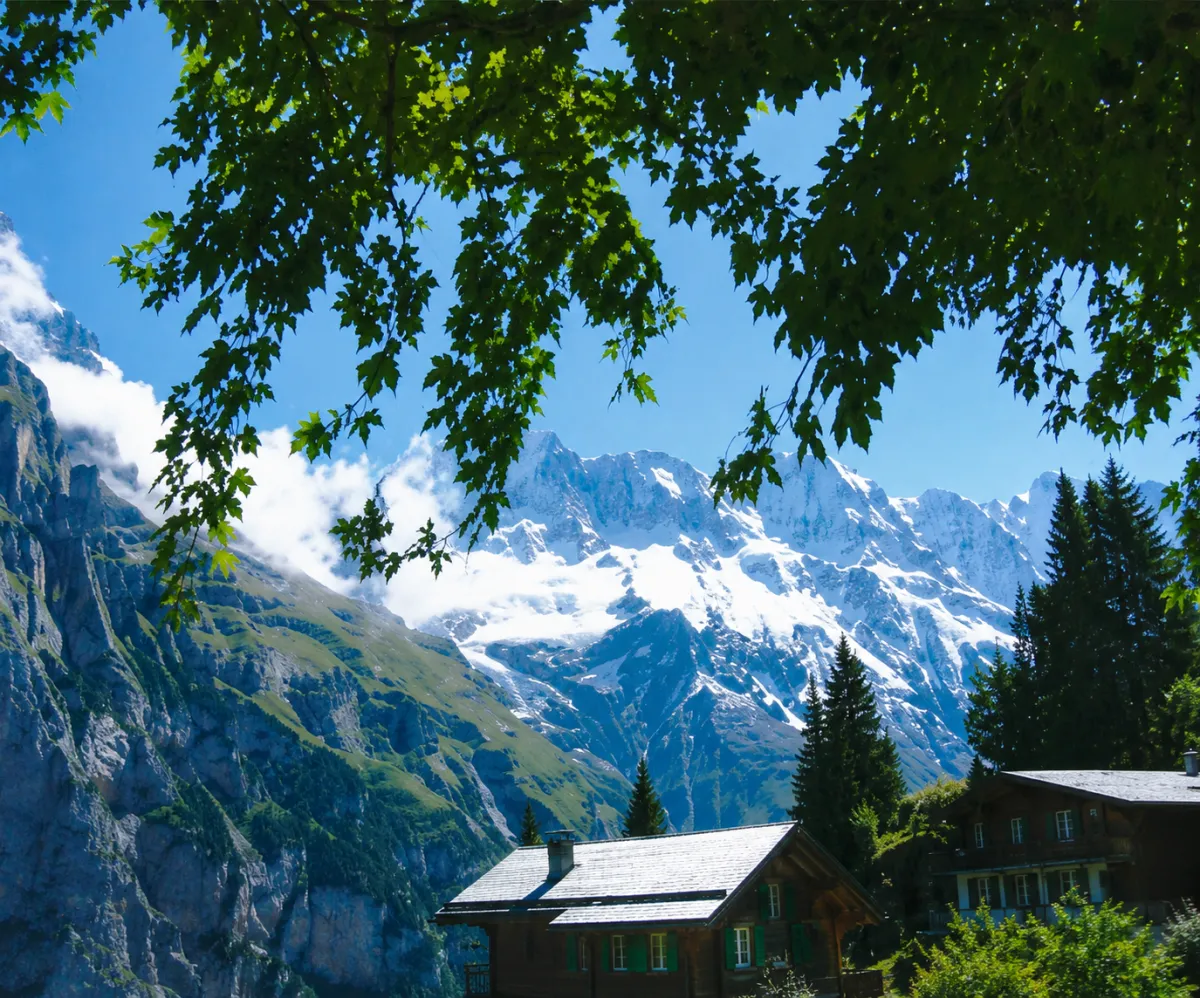
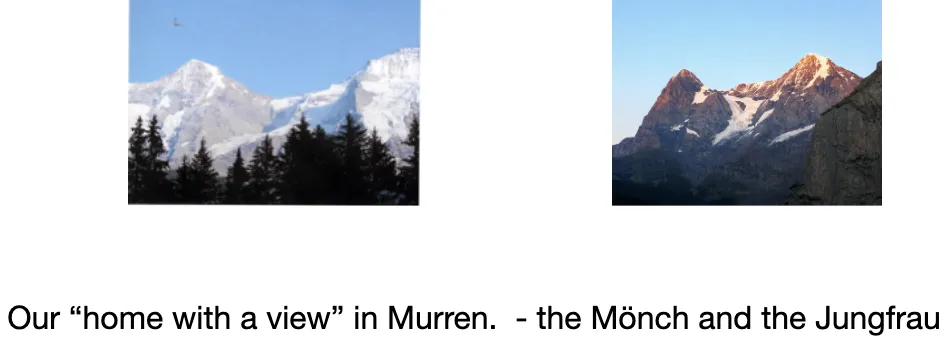
Back to our familiar stomping grounds, and what a pleasure it was to share this place with our friends. We found Chalet Hohmattli and our first-floor apartment. From our balcony, we had great views of the famous three peaks: the Eiger, Mönch, and Jungfrau.
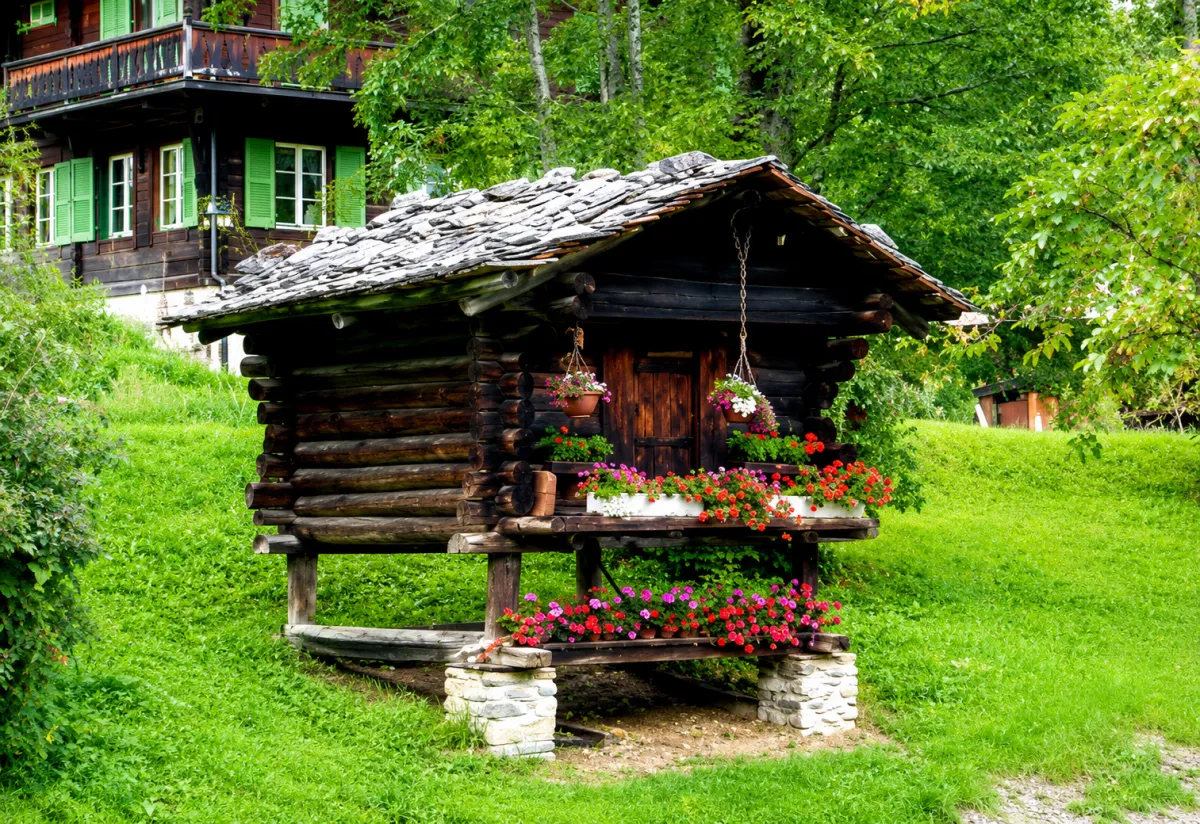
Gimmelwald
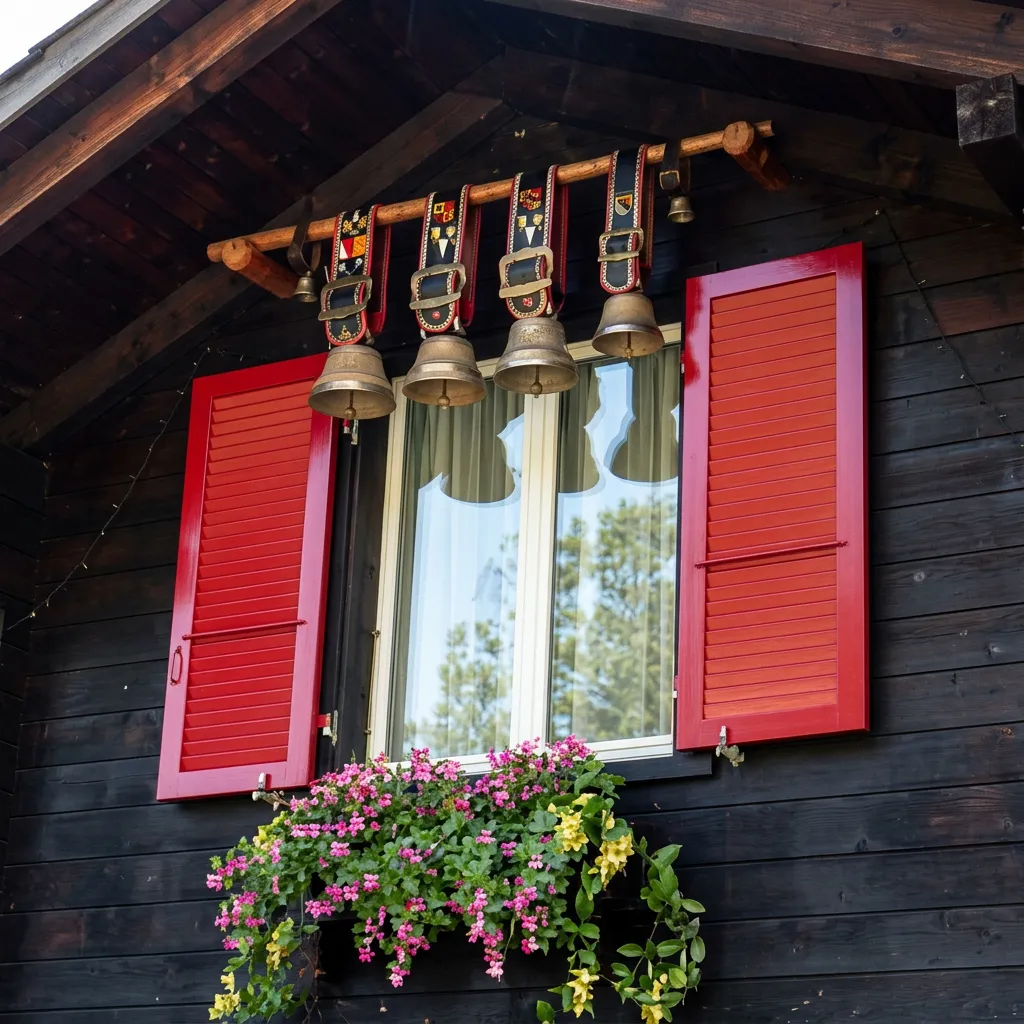
This is a delightful little mountain village made somewhat famous by Rick Steves through his books and TV shows. We strolled around the village, admiring the red geraniums in the window boxes, the row of large bells hanging on the side of a barn, and the much-photographed little cheese house.
We also saw the “Sleep in the Straw” place. The farmers clean out the barn when the cows leave for summer pasture, and with fresh straw placed in the stalls, the barns are ready for backpackers to sleep in. We peeked inside and saw two young men sleeping in the straw.
From Gimmelwald, we took two more cable cars to the top of the Schilthorn, the mountain that rises high above all the others. We wanted our friends to experience eating in the revolving restaurant and marvel at the incredible view.
GRINDELWALD FIRST (pronounced “feerst,” meaning “first”)
This was a new adventure for us, but we had heard rave reviews about it. It would be a long hike rewarded by a beautiful lake. We started with a very long (30-minute) gondola ride from Grindelwald to First. Then the yellow hiking sign said it was 50 minutes to the lake, Bachalpsee. However, it took us two hours because there was lots of uphill climbing, and we had to stop several times to rest and take pictures.
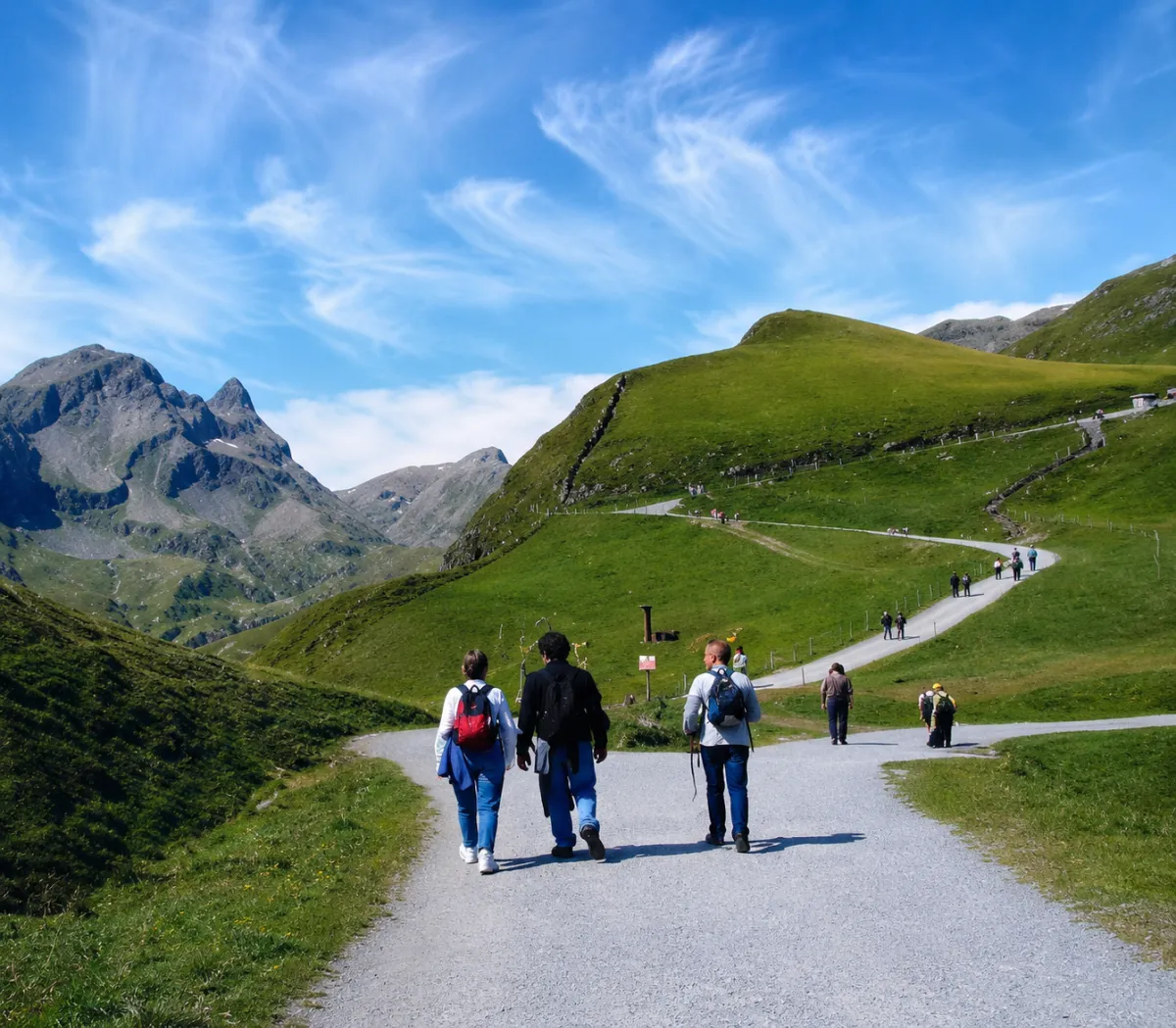
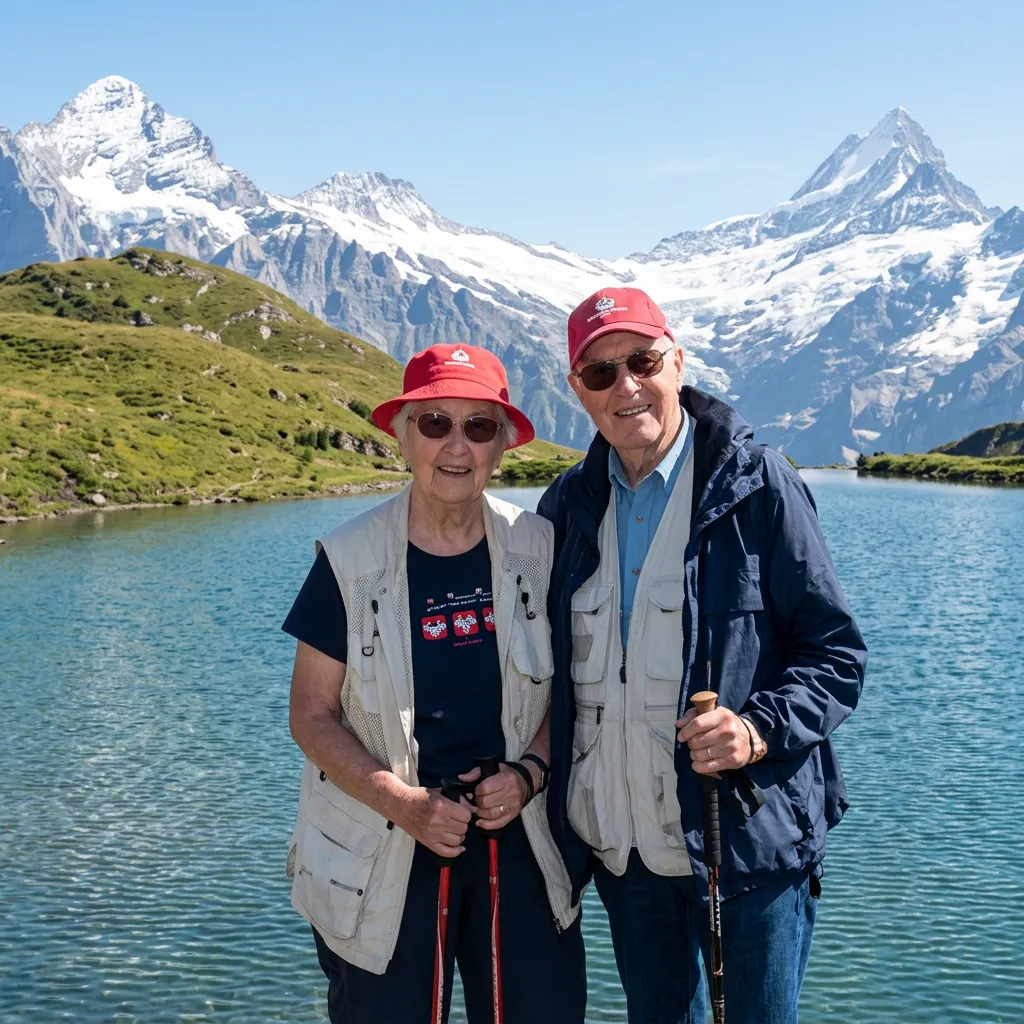
Finally, the lake! It was a picture-perfect scene. The lake and the snowy white mountains filled our vision in every direction. We ate our lunch while marveling at the view. Then it was time to head back, which didn’t take nearly as long as the climb up. Afterward came the long gondola ride with breathtaking scenery. We stopped for apple strudel and finally got “home” at 9:00. We were all very tired. My knees hurt from walking downhill, my hips hurt, and we were all a little sunburned. But what a great day!
BRIENZ BOAT RIDE
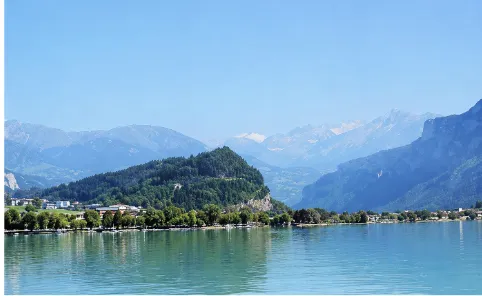
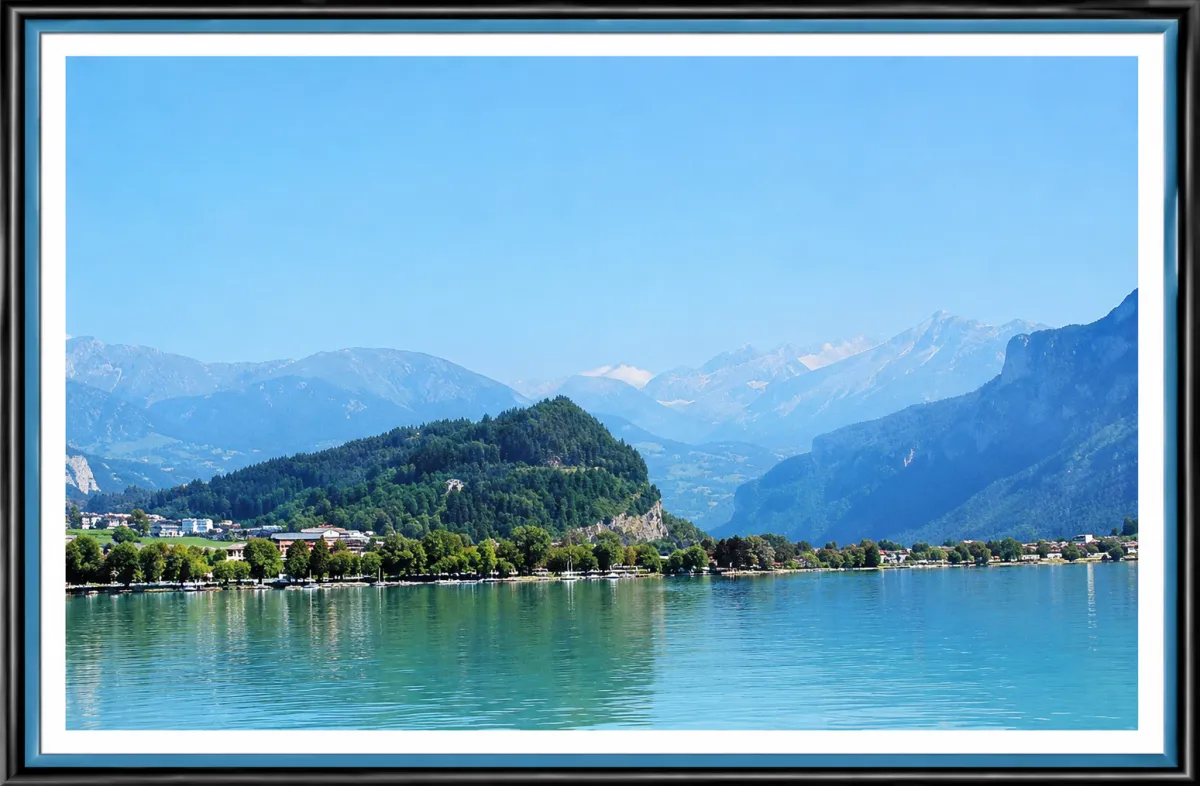
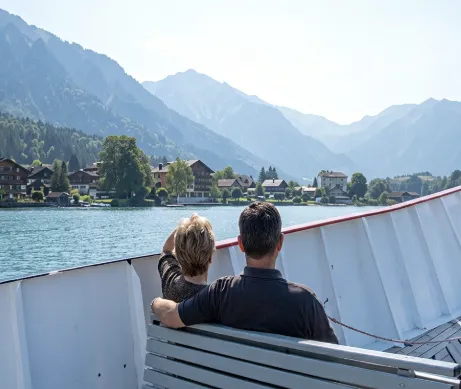
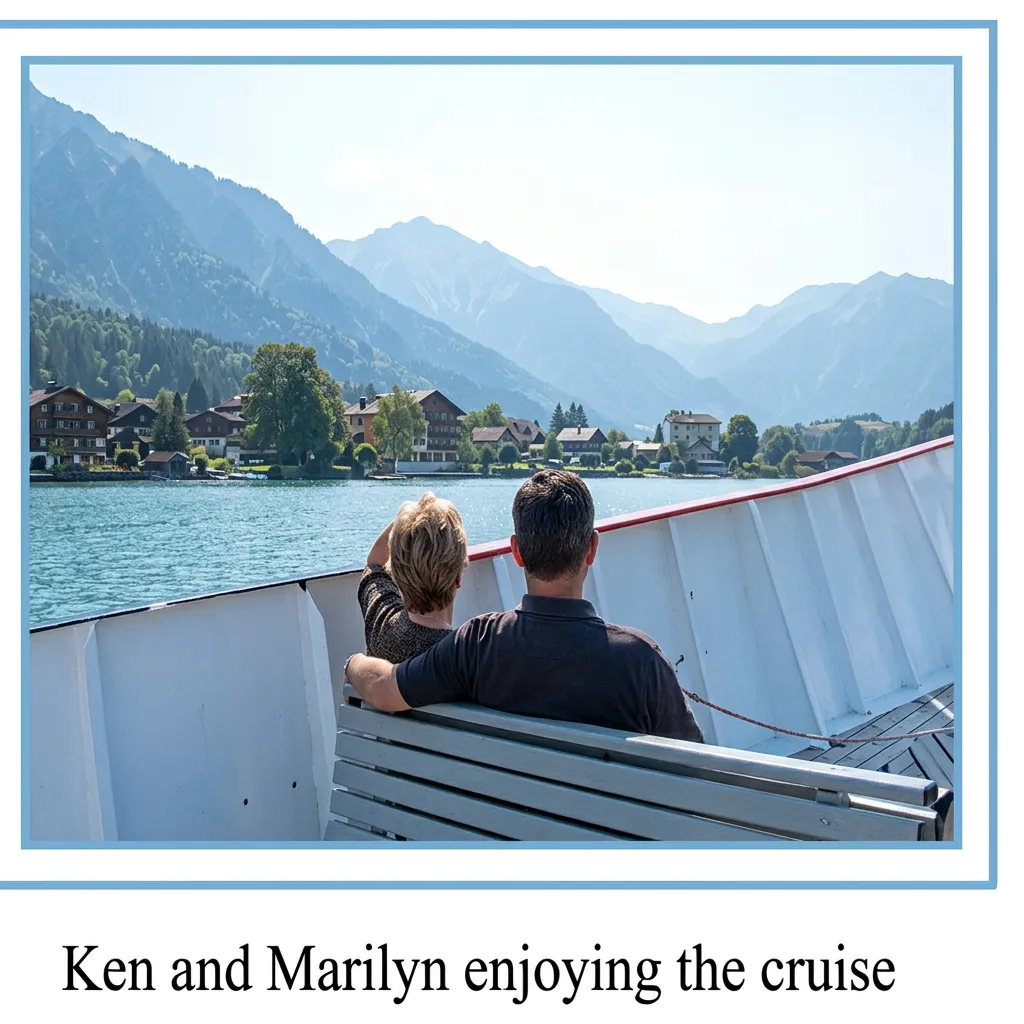
A good choice for today. It was restful, with beautiful scenery all the way. It was a gorgeous, sunny, and hot day. For an hour and a half, we relaxed as the boat traveled back and forth across the lake, picking up and dropping off passengers.
Italy & Austria - Side Trip
Bellagio - Salzburg - Hallstatt-Sheep Roundup
ITALY
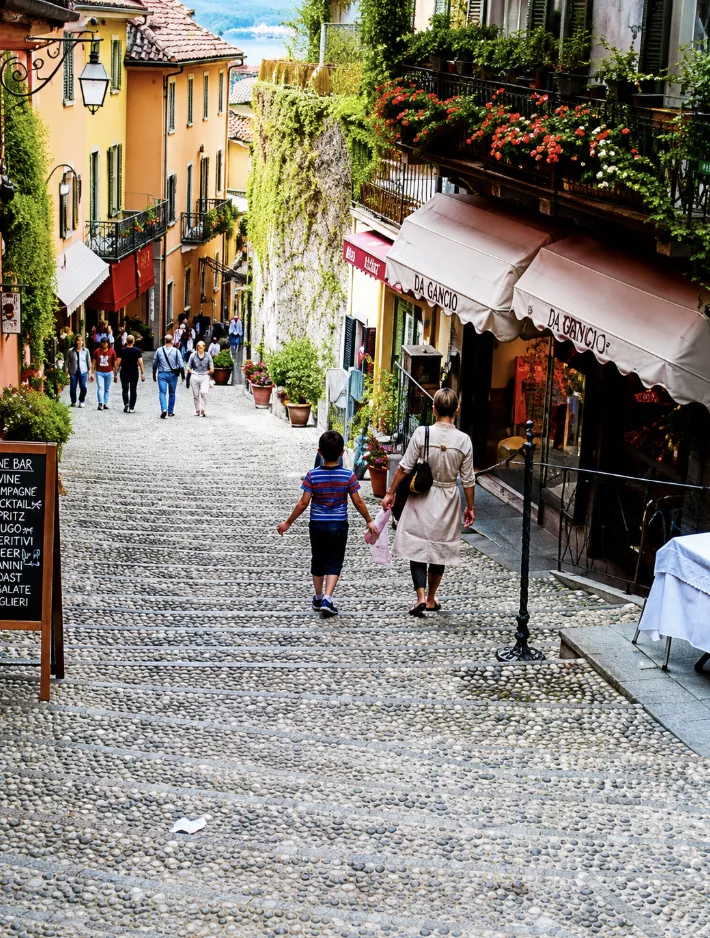
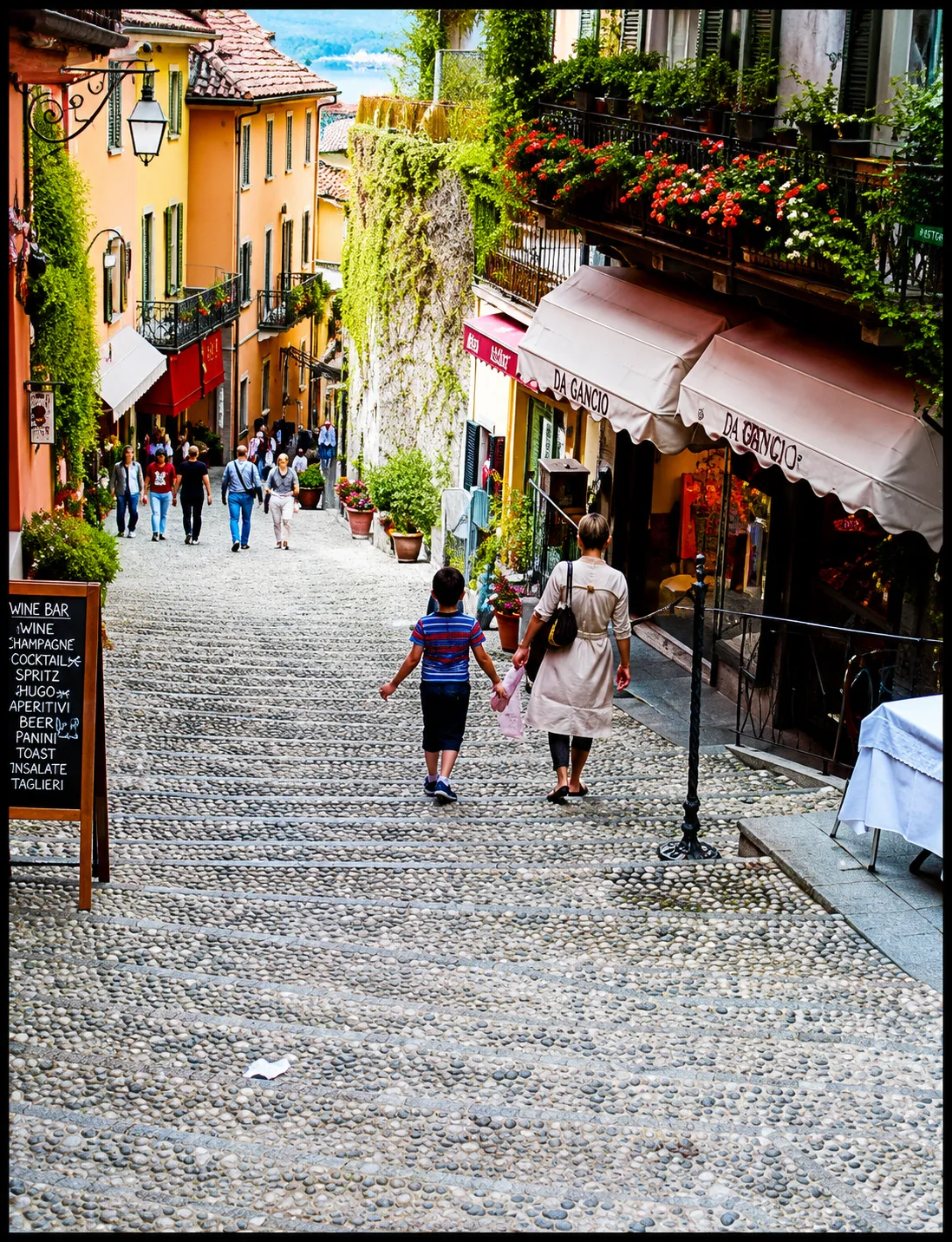
This was actually an extension of our time in Switzerland. We separated from Ken and Marilyn for a few days so we could visit our niece and her little girl in northern Italy. Their apartment had a beautiful view of Lake Como. The next day, we took an express boat to Bellagio, a unique village on a promontory jutting out into Lake Como. We climbed the many stone steps from the boat landing to an assortment of local shops, most of them featuring world-famous Bellagio silk. (Confession: we had never heard of it.)
Lisa took us to a shop where the proprietor designed silk ties for George Bush and Bill Clinton. There were pictures of them wearing the ties. ($140!) Out on the street, Al bought a silk tie from a vendor for $9. We enjoyed sampling local dishes while sitting at an outdoor table and felt quite stylish.
AUSTRIA
We rejoined Ken and Marilyn, picked up a rental car, and headed into Austria. We had some favorite places we wanted to show them, along with visiting some new ones.
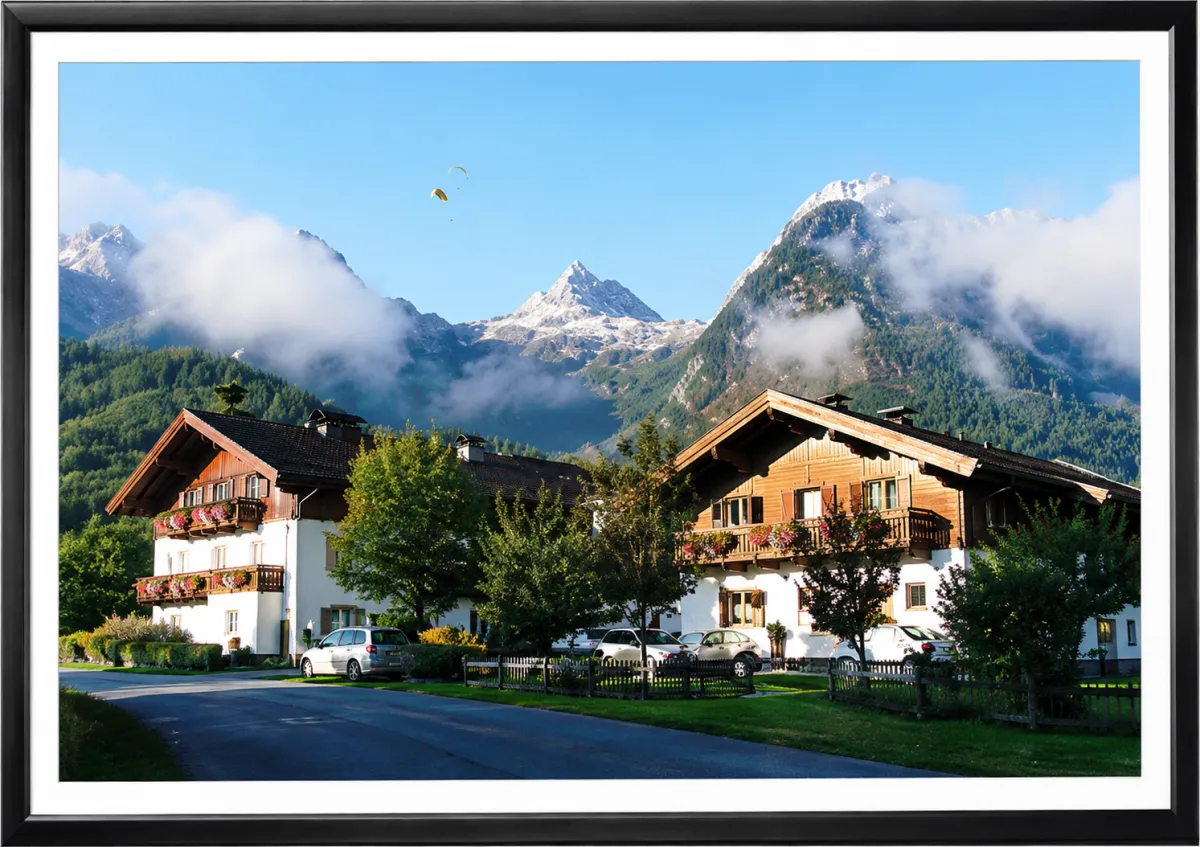
We found Edergut, our overnight lodging in Lofer. It was a working farm, and we went to the barn to see the cows munching fresh green grass while they were being milked. The next morning was sparkling clear, and the mountains behind Edergut created a perfect picture.
SALZBURG
It was a beautiful drive through the mountains, and we managed to find our way into the Old Town section of Salzburg. Our hotel, The Golden Ente (“The Golden Duck”), was located down a very narrow street, about the width of a car. (Drive in, unload luggage, and back out.) But at the end of the street was the Residenzplatz with the horse fountain, the place where Maria sang her “Confidence” song in The Sound of Music movie.
Ken and Marilyn had never been there before, and they wanted to see all the famous sights. We had visited Salzburg several times and had written about it in previous stories, so this time we took the funicular up to the fortress overlooking the city and simply wandered around taking lots of video with our new camera. This was in 2009, when video cameras were big and hung around your neck. It was also very easy to accidentally turn them on, only to discover later that you had wasted a lot of tape. So we videotaped the fortress and many other scenes. That evening, we were excited to watch our video, but instead we saw lots of “hiking boot, cobblestones, hiking boot, cobblestones”… then the walking stopped, and we heard our voices: “Do you have the right change for the WC?” The walking continued, hiking boot, wooden floor, hiking boot, marble floor. (Oh no… he’s going into the men’s room…) Marble floor, end of video — turned off just in time!
MONDSEE
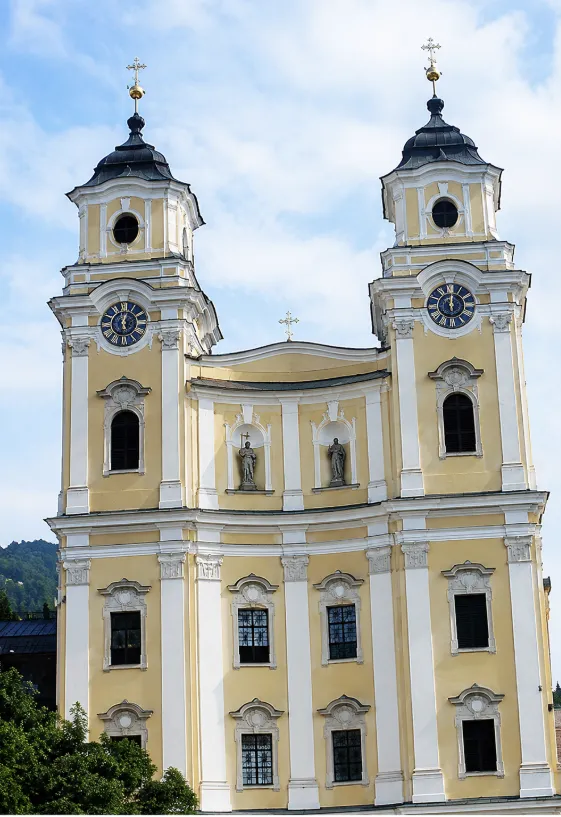
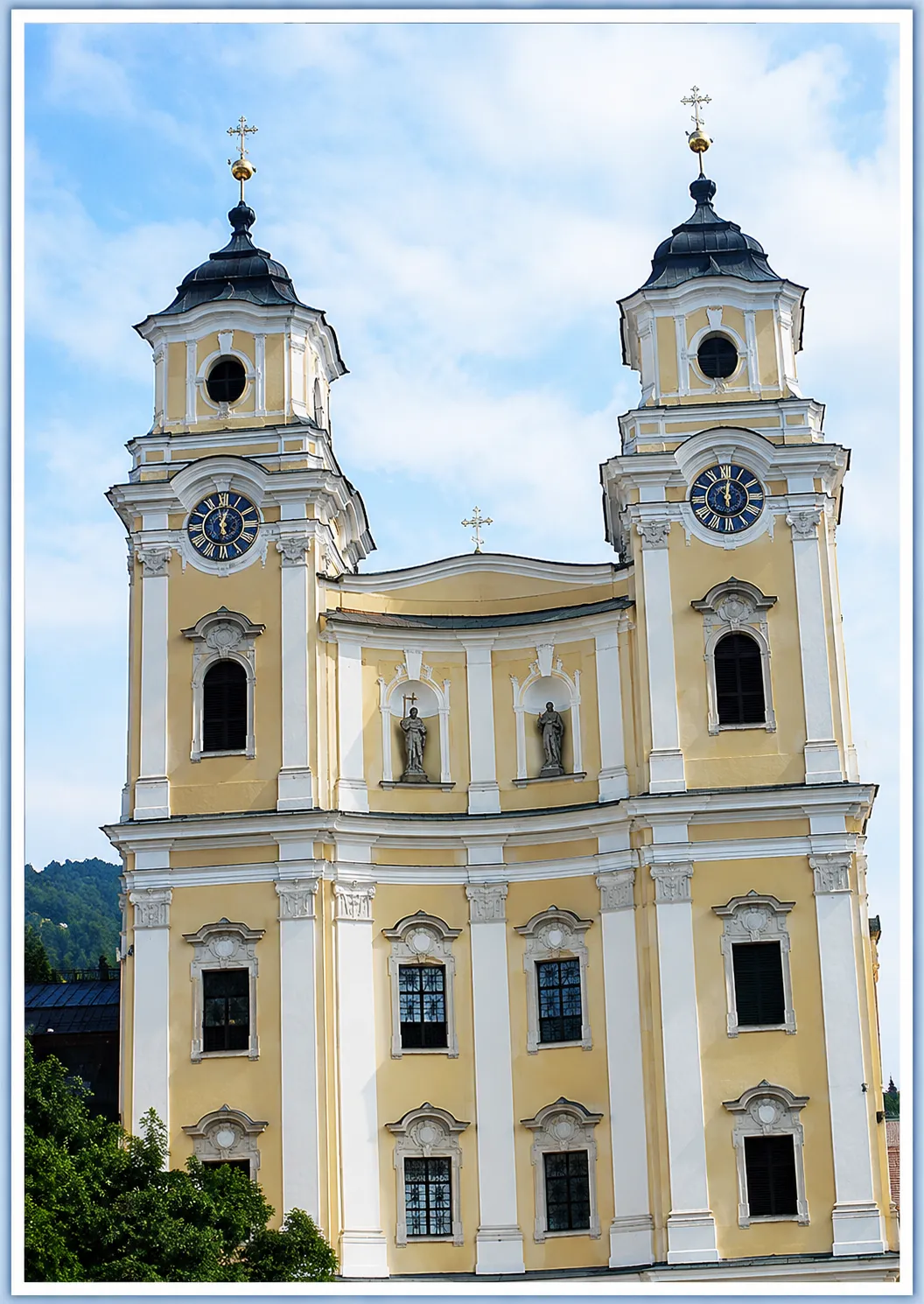
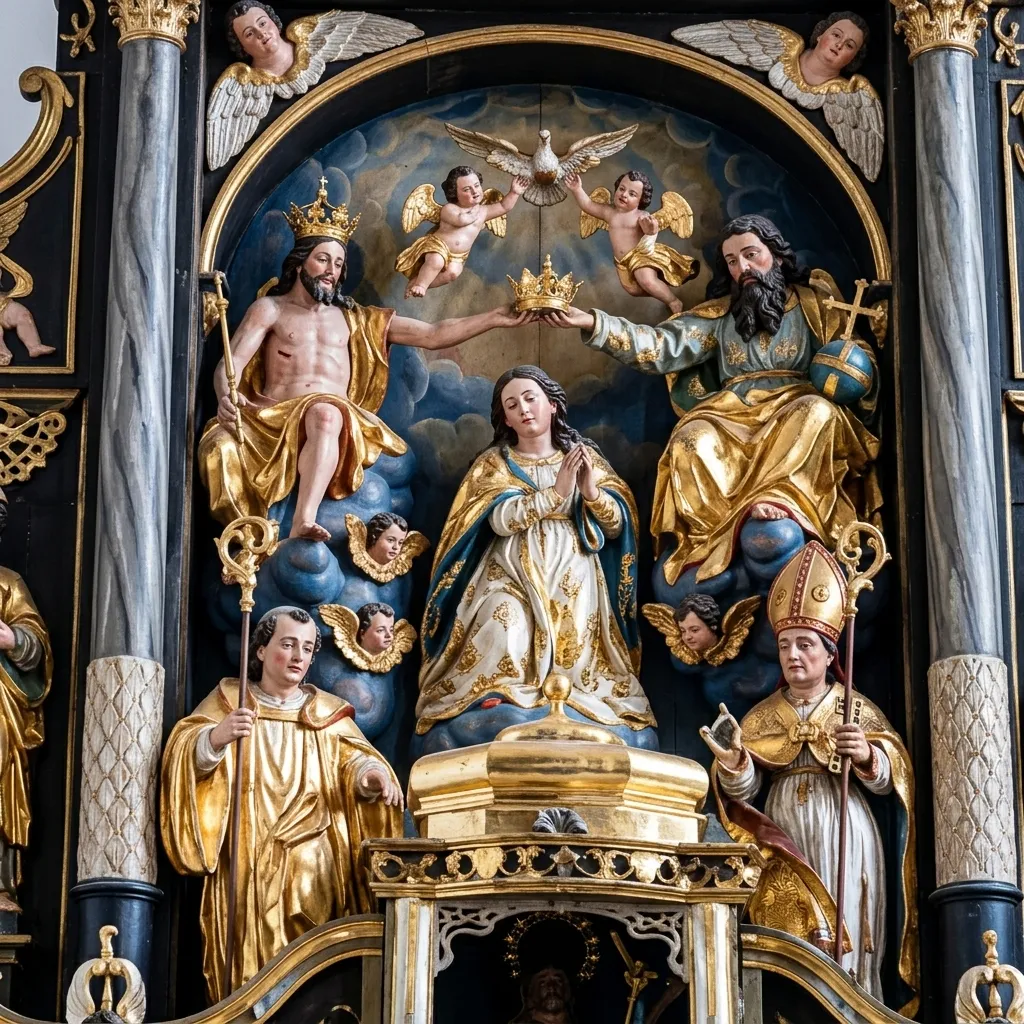
We stopped in Mondsee to visit the church where The Sound of Music wedding scene was filmed. The beautiful altar piece was very impressive. It is filled with decorated skeletons made to look like saints.
HALLSTATT
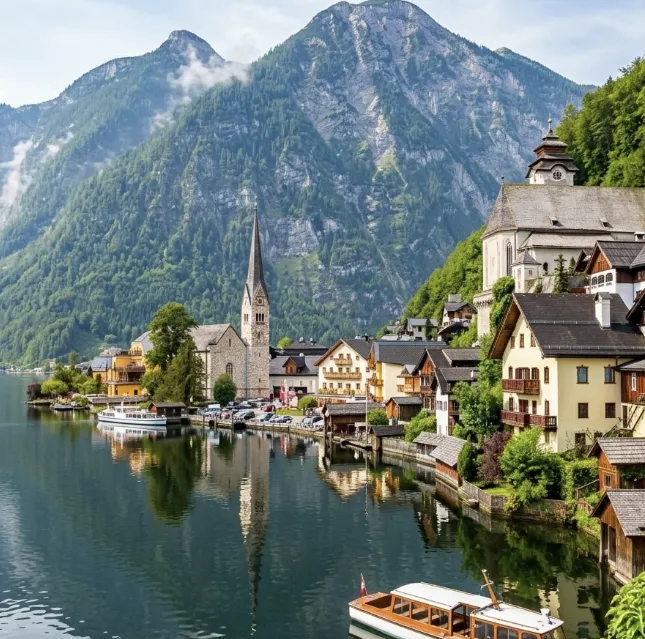
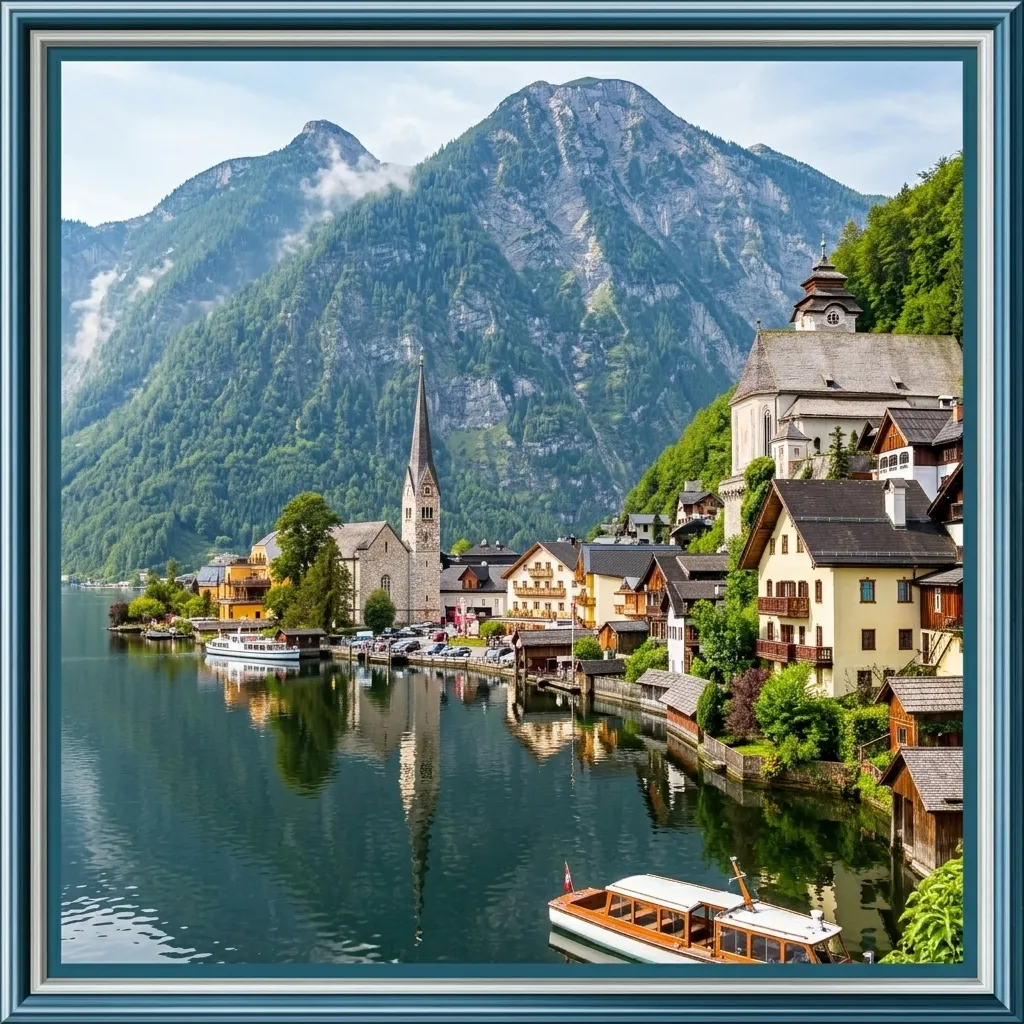
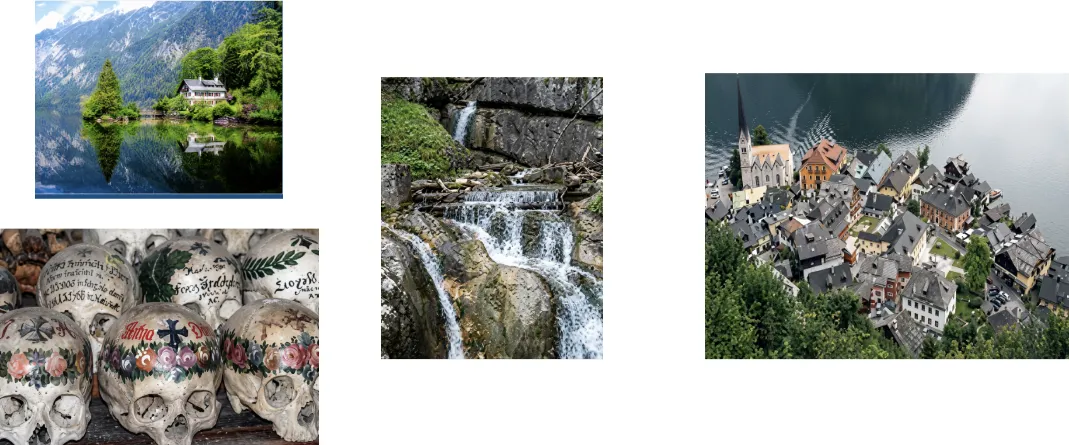
This is the most charming and beautiful town in Austria. It is 7,000 to 8,000 years old, dating back to Old Testament times. Hallstatt was known for its salt mining and still has an operating salt mine today. The little town has no room to expand because it is squeezed between the lake and the mountains, so the buildings are very old and built close together. The church has a graveyard with very limited space. For years, they followed the practice of digging up old graves to make room for new ones. The bones and skulls were carefully cleaned and polished. The skulls were painted with the name and date of the deceased, along with a few flowers, and then displayed in the charnel house. The most recent skull was dated 1985. Now that the Catholic Church has relaxed its rules regarding cremation, this practice is no longer followed.
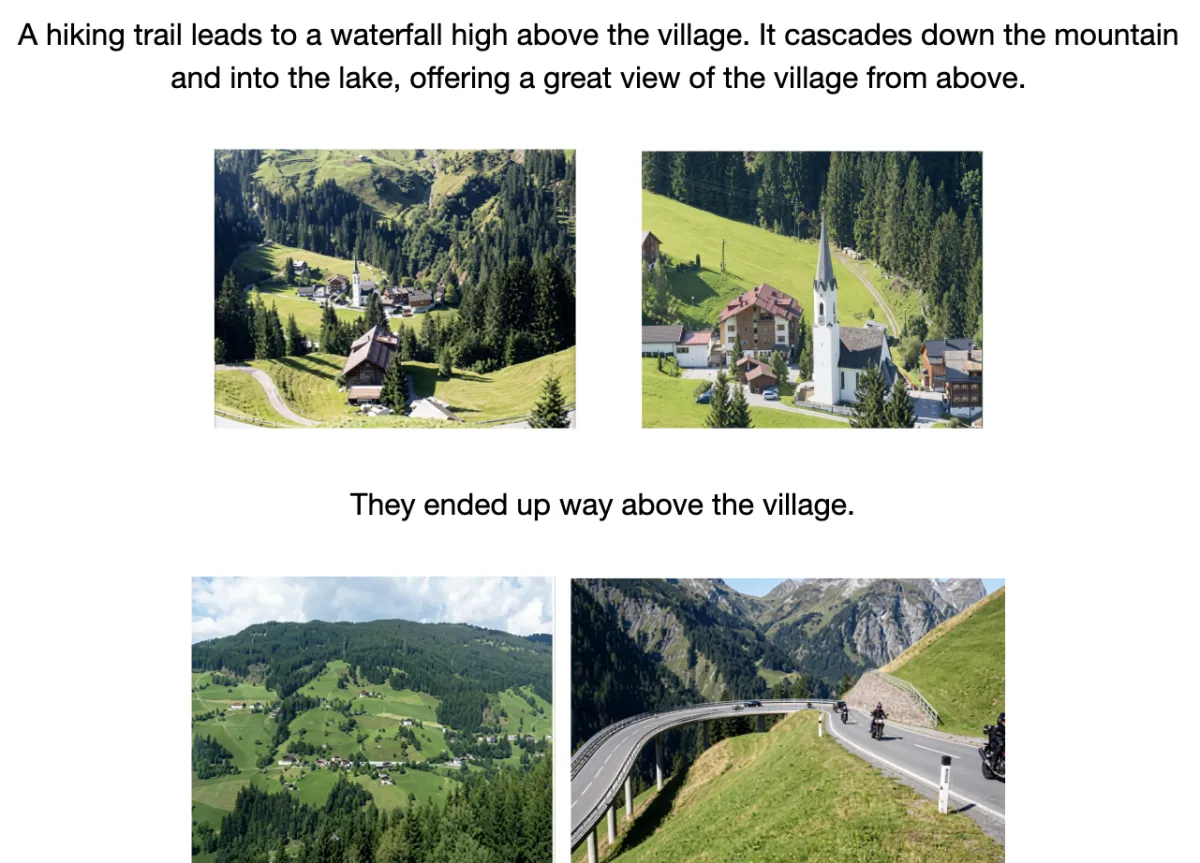
As we continued driving through northern Austria, we came across some of our favorite scenes. How many times had we photographed the village of Schröcken from above and then again from closer up?
SHEEP ROUNDUP
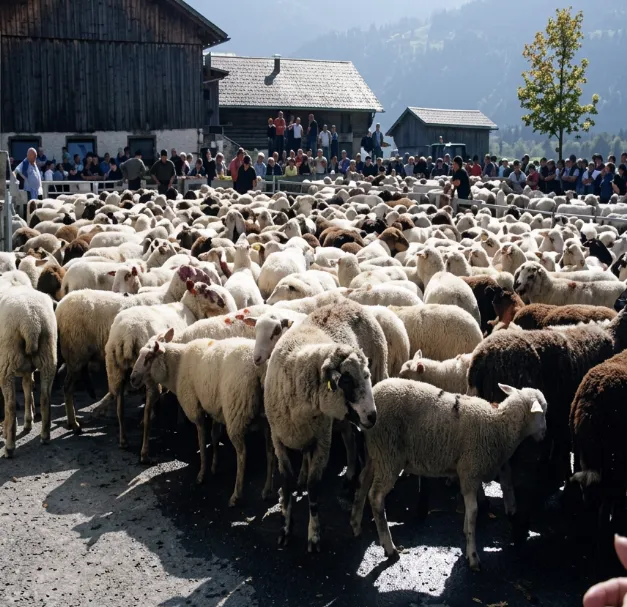
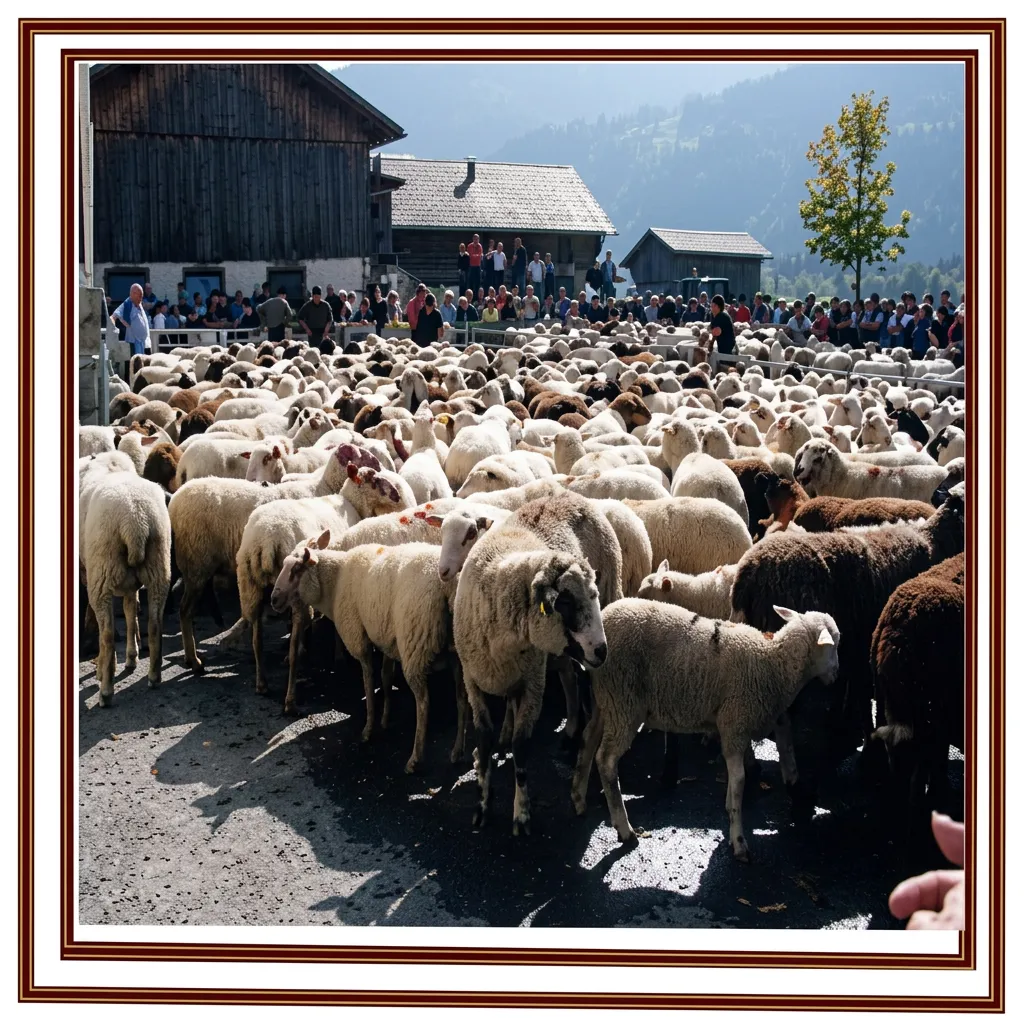
At Schoppernau, we found a huge crowd of people. We stopped to see what was going on; it must be some kind of celebration. It turned out they were celebrating the return of the sheep from the summer pastures. Hundreds of sheep were being herded down the mountain and through the main street of town into holding pens. There were thousands of sheep to be sorted and returned to their owners.
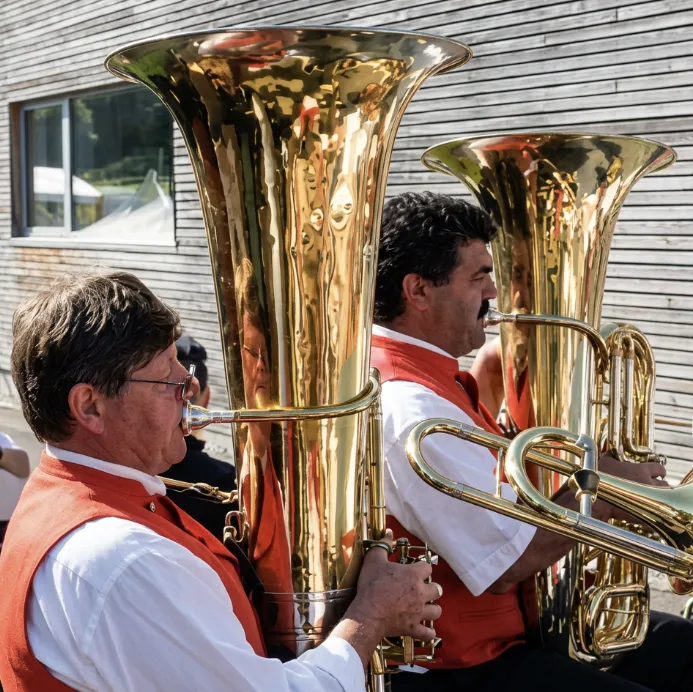
There were also thousands of people, including many children dressed in Lederhosen and Austrian hats decorated with flowers. An oompah band was playing, people were drinking lots of beer, and handmade crafts were for sale.
What a serendipitous find for us, a grand finale!
2010 - EGYPT
CAIRO MUSEUM
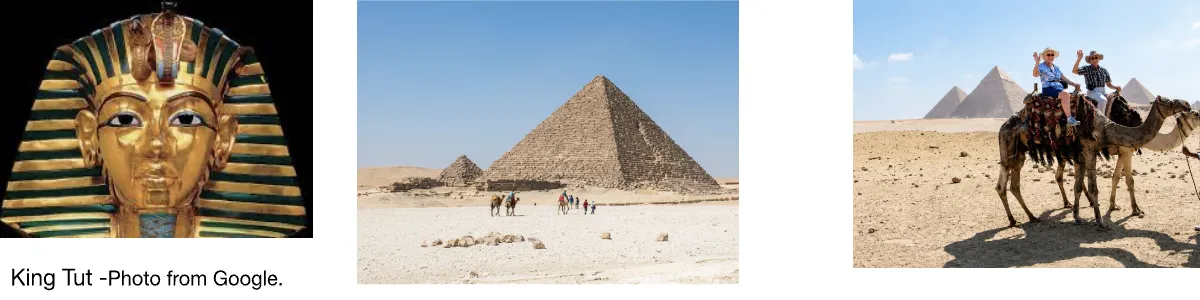
Here in the museum was the body of King Tut, along with his famous solid gold funeral mask, well protected under heavy glass. He was a very young king when he died in 1323 B.C. at the age of 19. His tomb remained undiscovered until it was found in the Valley of the Kings in 1922. His body was enclosed inside a coffin, within a tomb, and then inside another elaborate tomb decorated with gold and precious metals.
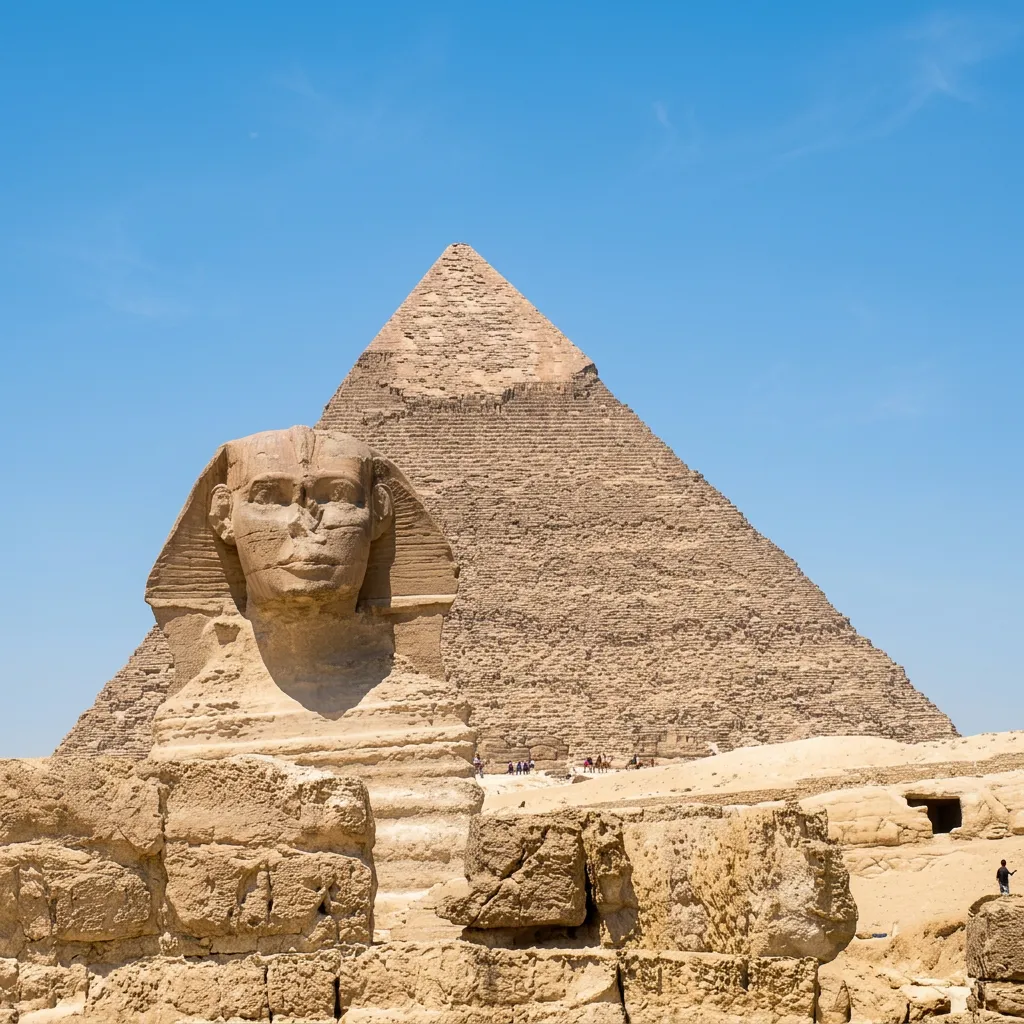
PYRAMIDS OF GIZA
The pyramids! Four thousand years old, rising toward the blue sky and surrounded by desert sand. They are massive, and it is amazing to think they were built entirely by human labor. The Great Pyramid stands 455 feet high and contains 2,300,000 blocks, each weighing an average of 2½ tons. They were put in place by men who pushed, pulled, and dragged them into position. Of the Seven Wonders of the Ancient World, the pyramids are the only ones still standing.
The Sphinx is a very impressive and enormous carving with the head of a man and the body of a lion. It was carved from a single piece of granite. Its nose is missing, and there are many theories about who destroyed it. One story blames Napoleon, claiming that he fired a cannon at it and hit the nose.
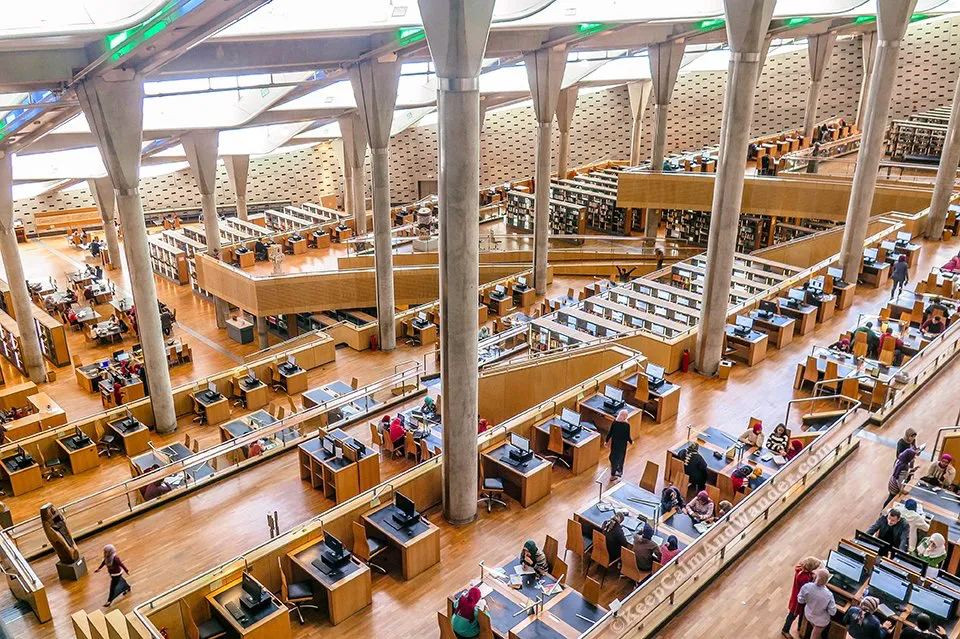
ALEXANDRIA
We rode first class on a luxury train to Alexandria. Buses then took us to the amphitheater, which was discovered in 1960 during excavation work for a new building. The ruins had been buried under silt from the flooding of the Nile River. It dates back to the 1st century A.D.!
This very modern library was built in 1988 on the same site as the ancient library. It has 11 floors with cascading suspended platforms overlooking the vast library space.
The amphitheater seats 700–800 people and is entirely below street level. The library has room for 2,000 readers, over 1 million books, and access to 600,000 books available on the internet. You can even have a book translated into six languages, and a machine will turn the pages for you. There is also a machine capable of printing a book in 20 minutes. It was all quite mind-boggling.
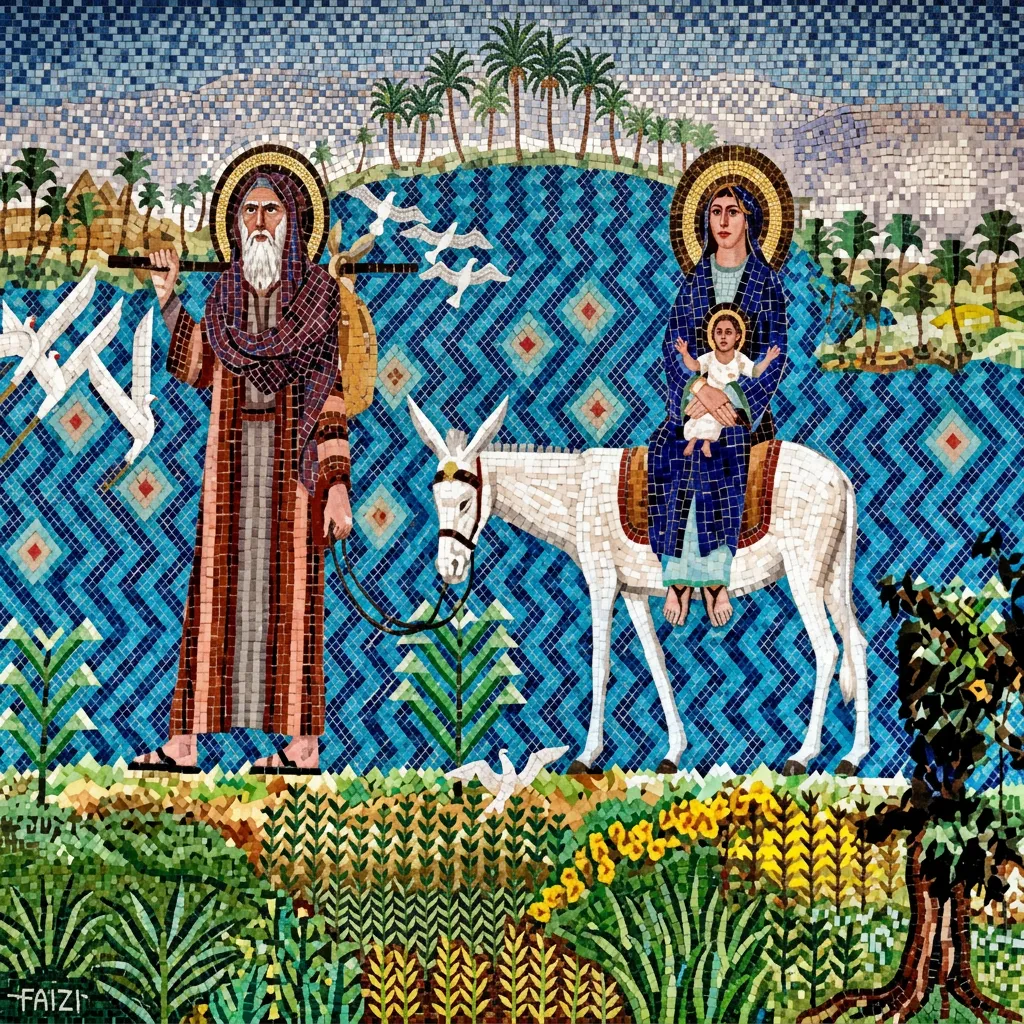
Coptic Christian Church
The Holy Family is believed to have stayed here when they escaped to Egypt.
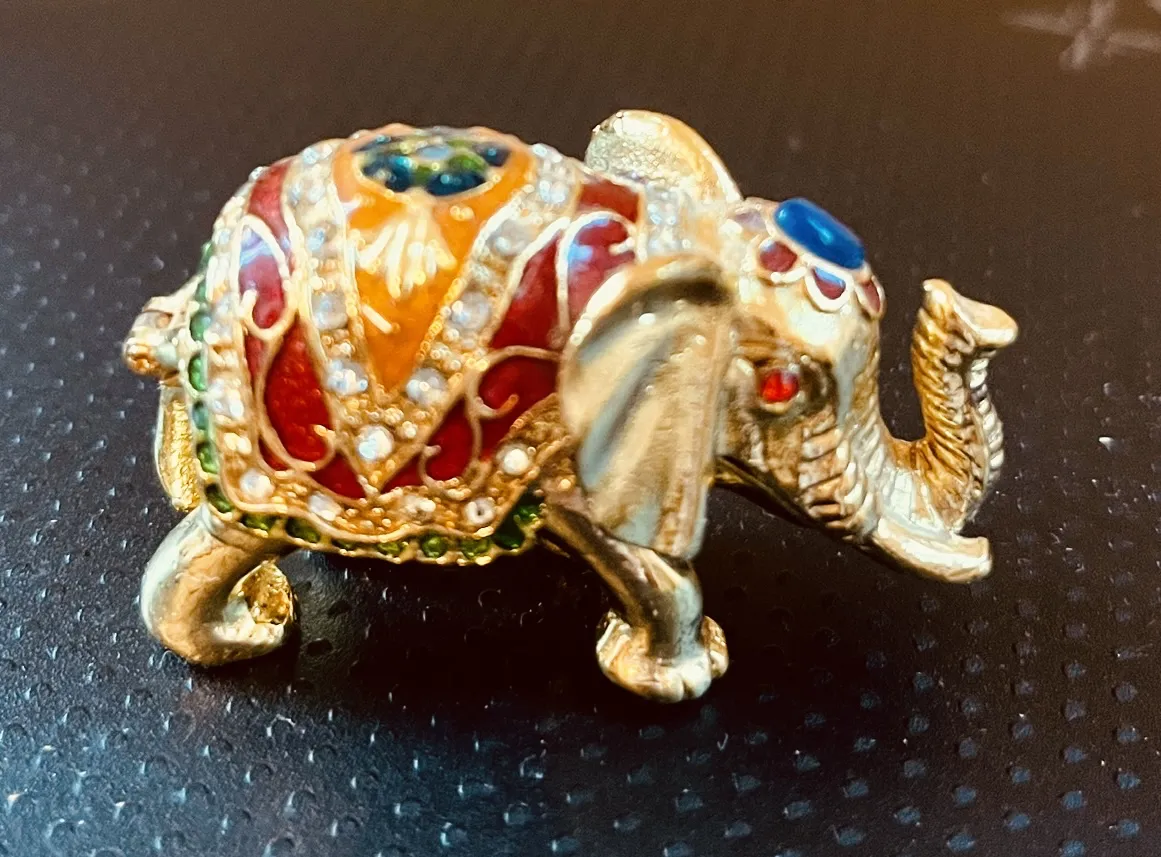
The outdoor market was crowded with tiny shops filled with everything imaginable. I spotted a small bejeweled elephant priced at $40. I really wanted it, so I bargained. I offered $5, and the seller came down to $25, then $20. I kept saying, “No, no, no.” When he lowered the price to $12, then $10, I offered $7 and walked away. He chased after me and finally agreed, “Yes, $7 is okay.” And so I got my elephant.
CRUISING ON THE NILE
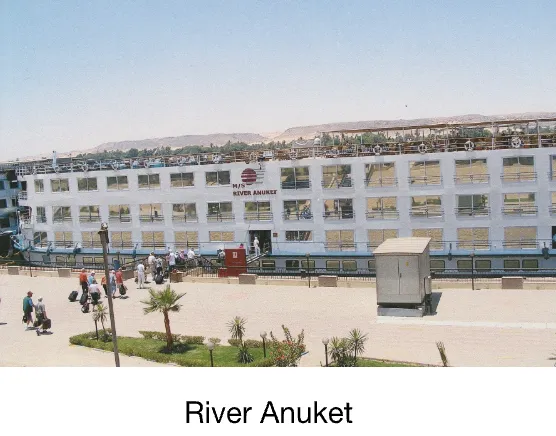
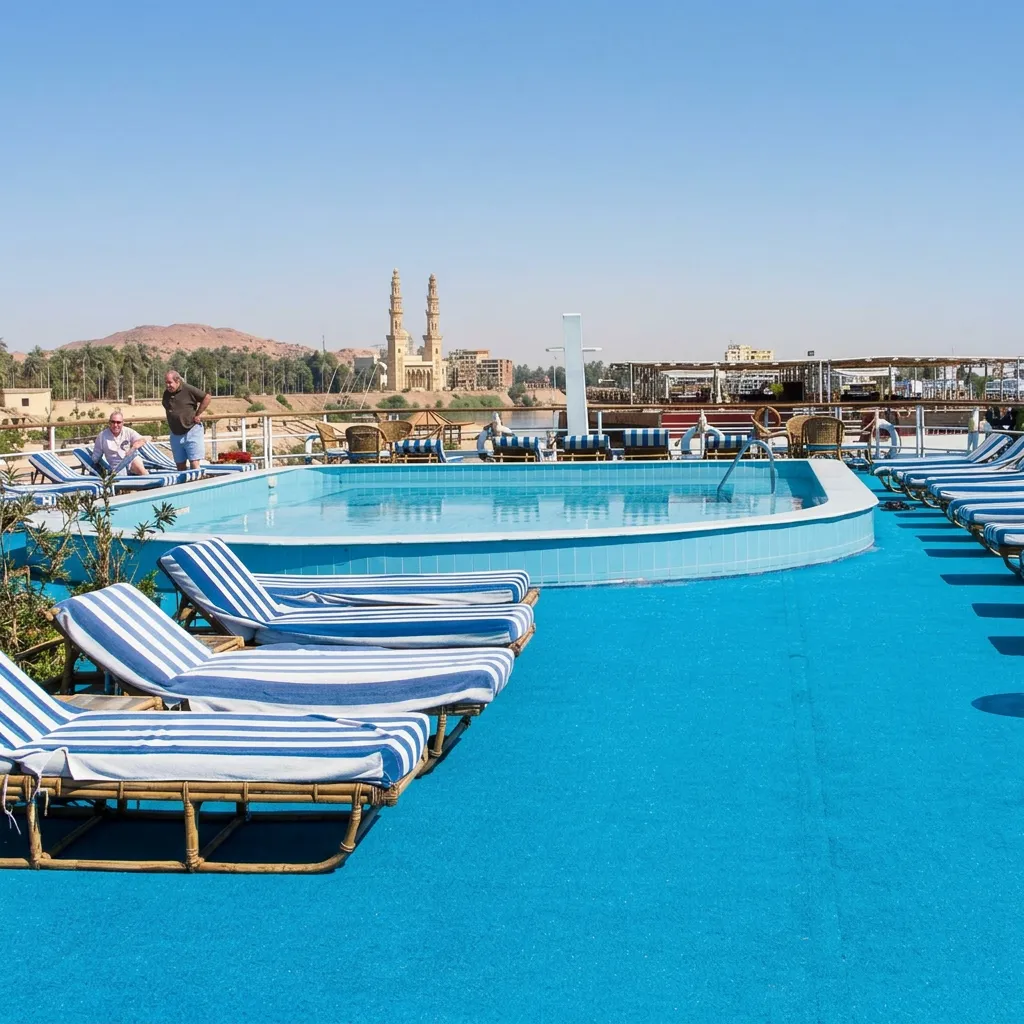
We drove along the Nile for miles and saw probably 100 riverboats. Finally, we arrived at ours, the River Anuket. Ah, what luxury! Our cabin was very spacious, with floor-to-ceiling windows, two beds, chairs, and a table topped with fresh fruit. The air conditioning made it wonderfully cool and comfortable.
We explored the ship and discovered a door leading to the top deck. There was a swimming pool and a covered sun deck. The temperature up there was 110 degrees, like an oven! We quickly retreated to our nice, cool air-conditioned room.
ABU SIMBEL
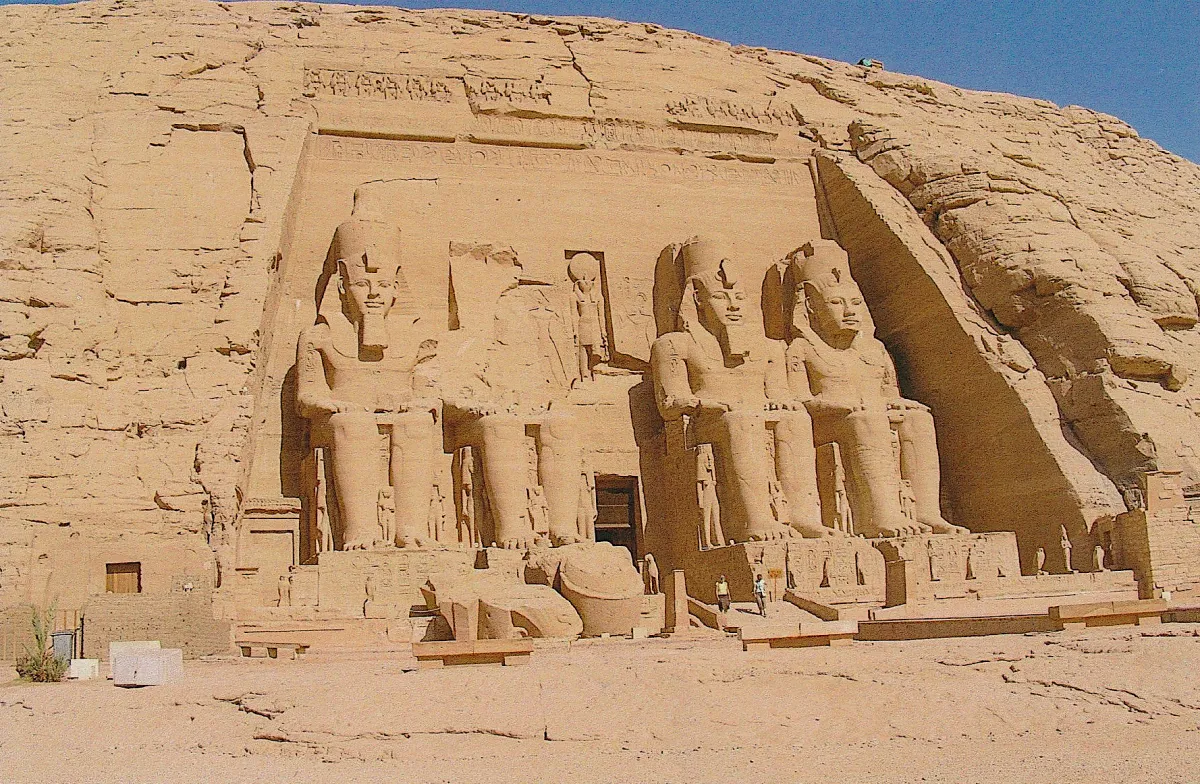
A 3 1/2 hour early morning drive through miles and miles of the desolate Sahara Desert took us to the Temples of Ramses. They are considered the most beautiful and impressive of all the temples in Egypt. Our first look at them was awesome. We had heard them described and had seen pictures, but to see the real statues was unbelievable.
The first temple features four statues standing 65 feet tall, all honoring Ramses II. The head of one of the statues fell off years ago and still lies where it landed in the sand. The people in the picture help give perspective to the enormous size of the statues.
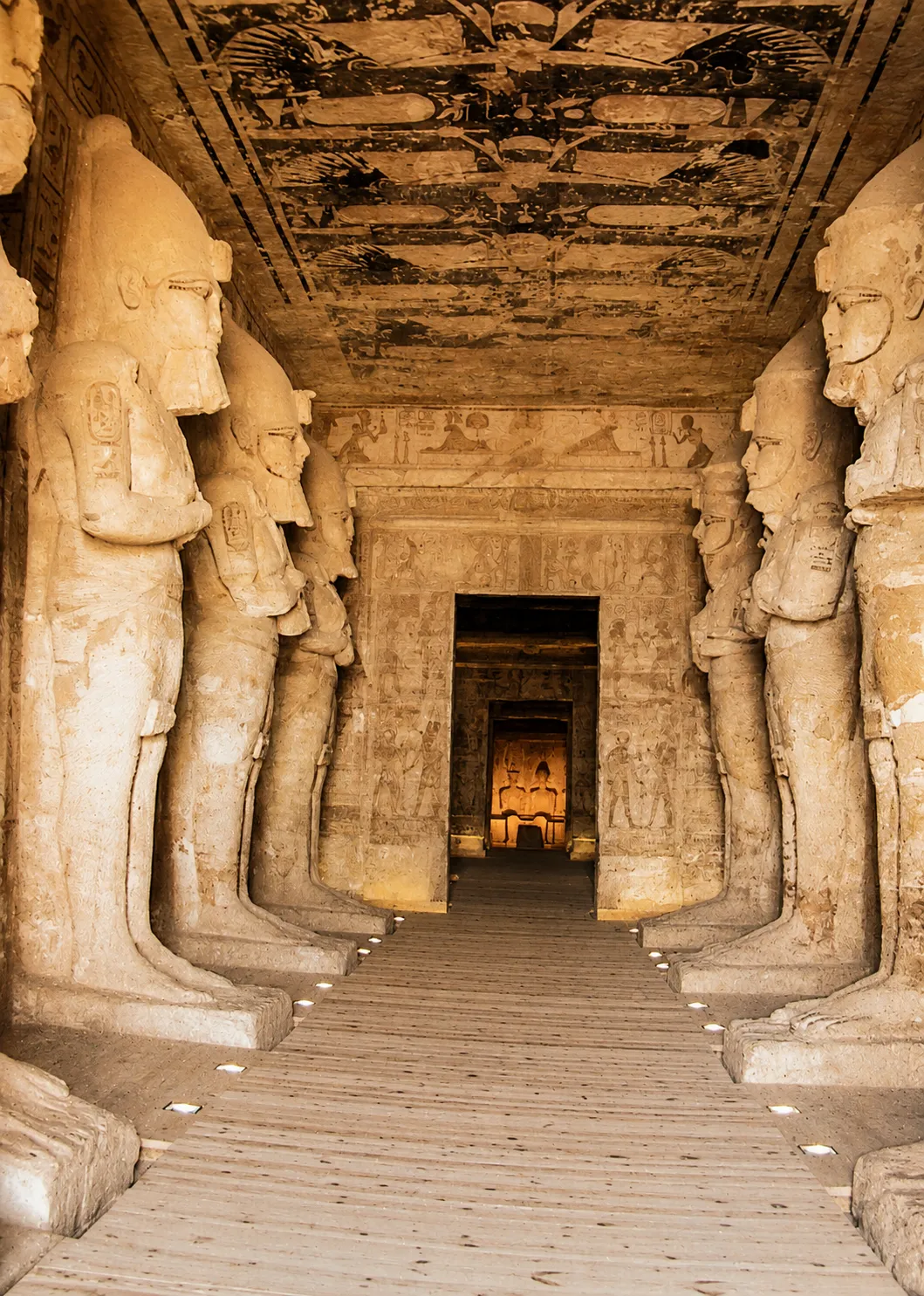
Near the feet of the statues, we could see a doorway leading into the temple. We entered through the huge entrance, awestruck by the enormous scale of everything. Inside were beautiful wall carvings, statues, and additional rooms branching off from the main chamber. The final room contained four statues and remained dark except for two days each year. On those days, the sun illuminates three of the four statues. The fourth statue, representing the god of darkness, has not seen light for 3,200 years. It took an amazing group of ancient astronomers and engineers to accomplish this!
The second temple is slightly smaller and dedicated to Nefertari, Ramses' favorite wife. It is also very impressive. These two temples overlook Lake Nasser from a sandy hill, safely above the waterline. The amazing part of the story is that both gigantic temples were moved from their original location. When plans were made to construct the Aswan Dam, it became clear that the rising waters of the Nile River would submerge the twin temples of Abu Simbel. A massive rescue project was then carried out. The temples were dismantled and relocated 64 meters higher and 180 meters west of their original site. Moving the temples was an enormous undertaking. The structures were cut into pieces weighing between 3 and 20 tons, then carefully reassembled at the new site exactly as they had been before. The relocation took nearly five years to complete in 1968 and cost $42 million. Modern earth-moving equipment and cranes were used, which makes one wonder even more how the ancient Egyptians built these mammoth structures thousands of years ago. Donations came from all over the world to help save these priceless works of art.
PHILAE TEMPLE
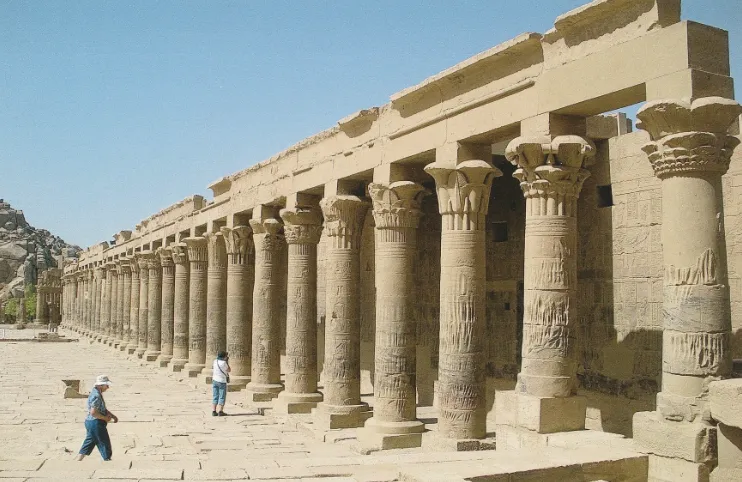
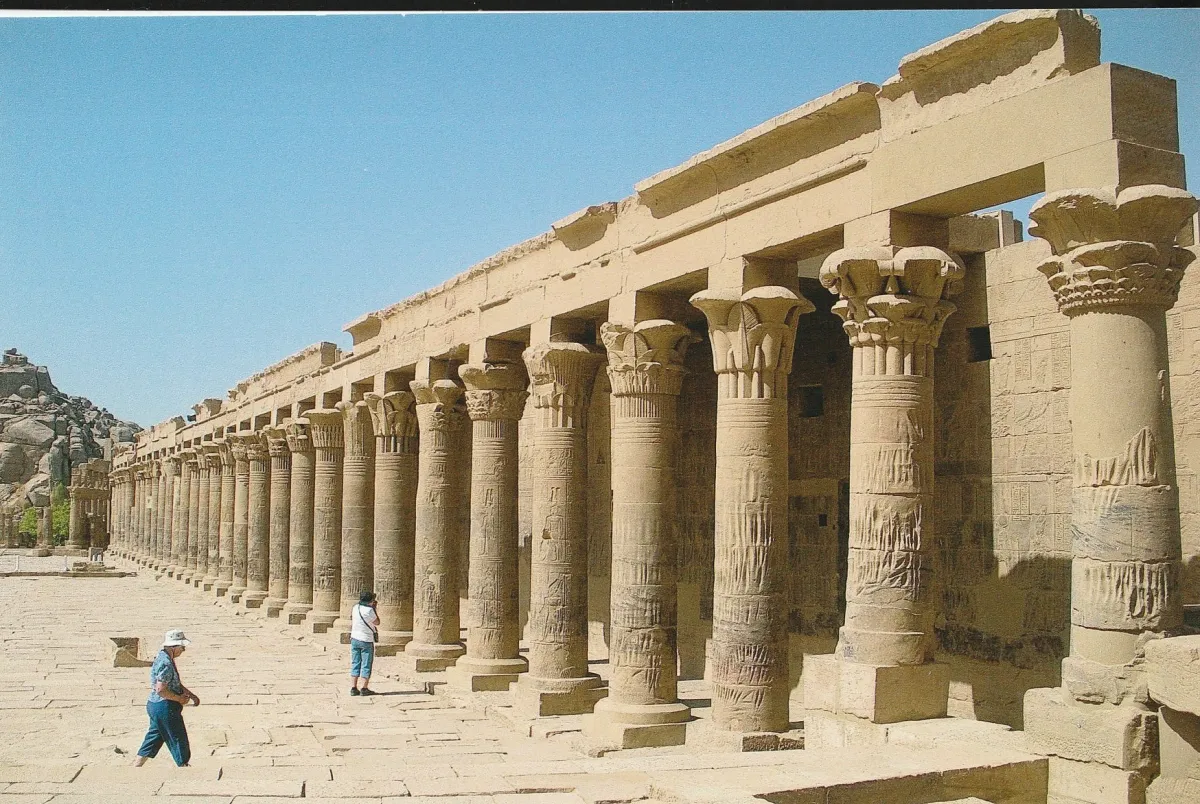
This temple had been underwater for 70 years until cofferdams were built to bring it back to the surface. It was then cut into 40,000 pieces, carefully labeled, and reassembled on a new island. The temple is very impressive, especially with its long row of towering columns.
PAPYRUS INSTITUTE
We watched an interesting demonstration of how paper is made, and there were many steps involved. Reeds that grow in the Nile Valley are collected, dried, and arranged in long strips placed both vertically and horizontally. Another layer is added on top, and then everything is pressed together. Beautiful pictures are painted on the finished papyrus, and you can identify genuine papyrus by the faint horizontal and vertical lines.
That afternoon, we went up to the top deck, also known as the oven, and Al took pictures as we passed through a series of locks. I stayed in the swimming pool with the water up to my neck and a hat on my head. The temperature was 125 degrees. Later, we enjoyed a quiet time in our spacious air-conditioned room while watching the Nile flow by.
The next day was scheduled for a visit to the famed Valley of the Kings, but Al was not feeling well, and neither of us had slept much. When the alarm went off at 4:30 a.m., we decided to stay put and take it easy. The weather report predicted 112 degrees, and we had already had enough of the intense heat. (We saw the tour group return completely exhausted and dripping with sweat.) However, looking back now, I wish I had gone. They were able to enter King Tut’s tomb and see all the glittering gold and jewels, truly a once-in-a-lifetime opportunity.
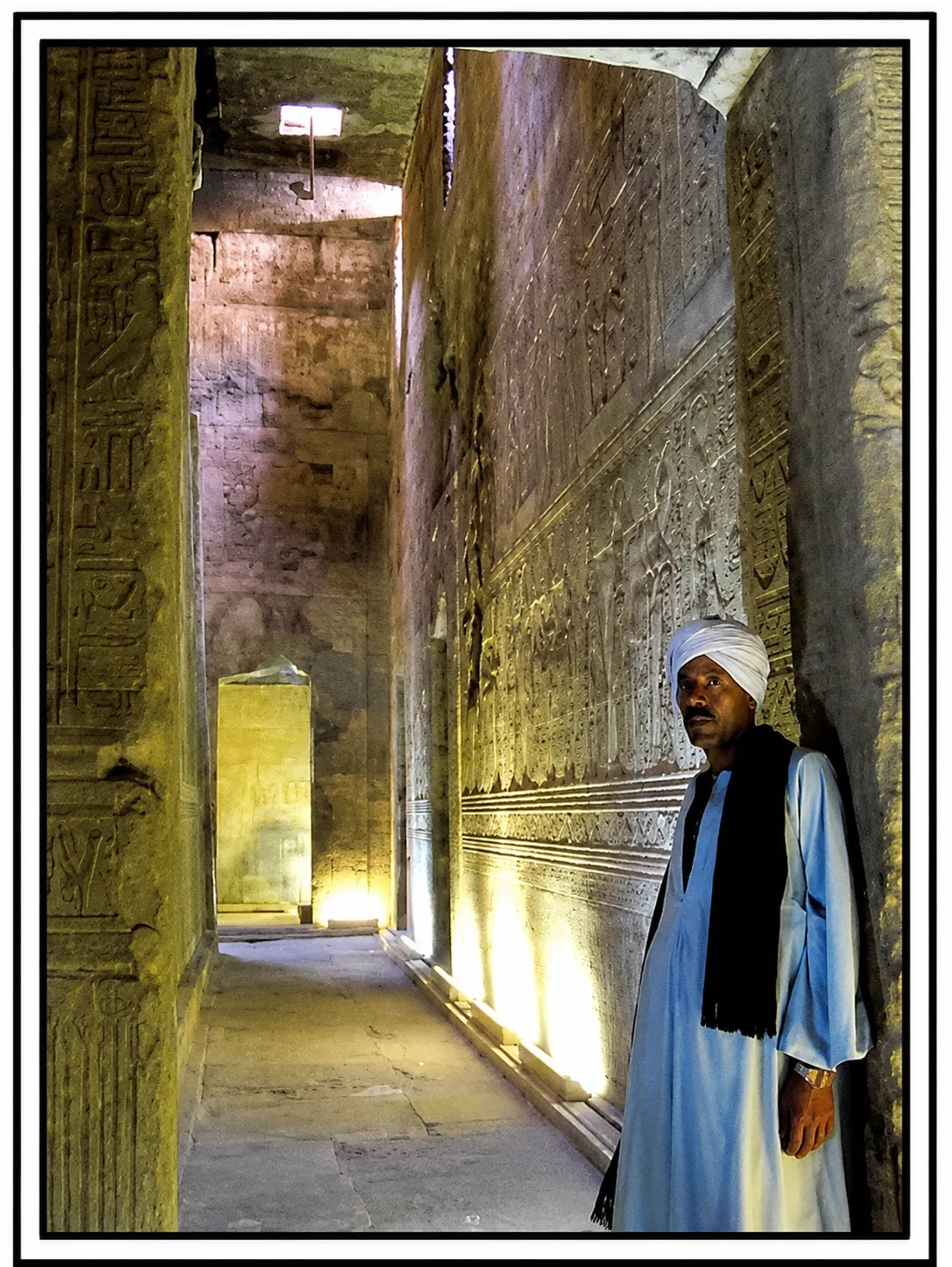
LUXOR TEMPLE
That evening, we took a 45-minute ride in a horse-drawn carriage through the heart of Luxor and past the temple. It was a stunning sight, beautifully illuminated at night. Luxor is often called the world’s largest outdoor museum.
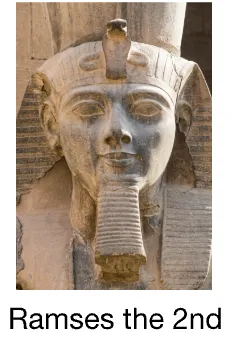
The temple features a statue of Ramses II, we saw his statue and likeness in many places throughout Egypt. Originally, two obelisks stood in front of the temple. One still remains there, while the other now stands in the Place de la Concorde in Paris. The story of how it was transported there in 1836 is quite amazing.
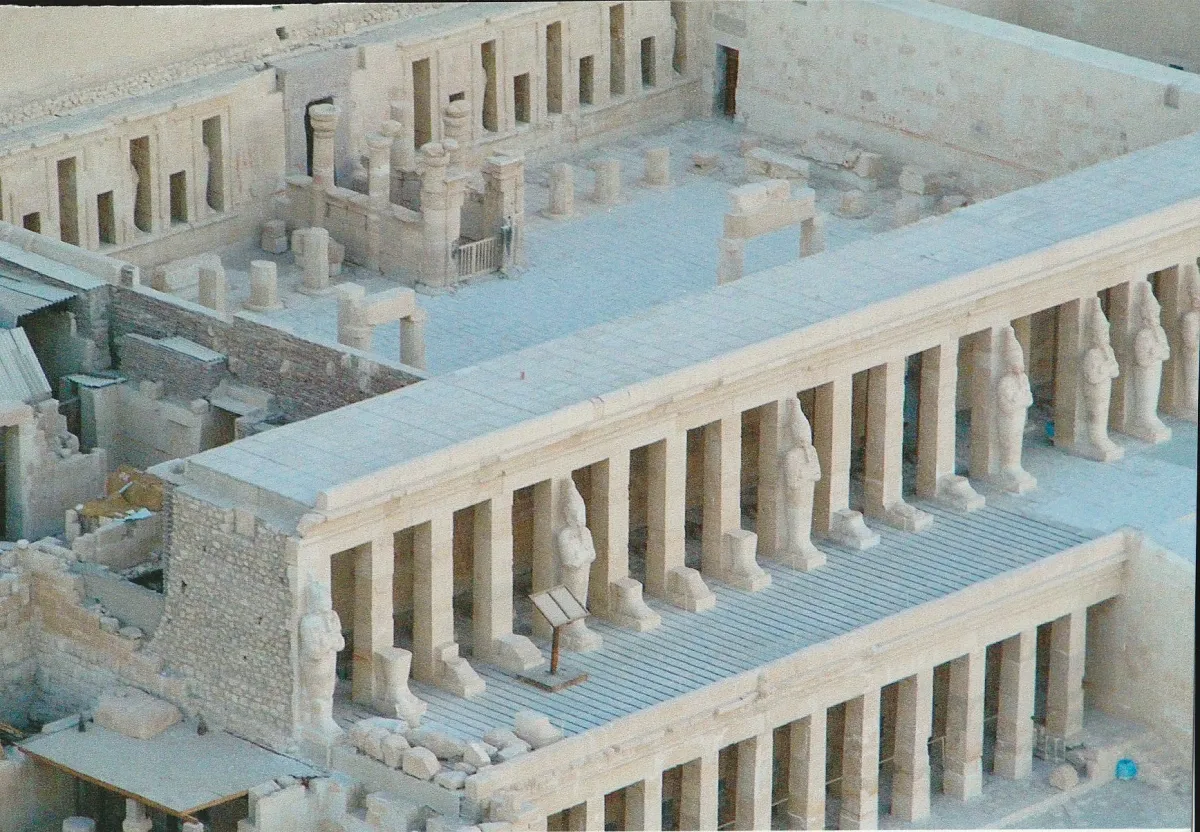
TEMPLE OF DENDARAH
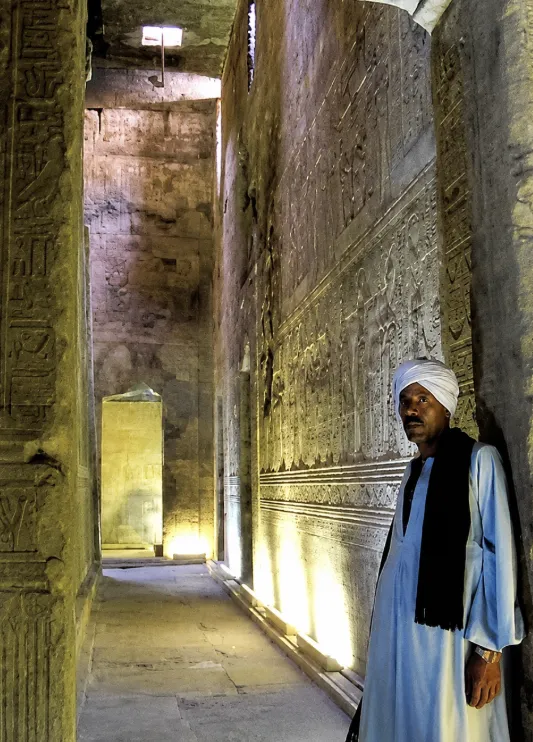
This temple is dedicated to the cow goddess Hathor. She is one of the most important goddesses in ancient Egypt because she represents fertility, childbirth, and motherhood. She was also the goddess people came to when seeking healing. Our picture of the Temple of Dendarah won “Best of Show” at the Bond County Fair.
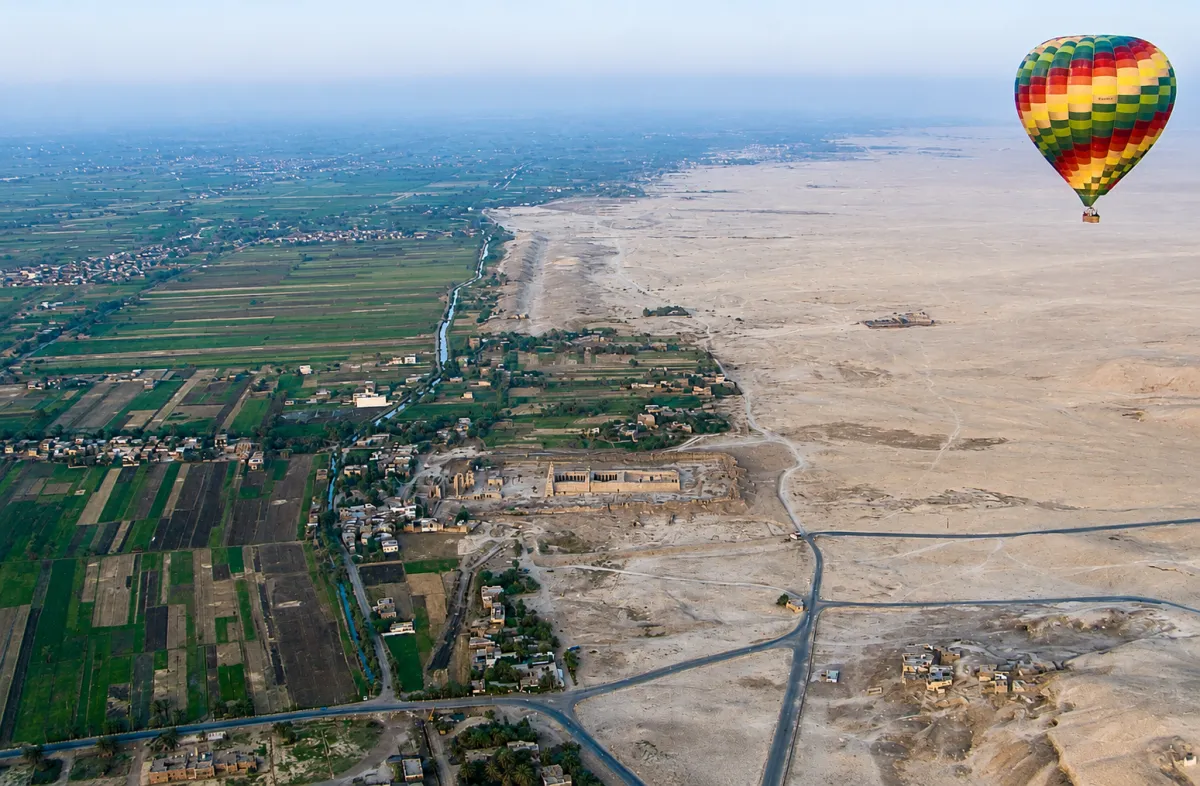
HOT AIR BALLOON RIDE
This was the day we had been looking forward to: a hot air balloon ride. A van took us to the nearby Nile River, where an open-sided boat was waiting for us with tables already set for breakfast. We crossed the river to an open field where eight or ten large balloons were being prepared for launch.
We flew over the Valley of the Kings and Queens. From the air, we were able to see what others only saw from the ground. We even saw the caves where King Tut was discovered. There were many ruins and temples scattered below us; it was a thrilling experience. We caught the air currents just right, giving us a wonderful variety of views.
Then we witnessed a beautiful sunrise over the Nile. It was an awesome experience that far exceeded our expectations!
Landing — The ground crew guided the basket while the pilot kept us hovering about three feet above the ground. He carefully steered the basket across a rough plowed field until we reached a smooth landing spot where we gently touched down. The ground crew then deflated the balloon, and we climbed out. There was sparkling grape juice, singing, and dancing; it was a truly fun and memorable experience.
(Three years later, a hot air balloon crashed in this very area, killing 19 of the 21 passengers. A gas line leak caused the balloon to ignite. It was rather sobering to later learn this.)
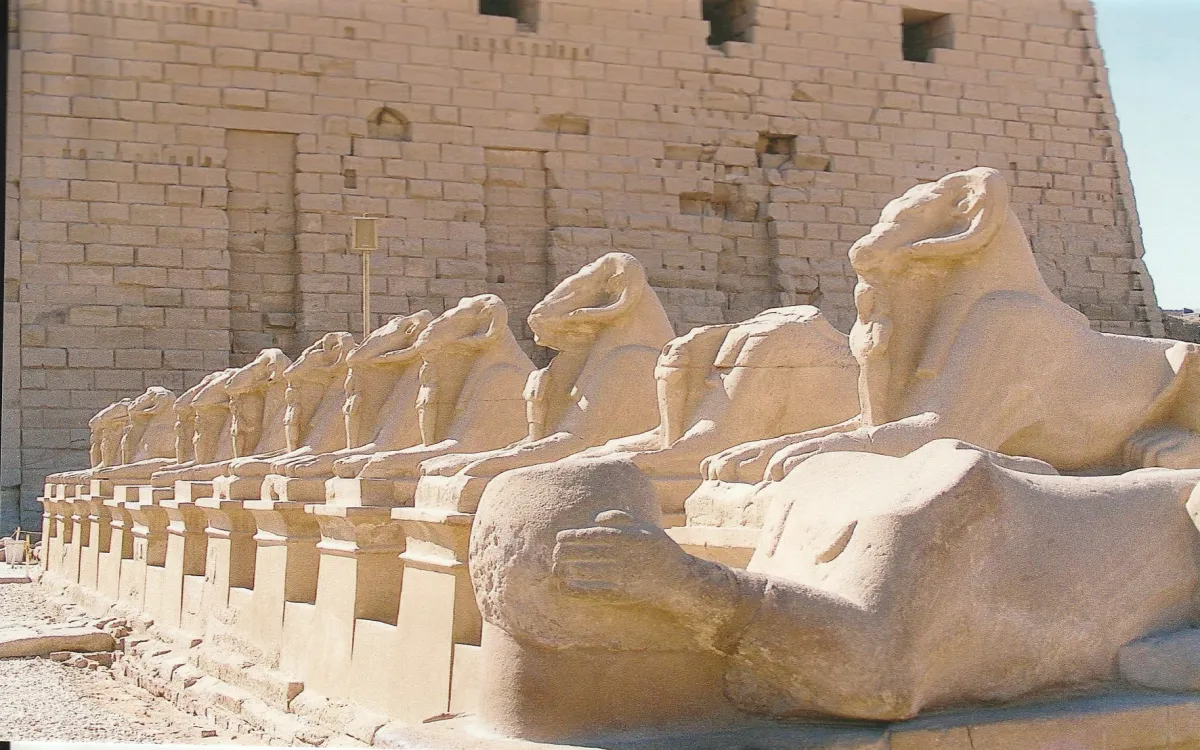
KARNAK TEMPLE
We had heard that this would be the grand finale of our trip, and it truly was impressive. The temple is over 3,400 years old. The entrance is guarded by a long row of ram-headed sphinxes.
Our farewell dinner featured beef tenderloin and a Baked Alaska parade. We had seen so much in just 12 days that our heads were spinning. Most of the tour group would be heading home, but we and three other couples would continue to Jordan for six more days. That evening, we relaxed in the quiet safety of the Marriott Gardens with those three couples, wondering what exciting adventures awaited us in Jordan.
2010 - JORDAN
After the intense heat of Egypt, the cooler weather in Jordan was refreshing; we even wore jackets. A bus ride through the city of Amman took us past several historical sites. Most interesting was the Temple of Hercules overlooking the city. Tradition says this is the area where Uriah was killed (II Samuel 11:14).
From Amman, it was all downhill to the Dead Sea, descending from 1,375 feet above sea level to 1,200 feet below sea level. And it was hot! We decided to try swimming in the Dead Sea again. My first experience several years earlier had been a disaster after my head went under the salty brine. The Dead Sea is about 30% salt.
The walk to the water was across scorching hot sand, and the bottom of the sea was very rocky. I was extremely cautious as we waded out to knee-deep water. When I sat down, my feet immediately floated up, and I couldn’t force them back down, so I couldn’t stand up again. Finally, I placed my hands on the bottom; thankfully, the water was shallow enough for me to push myself upright. That was enough of the Dead Sea for me; you truly have to experience it to believe it.
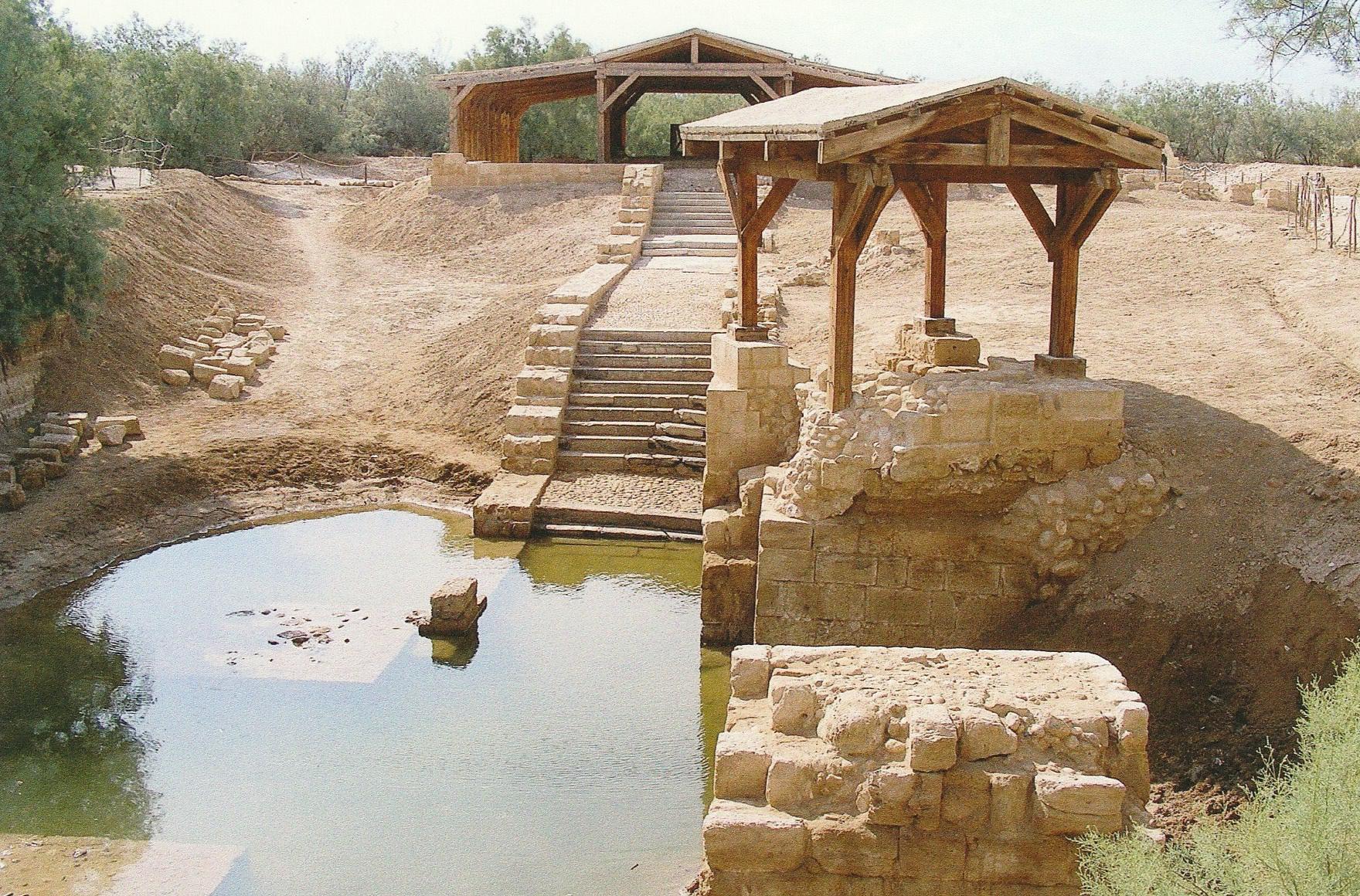
It was only a 20-minute drive to the place where Jesus was baptized. Yes, He was baptized on the Jordan side of the river. We had a long walk to the river past three churches, including a beautiful gold-and-white Greek Orthodox church. At the “actual” site, marble steps led down into the water where John baptized Jesus.
That evening was a hosted dinner. We were greeted by a mother and her daughters, both in their 20s. They shared about their life and their school. Interesting facts: premarital sex is rare (not worth the penalties), and the penalty for rape and premeditated murder is hanging. Drinking is not allowed by Muslims, so DWI is rare. The mother brought in a big pot that was covered. She took the cover off, put a large tray on top, then inverted the whole thing. A delicious mix of rice, chicken, and vegetables. Hot mint tea and baklava. Later, our tour leader explained that the girls’ father lives upstairs with his second wife. The girls and their mother live downstairs, and he supports them all. A typical arrangement.
We drove by Jaresh, where Jacob wrestled with an angel. Now, a few columns rising from the ruins of a temple indicate the place.
HIPPODROME
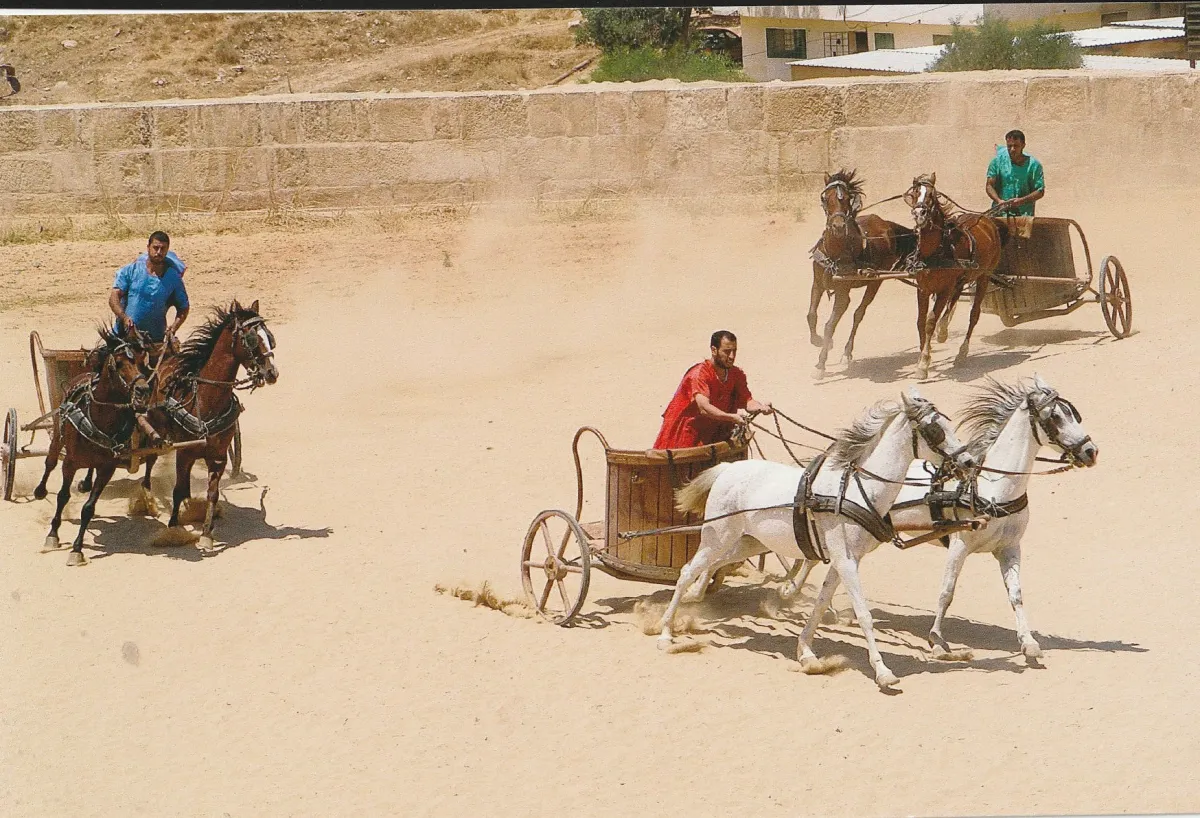
A real chariot race! We felt as though we were watching Ben-Hur! The horses came tearing around the course at full speed with their manes flying. My little camera even captured a great action shot.
We then traveled along the King’s Highway, considered the oldest highway in the world. It stretches from the Gulf of Aqaba through Jordan all the way to Lebanon. Moses once asked permission to travel on it, but the Edomites denied his request.
“Let us pass, I pray thee, through thy country: we will not pass through the fields, or through the vineyards, neither will we drink of the water of the wells: we will go by the king's highway, we will not turn to the right hand nor to the left until we have passed thy borders.” Numbers 20:17 The Edomites’ refusal and threat of war forced the Israelites to take a much longer route to avoid the King’s Highway.
MT. NEBO
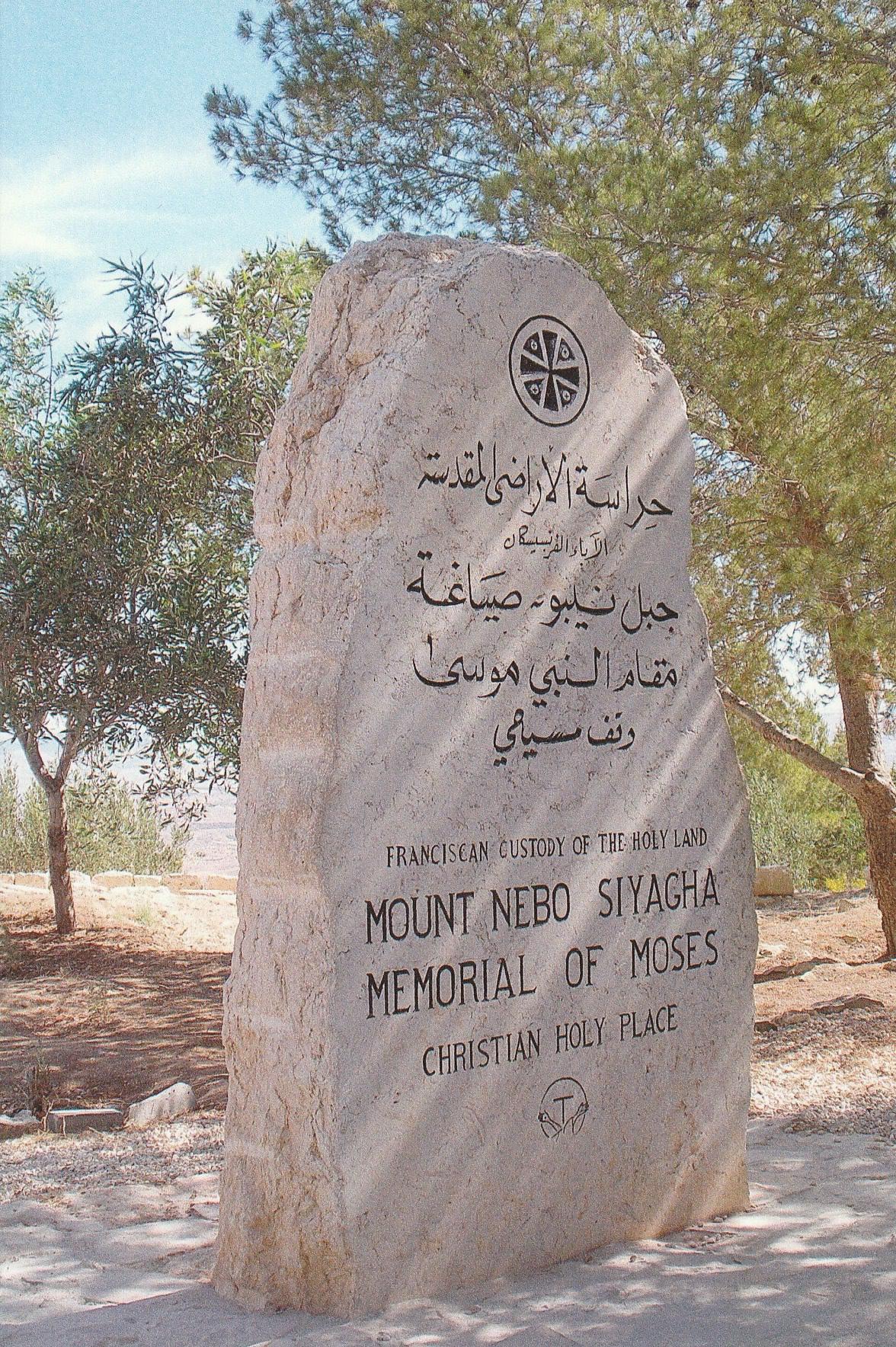
We went to the top of Mt. Nebo, where Moses looked out over the Promised Land. He was never allowed to enter it. Instead, he died and was buried on Mt. Nebo. There is a monument there inscribed: “Memorial of Moses.” (Numbers 27:12)
So we stood where Moses once stood and looked out over the vast plains of the Promised Land. It was a very clear day, and we could see for miles, northward across the plains and westward toward the hills. Faintly in the distance, we could even make out Jericho and Jerusalem. It was a thrilling experience.
Finally, we arrived at Wadi Musa, which means “Valley of Moses.” Aaron, the brother of Moses, is believed to be buried here. His tomb was barely visible high on the mountainside. And here also was Petra. We were anxious to finally see and experience this famous place.
We had been upgraded to the Mövenpick Hotel, a top-rated hotel located right at the gate and entrance to Petra. Several of us crowded into one elevator packed tightly together, and it stalled! There was no alarm button and no phone. We pounded and banged on the door until someone finally heard us and managed to open it.
The bathroom in our room was stocked with soaps and lotions made from Dead Sea minerals, mineral mud soap bars, and genuine Dead Sea salts.
PETRA
One of the Seven Wonders of the Modern World.
Petra is about 9,000 years old. Earthquakes devastated the city and nearly ended life there. Eventually, it was abandoned and became known as “The Lost City.” In 1812, a Swiss explorer rediscovered Petra and found 850 tombs carved into the rock walls. Since then, it has become one of the world’s most popular tourist destinations. The movie Indiana Jones and the Last Crusade was filmed here.
Petra was a flourishing trade center in biblical times. It is even speculated that the Three Wise Men may have passed through here to purchase gold, frankincense, and myrrh.
Just outside the entrance is “Moses Spring,” a freshwater spring that is still flowing today and is channeled to provide water throughout Petra. It is traditionally described as the place where Moses struck the rock and water sprang forth. (Numbers 20:10–11)
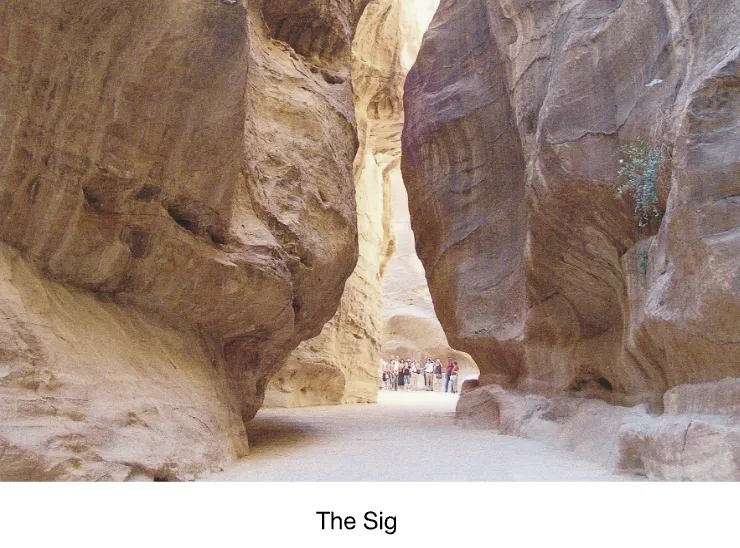
Camels carried us to the entrance of the Siq. From there, we walked on 2,000-year-old stones through the magnificent beauty of the ancient Siq. It is a dim, narrow gorge, in some places no more than three feet wide. The towering walls enclosing the Siq rise between 300 and 600 feet high.
In some places, water cascaded down the rocks, and small bits of greenery poked out from the stone walls. This passage once served as the grand caravan entrance to Petra. We were told that the Wise Men may have traveled through Petra on their journey to Bethlehem and may even have purchased treasures here to bring to the baby Jesus.
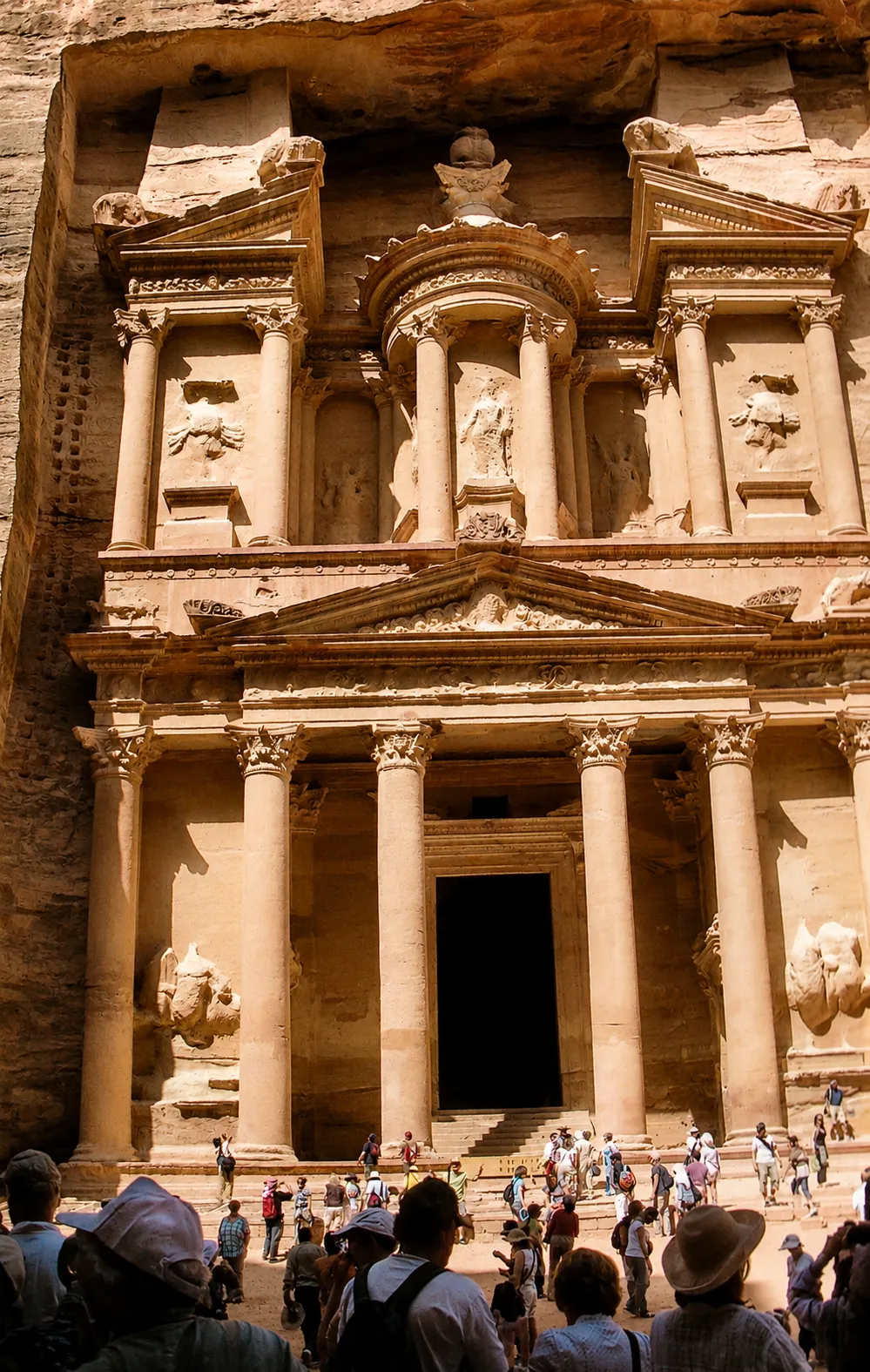
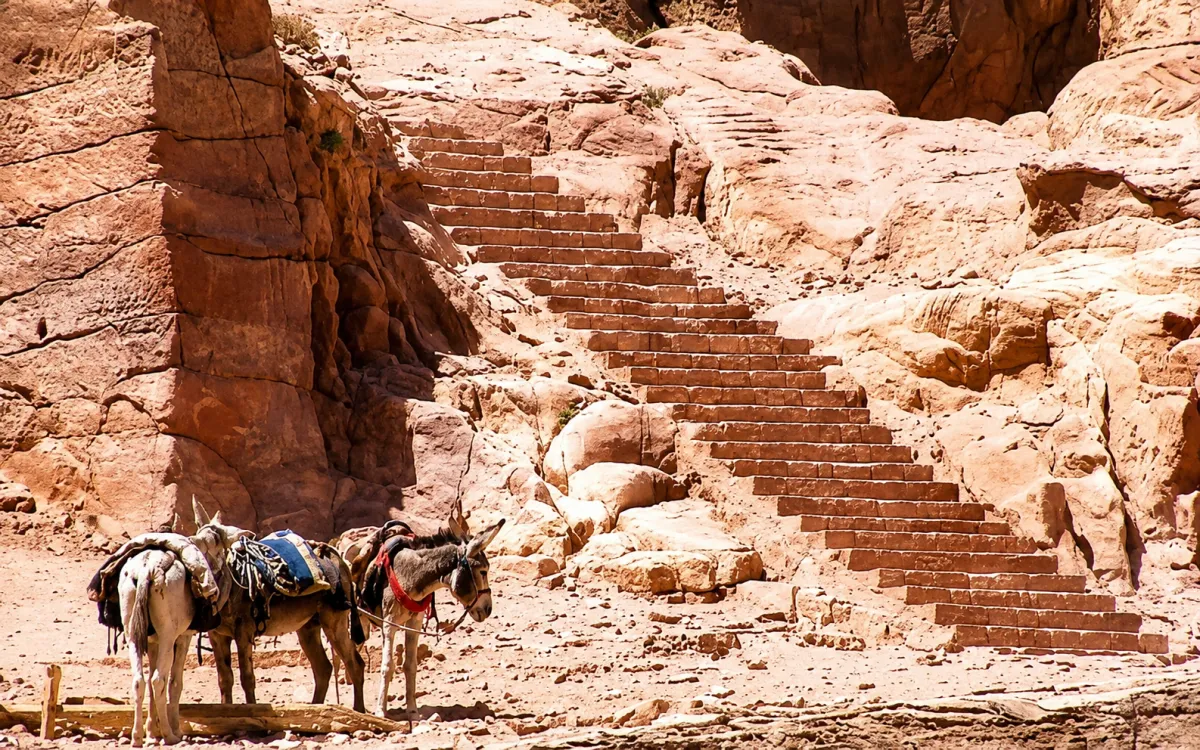
We strolled through Petra at a leisurely pace, admiring the many caves, dwellings, and stairways carved out of the rock. Along the way, children were selling postcards and jewelry. We bought a small rock that had been chipped from the rock walls. Camels were also available for rides. We met a woman selling jewelry and copies of her book, Married to a Bedouin. She had originally come to Petra as a backpacker, fallen in love, and married a Bedouin man. She ended up living in a rock cave and raising their children there.
After a very hot 3-mile walk, we came to the end of the canyon and an AC restaurant! What a welcome respite. A nourishing meal restored our energy (at least some of it…).
Then our group divided up into those who wanted to hike up the mountain to see a monastery. And those who didn’t. Al opted for the hike, and I chose a donkey ride back to the Treasury.
So there I sat on the steps of that famous building, waiting for my husband. Eventually, he returned, and together we walked back through the Siq, uphill and very hot. At last, we reached the horses, and a ride was included with our entrance ticket. What a pleasure it was to ride that final half mile! And just outside the hotel, there was an ice cream vendor waiting for us.
WADI RUM
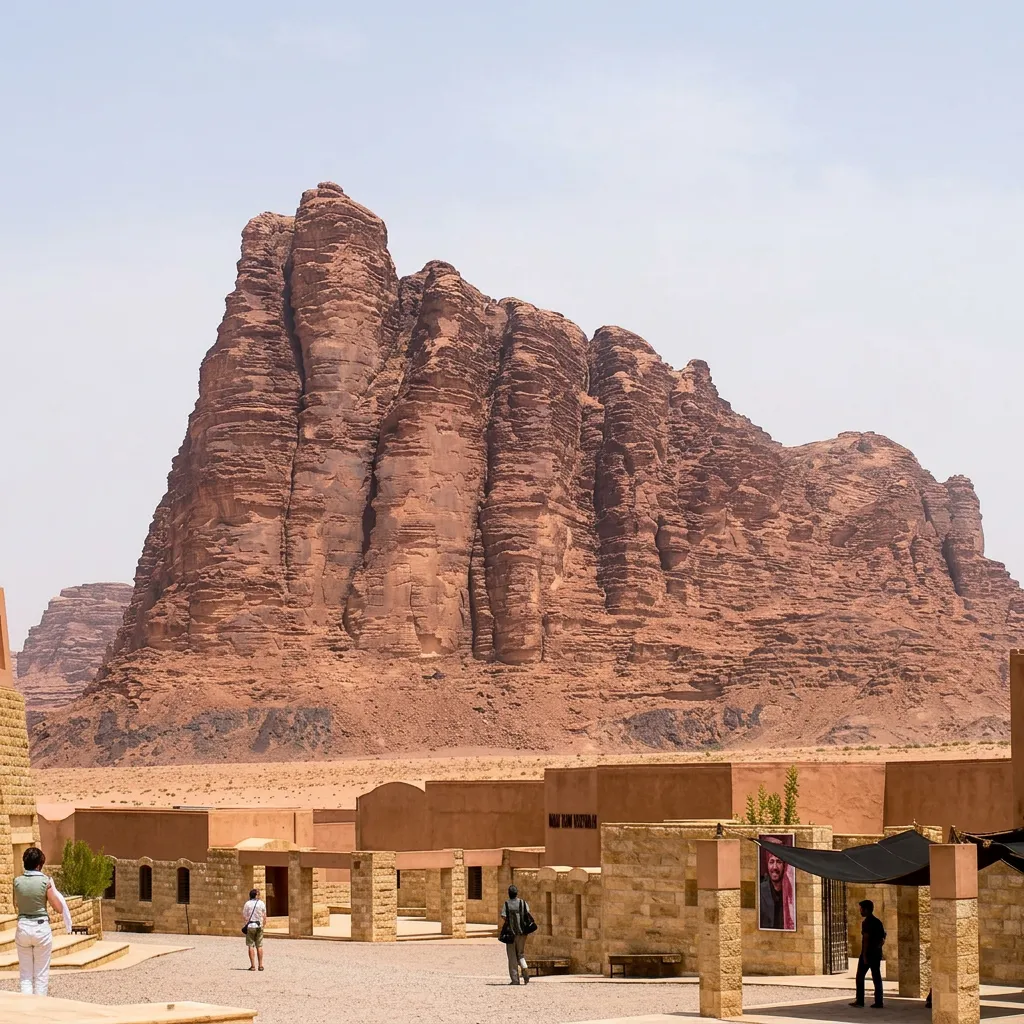
We drove an hour and a half south through the desert. The scenery along the way included Bedouins, tents, sheep, camels, and endless stretches of sand. At Wadi Rum, we saw the Seven Pillars of Wisdom dunes, named in honor of Lawrence of Arabia, whose autobiographical book carries the same title.
At the tourist center, we were loaded into 4-wheel drive vehicles. We sat in the open back with a canopy over us but no protection from the wind and sand. The tires were deflated to drive through deep sand. We stopped to see a picture, carved on a rock, of Lawrence of Arabia, their hero, and King Abdullah.
We also had the opportunity to climb a dune. Those who attempted it quickly discovered how difficult it is to climb through deep sand! They kept sliding back down the hill. Al decided to give it a try, while I stayed behind.
Then we headed back to the visitor center. The roads were rough, the driving was fast (a little too fast for those of us riding in the open back), and the wind-driven sand blew straight into our faces. By the end of the ride, I discovered that my water bottle had not been properly closed, and my clothes were soaked. (Actually, it felt pretty good.) Al’s shoes were also falling apart; climbing the dune had completely done them in. The sole of one shoe was flapping loose. Back on the bus, he pulled out his ever-handy duct tape and patched them up. What an adventure to end our trip.
2011 - NORWAY - WINTER
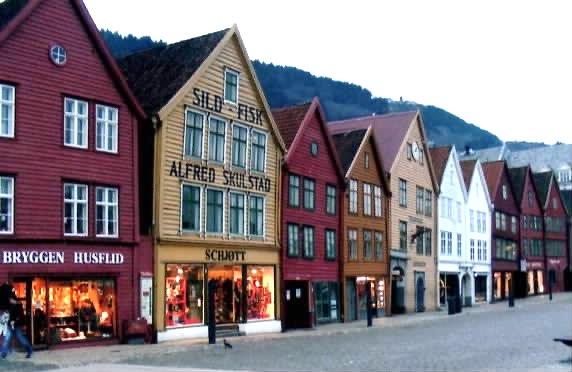
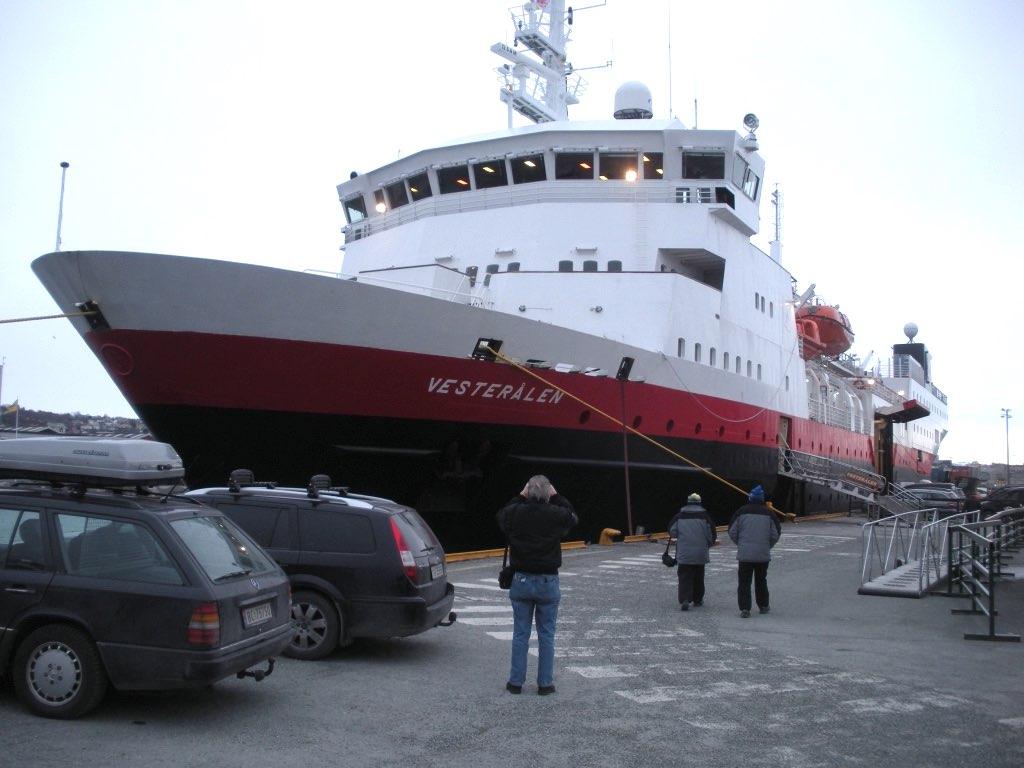
Norway in the winter? Friends thought we were crazy. We had done the Hurtigruten coastal cruise in the summer. We thought it would be fun and different to do it in the winter.
We flew to Bergen and boarded one of Norway’s coastal ships, the MS Vesterålen. Since we had taken this cruise before in the summer, we already knew the routine: stopping at 34 ports on the journey north and the same ports again on the return south.
ELUSIVE NORTHERN LIGHTS
This was winter in Norway, with only eight hours of daylight. The scenery was stunning, with twinkling village lights glowing in shades of blue against snowy landscapes and icy mountain peaks. One of the main reasons we took this trip was to see the Northern Lights, but the skies always seemed to be overcast. Then one evening, the captain announced that the Northern Lights might be visible because the skies were beginning to clear. We quickly bundled up in warm jackets, mittens, and boots and headed up to an open deck. It was very dark, and the deck was icy and slippery. Holding tightly to railings and other firm surfaces, we carefully made our way to a spot with a clear view of the sky. It was cold and windy, and after about 20 minutes, we finally gave up. Slowly and cautiously, we made our way back across the frozen deck to the warmth inside the ship.
TROMSO
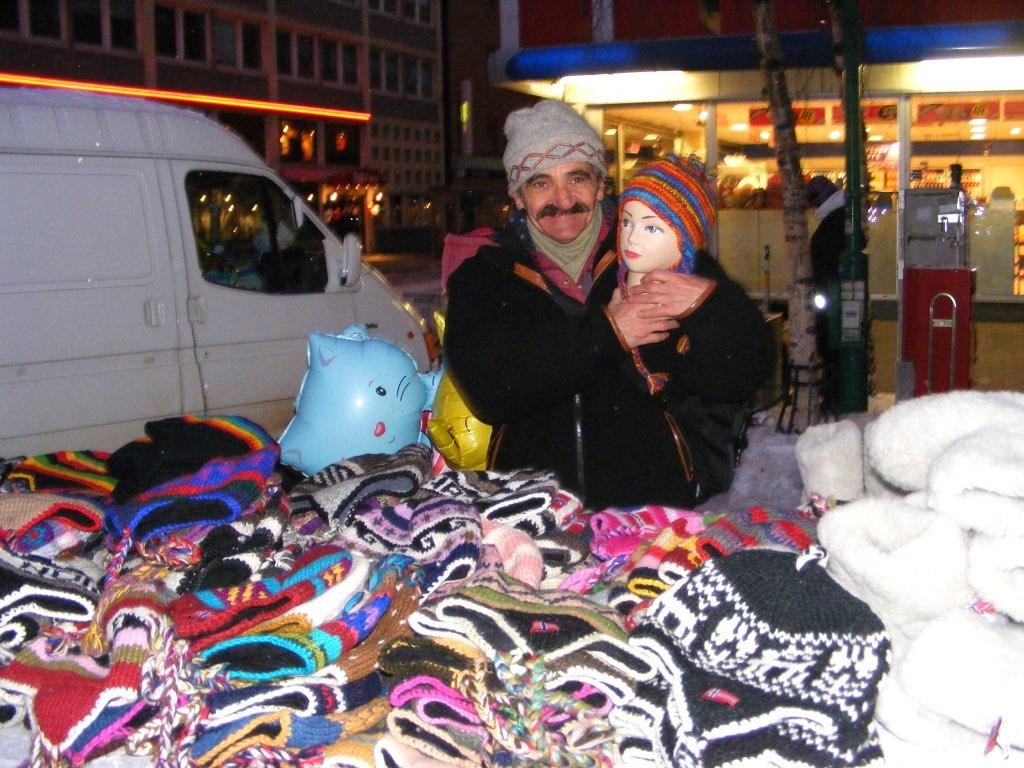
Sometimes the ship was in a port for a couple of hours, and we had time for a little walk. In Tromso, we bundled up in all the layers we had and ventured out. The streets were icy and snow-covered, and at 2:30 it was already getting dark. A few minutes’ walk from the ship, we found a small outdoor market set up for tourists. Dried, smoked meat of all kinds and a table piled with wool hats, slippers, mittens, and sweaters. I picked up a classic Norwegian sweater, curious to see what the price was.
The man told me the price was $70. As I showed the sweater to my husband, the man said, “Getting late, last ship of the day, you can have it for $35! “Sold. “ An unbelievable bargain. To this day, that sweater is one of my favorites and reminds me of that unexpected bargain on a dark, snowy day in Tromso.
ARCTIC CIRCLE
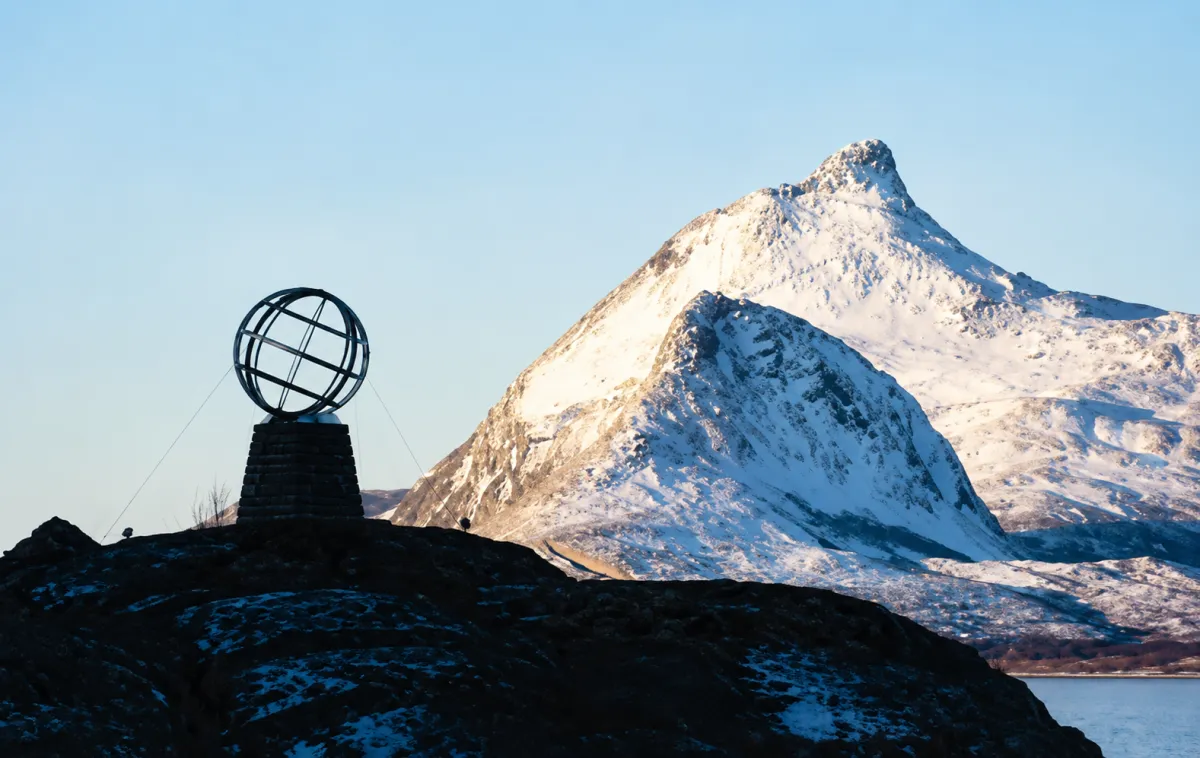
66 degrees, 33 minutes north. When we crossed the Arctic Circle, the traditional King Neptune ceremony was held. A crewman dressed as King Neptune dropped ice cubes down our necks and then presented us with certificates.
HONNINGSVAG
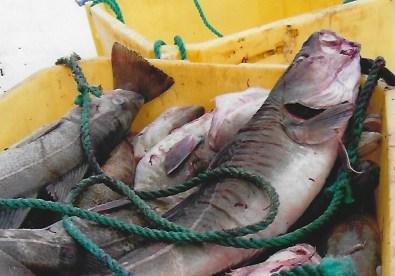
We docked in Honningsvåg and joined a minibus excursion to Skarsvåg, a tiny fishing village with only 65 residents. It was desolate, snow-covered, and very cold. We were greeted by Heidi, who had been born there. Her youngest child, age 12, was one of only four students in the local school, which somehow had five teachers. Older students had to stay in Honningsvåg during the week and return home only on weekends. Heidi led us down a snowy street to where her husband was unloading fish. A crane lifted the fish from the boat, and then a forklift transported them into a warehouse where they were cleaned and filleted, ready to be exported around the world. Skarsvåg is considered the northernmost fishing village in the world. Heidi told us they experience “nine months of winter and three months of bad weather!”
KIRKENES
This was the northernmost point of the trip and the place where the ship turned around for the journey south. Here we experienced the most exciting adventure of the trip, a dog sled ride. The buses were waiting for us, the temperature was around 10 degrees, and the snow was crunchy and squeaky beneath our feet.
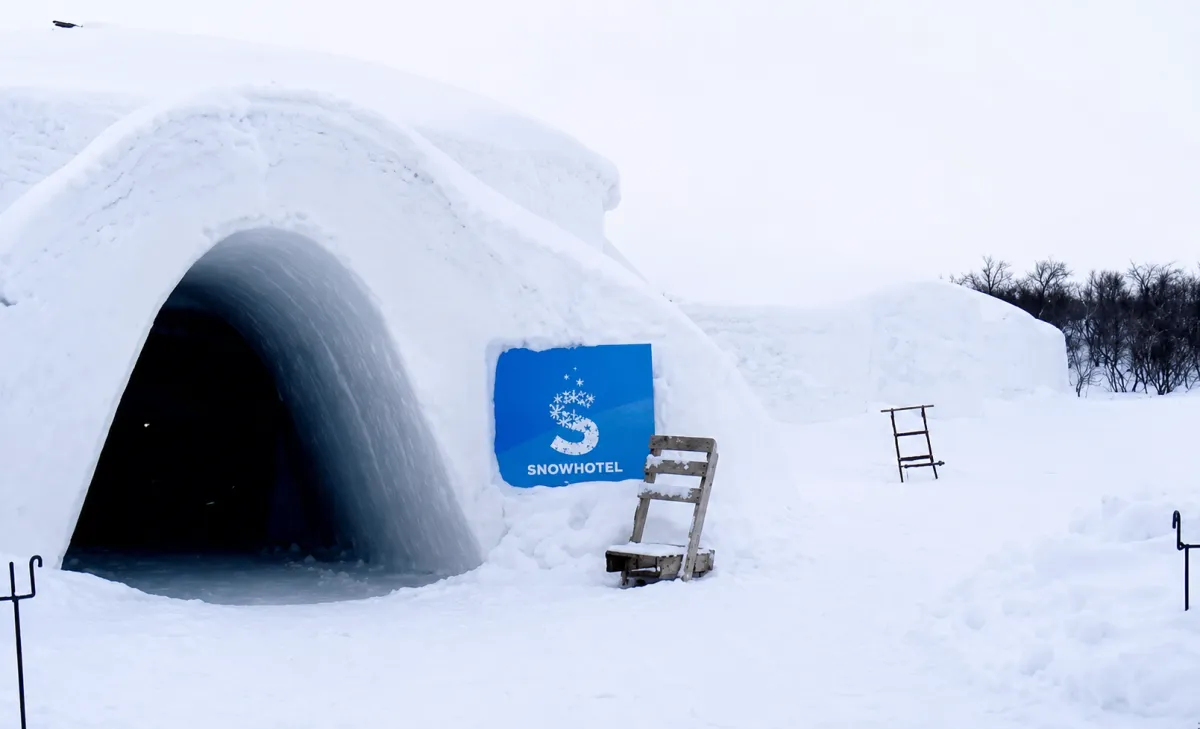
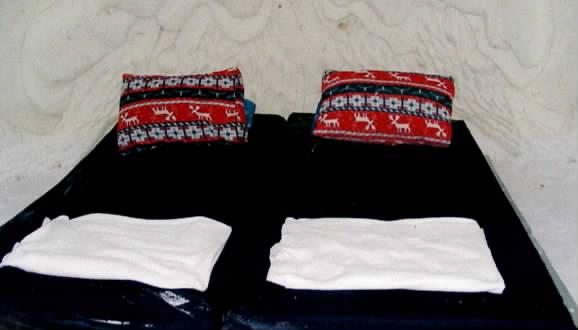
First, we visited the Snow Hotel, built entirely of snow and ice. For a price, you can even spend the night there. The nine bedrooms each featured a solid ice queen-size bed covered with blankets. We wondered, are the blankets heated?
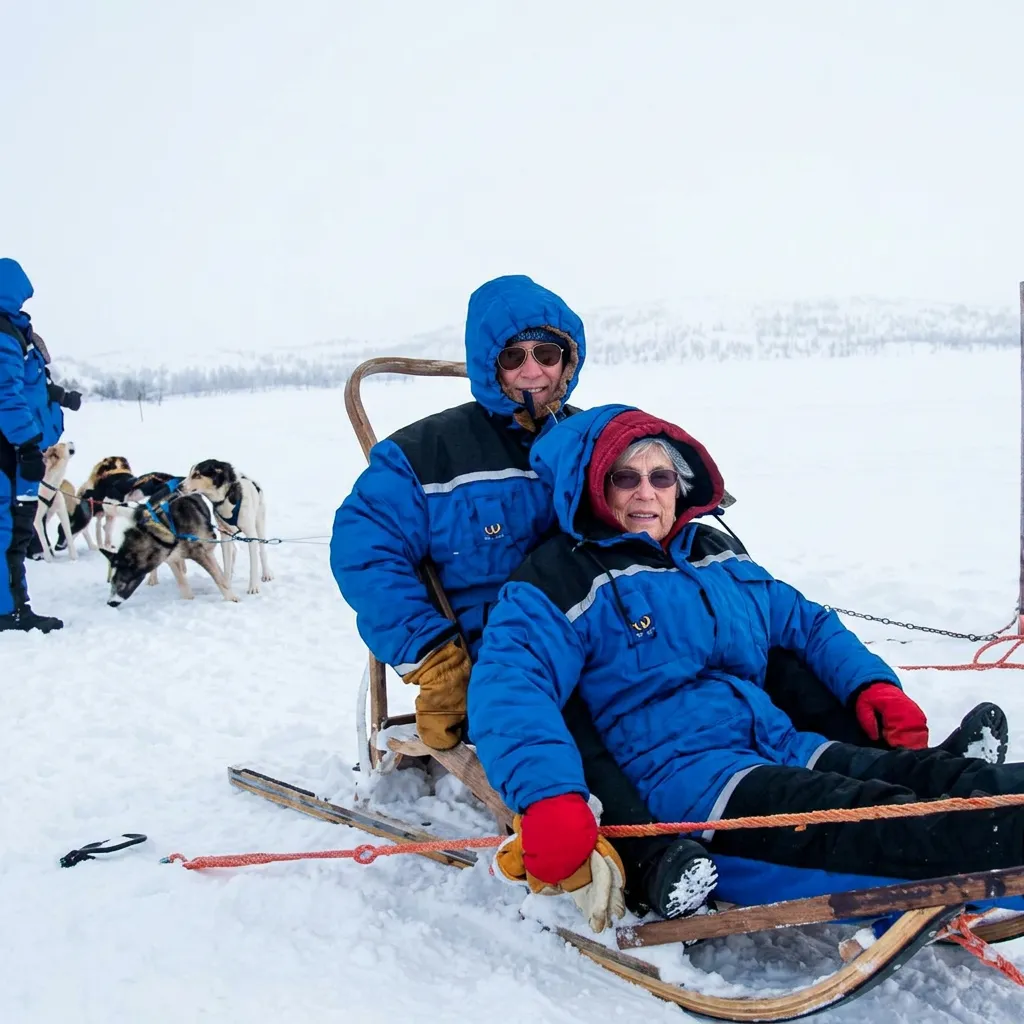
And here was the place for our husky dog sled ride! The dogs were ready for us, jumping and barking excitedly. But first, we were given extra warm clothing to wear over our own clothes: snowmobile suits, heavy wool socks, warm boots, and huge leather mittens. The air was icy cold, and snow was falling. We climbed onto the sled. I sat at the bottom of the sled, while Al sat behind me with his legs tucked safely beside mine. The musher stood behind us, and off we went!
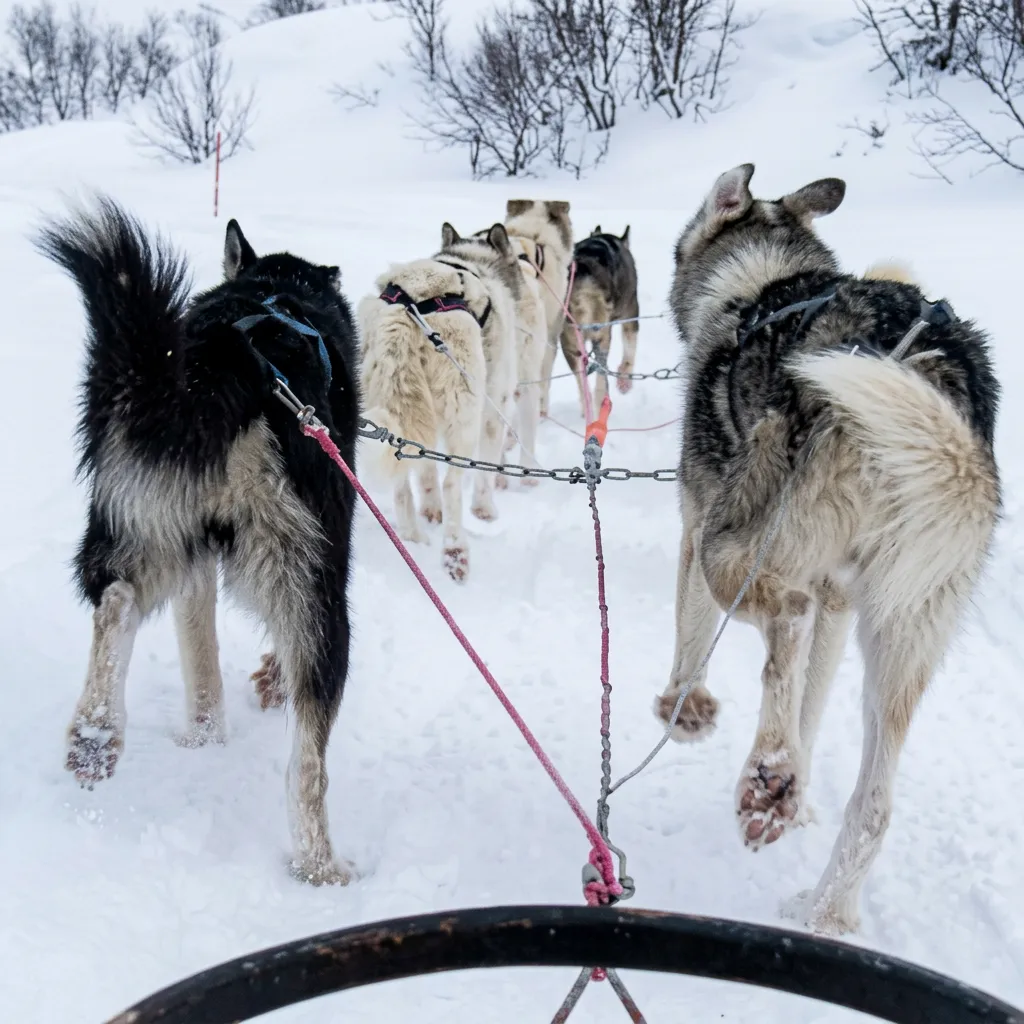
The dogs were thrilled to run. They raced along at a fast trot, barking the entire time. We traveled across a frozen lake and through wooded areas, but most of the ride took us over tundra filled with dips and bumps, and I felt every one of them. I sat directly behind the dogs, which was a perfect place for taking pictures. I used one of the large mittens to shield my face and protect the camera from the cold. Somehow, I managed to capture a wonderful rear-view photo of the dogs doing what they loved most, running and barking. The ride lasted 40 minutes, and we definitely felt we got our money’s worth.
Later, the ship headed south into rough seas. Then came an announcement over the P.A. system: “Northern Lights sighted.” Coats, hats, gloves, boots, and a camera, and we rushed to Deck D. It was dark, icy, snowy, and blasted by gale-force winds. The deck was extremely slippery. (What were we thinking?) We could see a pinkish glow in the southern sky. Was that it? We could see the moon clearly, but still no real glimpse of the elusive Northern Lights.
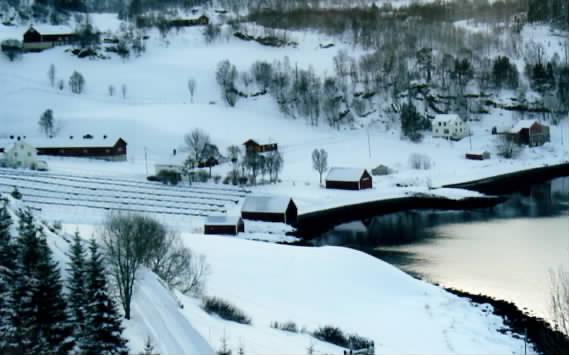
BUS TRIP - Harstad to Trondenes
A beautiful blue-sky day for our bus trip. Harstad is a pretty village draped in pure white snow. Even the roads were snow white. The bus drive was along the fjords with spectacular scenery, brilliant white mountains, dark blue water, little villages, red fisherman’s shacks, and even some reindeer.
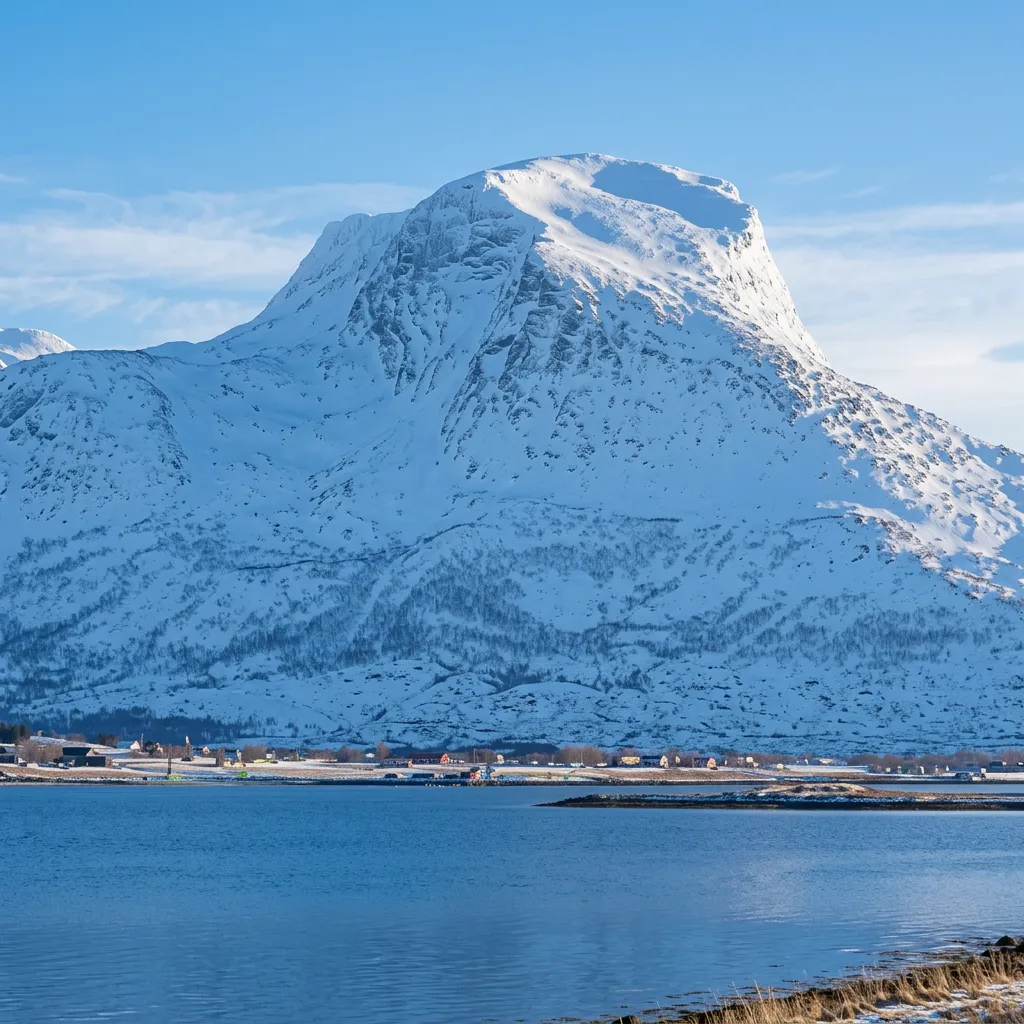
ICY MISHAP
Back on the ship and underway, we went out on the deck to take pictures. It was very slippery, and I said, “If we get through this trip without one of us falling….” We went back inside. We went down the steep stairs. I was hanging onto both railings, but for one second, I lifted my hand, my wet shoes slipped, and down I went! I bumped down 4 or 5 steps on my backside. Al helped me up. I didn’t seem seriously hurt, so we carried on. Later that night, as we prepared for bed, he observed what he described as the biggest black and purple bruise he had ever seen! Almost as colorful as the Northern Lights.
CRUISING
We sailed through beautiful scenery with sun, blue sky, and towering snowy mountains on both sides. We returned to Bergen and stayed overnight in a hotel with the luxury of a large room (compared to the cabin on the ship)
HOMEWARD BOUND
Very early the next morning (3:40), we stood on a deserted street near the hotel, waiting for our airport bus. A group of rowdy boys came weaving toward us, stopped, and pointed to my suitcase. “Can I have that?” I avoided eye contact and mumbled “no”. And they ambled on. We were praying! Thank you, Lord, for protecting us.
Bergen to Frankfort to Dulles to St. Louis. Miles of walking, umpteen escalators, many moving sidewalks, security checks, passport control, and body scans. But what do we remember? The glistening snow on the mountains, the dog sled ride, and a glimpse of the Northern Lights!
2011 - ENGLAND - COTSWOLDS & NARROW BOAT
with Colin & Valerie Cotton
We spent 2 weeks in England with our friends Colin and Valerie Cotton from South Africa. The first week was in the Cotswolds, a picturesque area in central England. We stayed in Clouds Hill Cottage in Blockley, right in the heart of the Cotswolds. The cottage had a wood-burning fireplace and a fully furnished kitchen. We spent our days visiting different areas of this very interesting area.
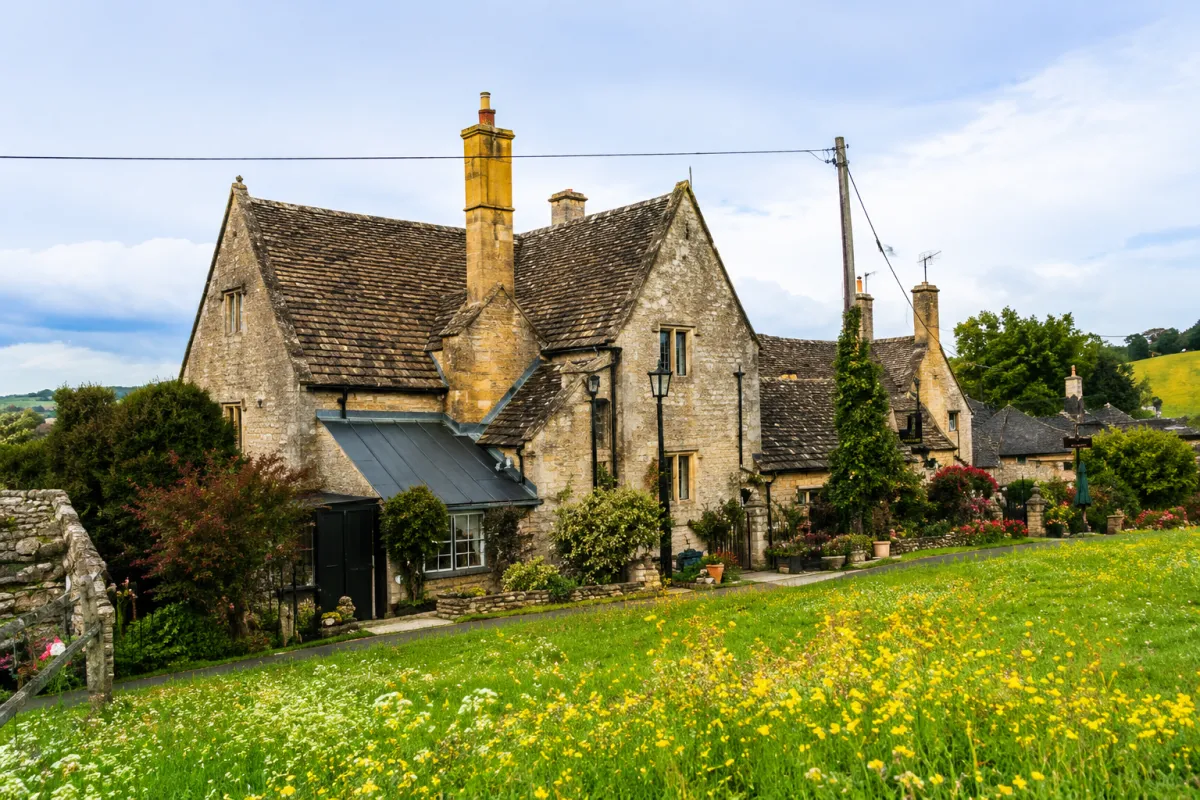
We found Sudely Farms, where we had stayed 13 years ago. We talked to the lady of the house, and she brought out her guest book. There were our names on page 1 - she had just opened the B&B! We remembered it so well. We slept in a room with 3 ft. stone walls, and the house was standing here before Columbus discovered America!
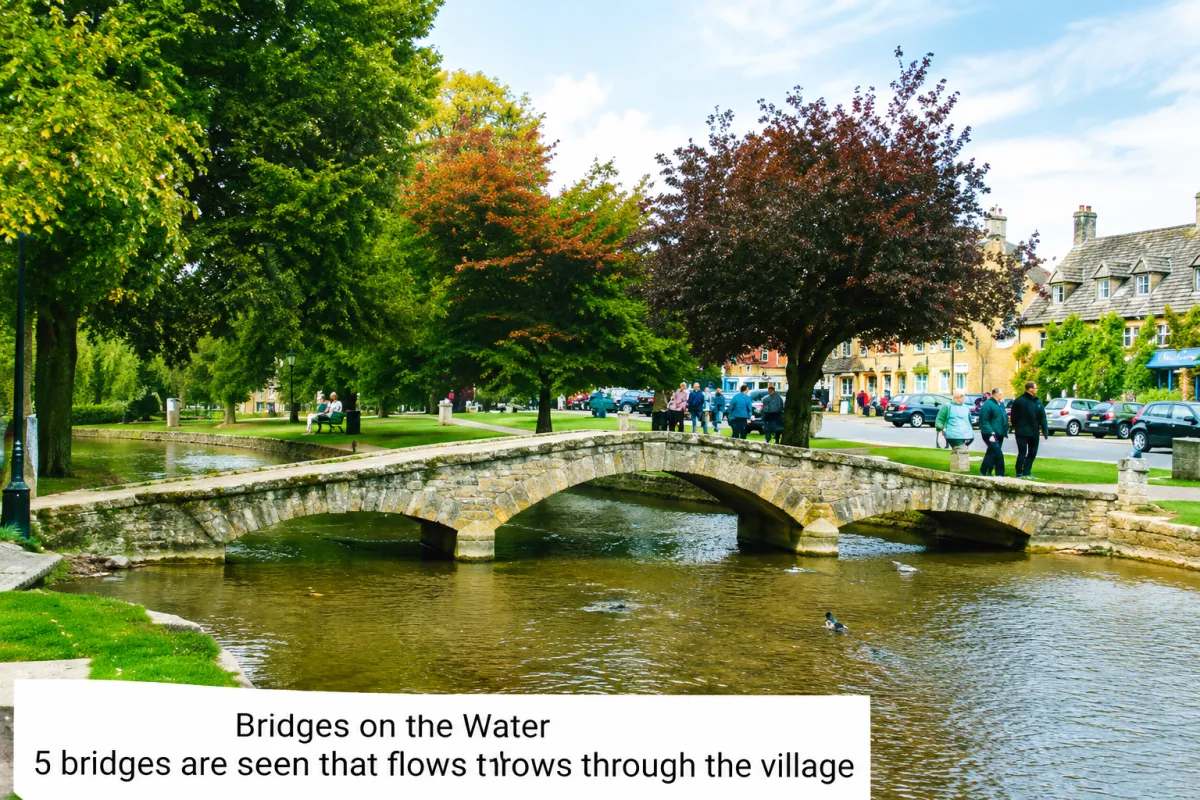
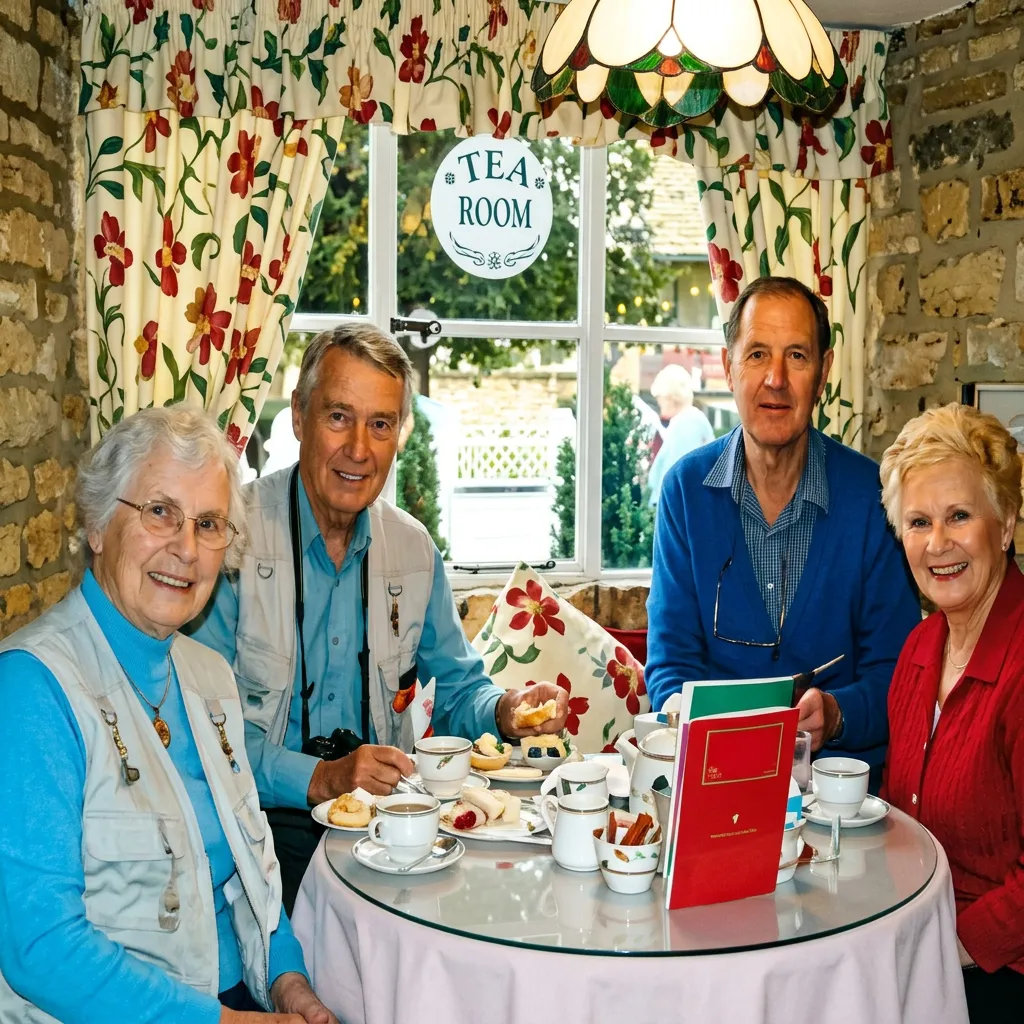
Bourton-on-the-Water is probably the most picturesque village with a stream running through it. 5 little footbridges cross the stream. We strolled the whole length, going back and forth over the bridges. We just took our time, taking pictures of ducks, the stream, bridges, and shops. And of course, stopping for a cream tea.
NARROW BOAT ADVENTURE
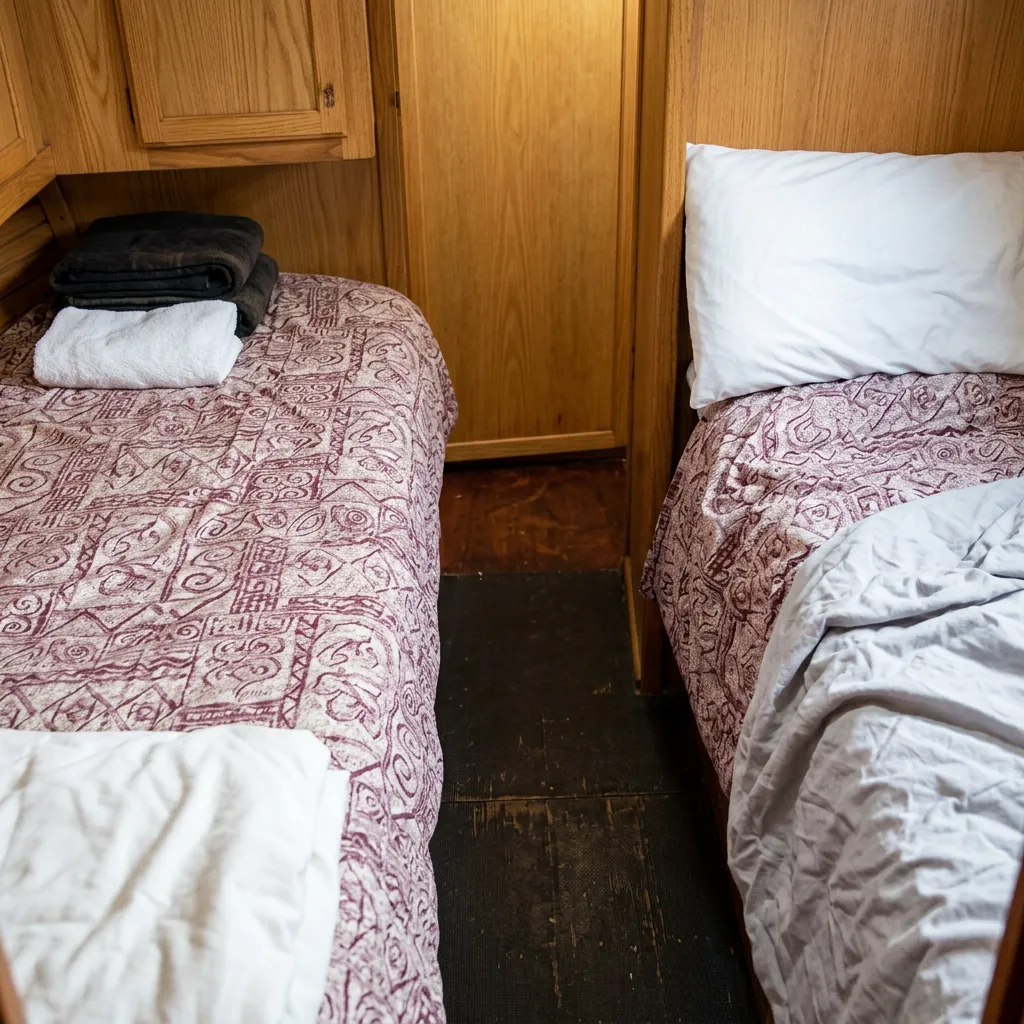
In the 1800s, narrow boats were used for commerce on the narrow canals that laced northern England. Today, those boats are used for leisure. Our friends, Colin and Valerie, had experienced a narrow boat cruise and convinced us to spend a week with them cruising the canals. Our boat was 55 ft. long and only 7 ft. wide. There was a lounge big enough to seat 4 people, a kitchen, a bath, one bedroom, and 2 narrow benches for sleeping.
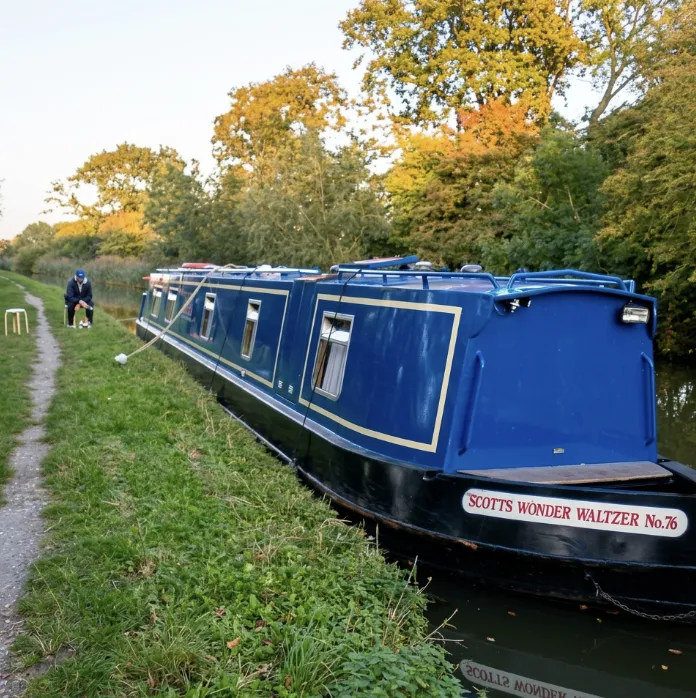
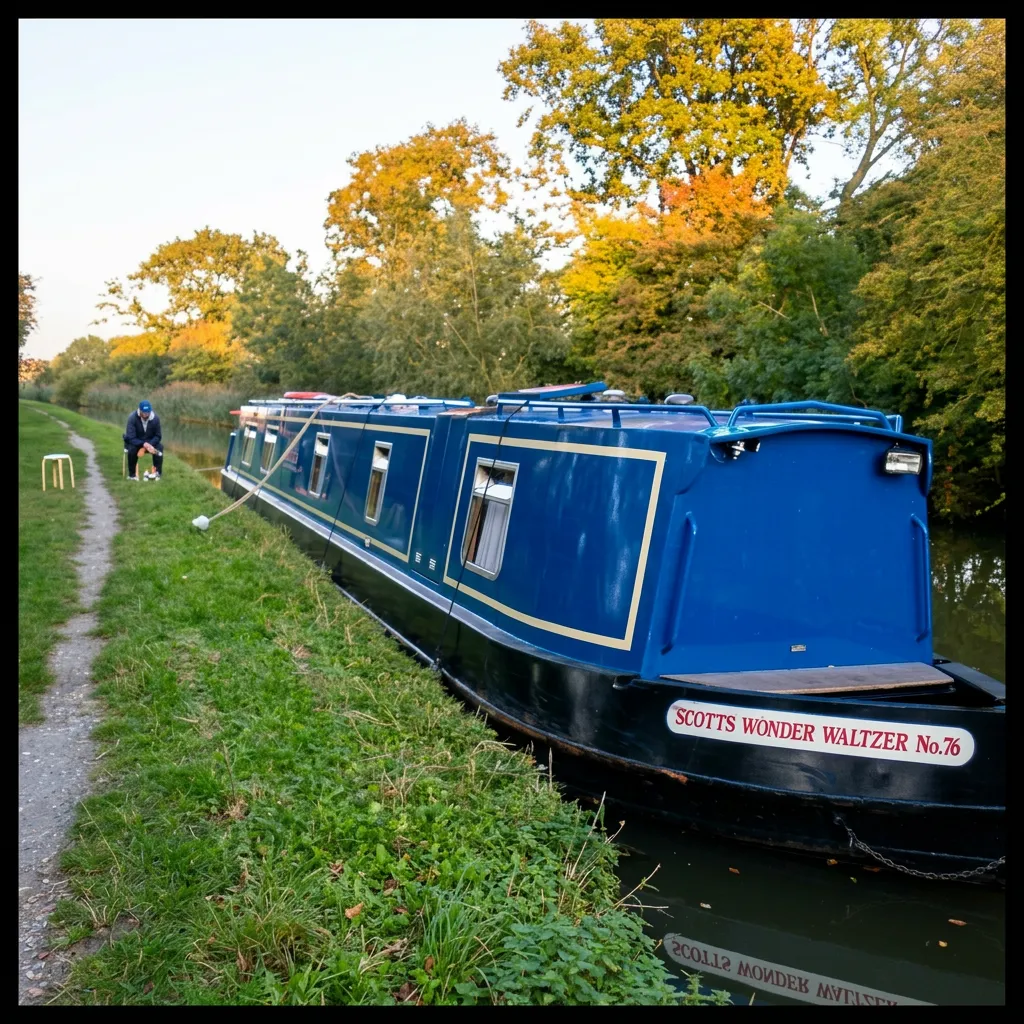
A man came aboard and briefed us for an hour on running the boat. Maximum speed 5 mph. Then we were on our own. A few minutes later, Colin ran us aground. We were up against the grassy side of the canal. Considerable maneuvering, and we were still stuck. Finally, Colin used a long pole to push us into deeper water and free of the weeds and mud. The two men took turns at the helm and gradually got better. Then we got to the Foxton Locks, there were 10 of them. A volunteer was there to help us. We had a big crank in our boat for this purpose.
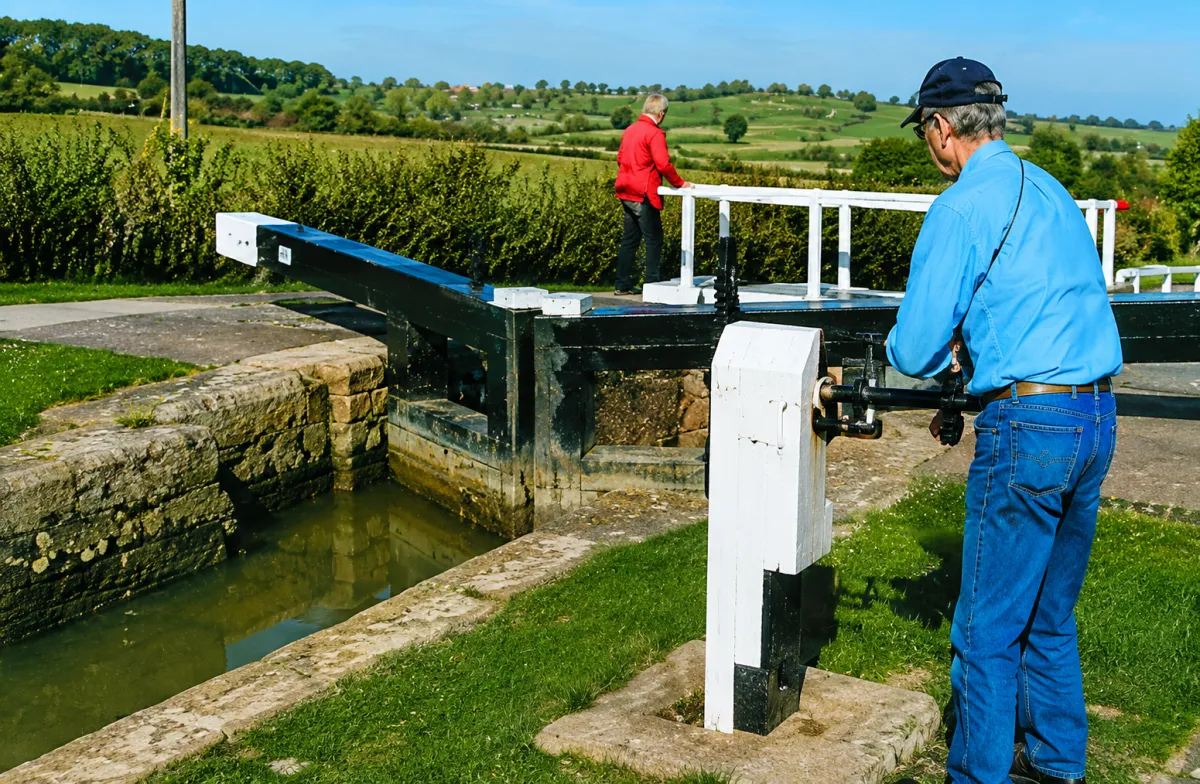
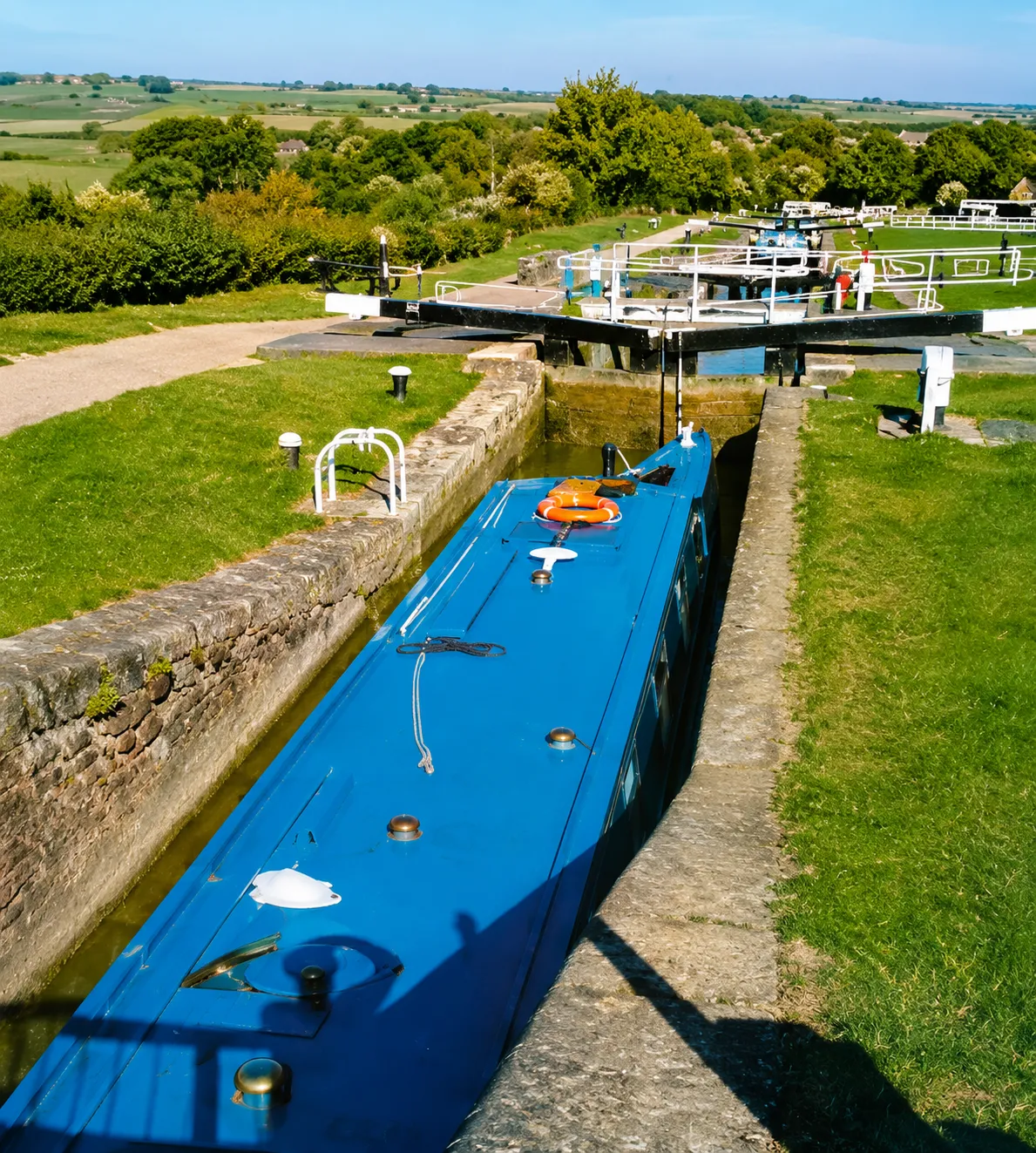
#1 Crank the red lever to let the water in Lock 1
#2. Crank the white lever to let the water out of 2 into the reservoir
#3. When the boat rises to the level of the water in Lock #2, open the gates.
#4. The boat proceeds into Lock #2. Close gates. Repeat 10x. It took 1 hour and 10 min. But it was a nice sunny day, and it was fun to move from one lock to the next.
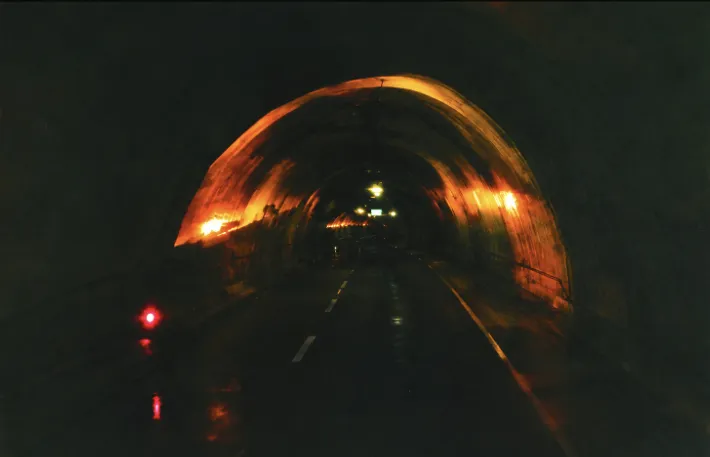
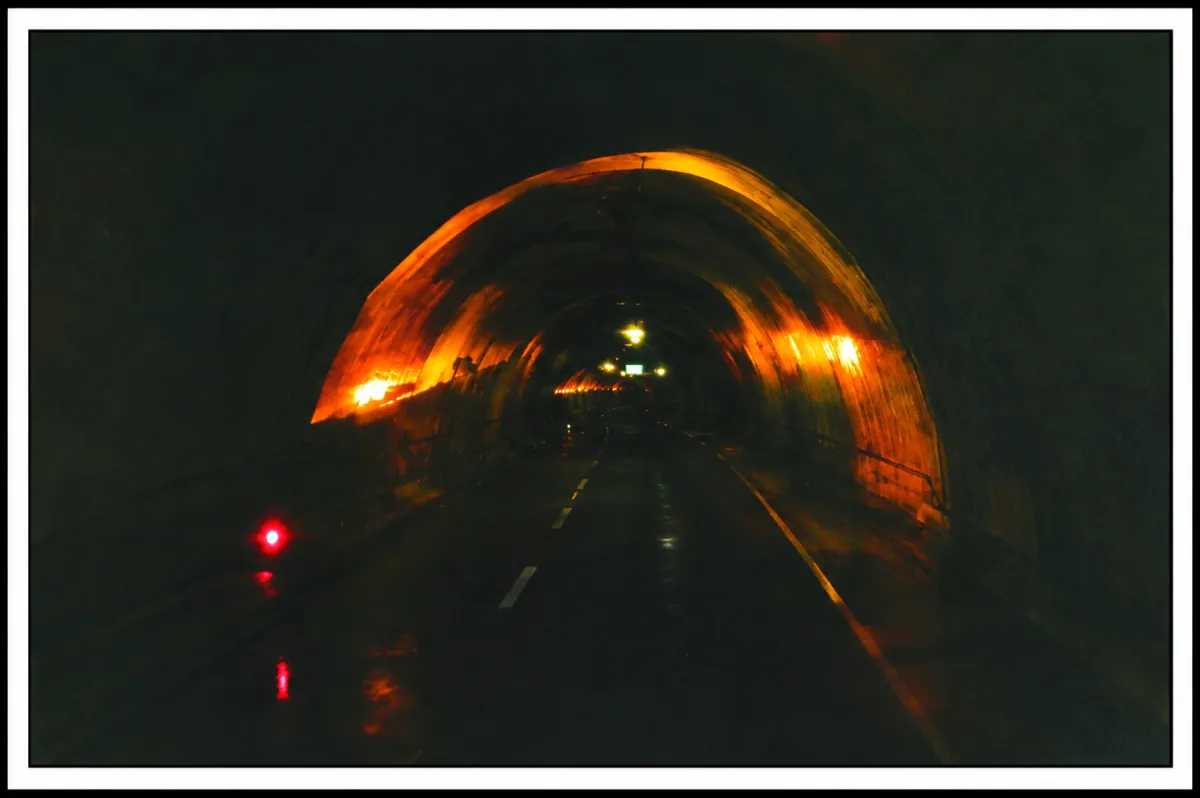
We went under many bridges. Then we entered the long, dark Crick tunnel, and there was nothing to see but the black walls and a circle of light at the end. Steering the boat through the dark tunnel was a challenge. It was difficult to keep the boat centered, and we kept hitting the sides of the tunnel. Crick was the longest tunnel, and there were several more. It took us 45 ” to go through it.
We looked in vain for scenes to photograph besides the many bridges. The most exciting was a cow standing at the river’s edge to get a drink.
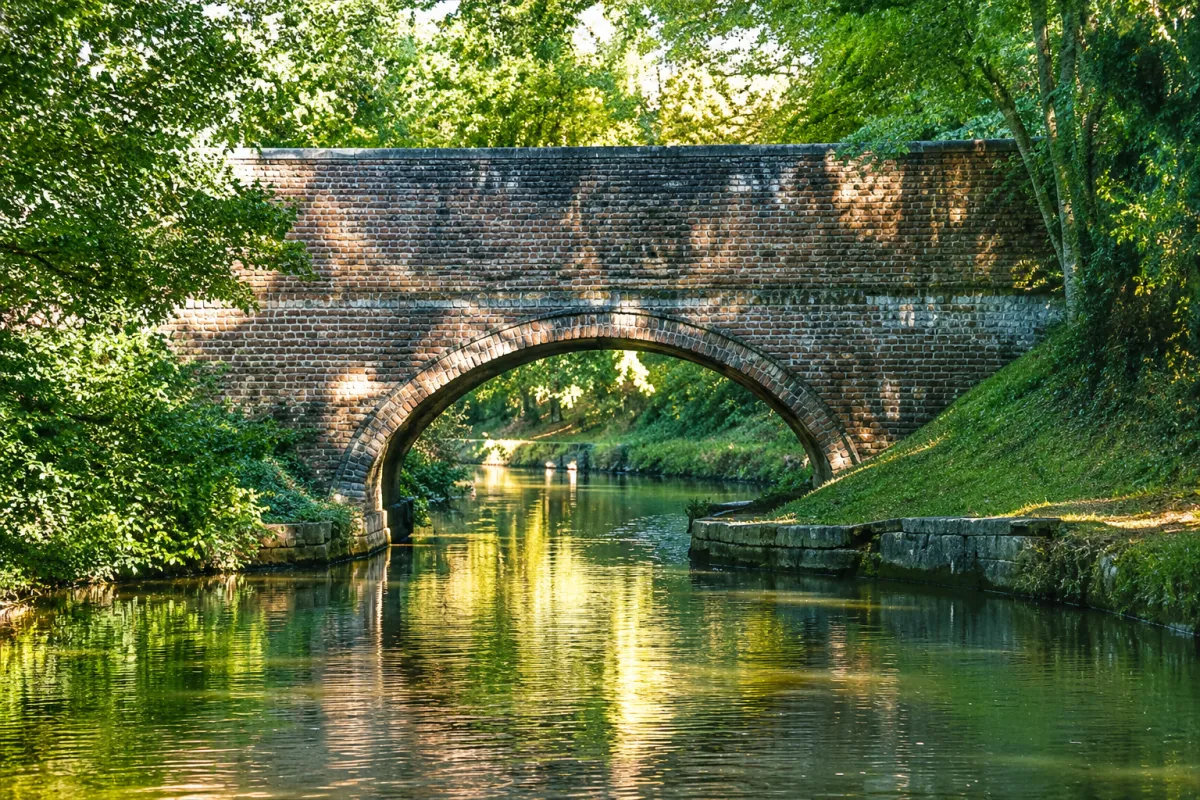
A narrow boat cruise was an interesting experience, but also the most boring trip we have ever taken. In one week, we cruised a total of 54 miles.
2012 - Spain, Portugal (Madeira)
TOLEDO
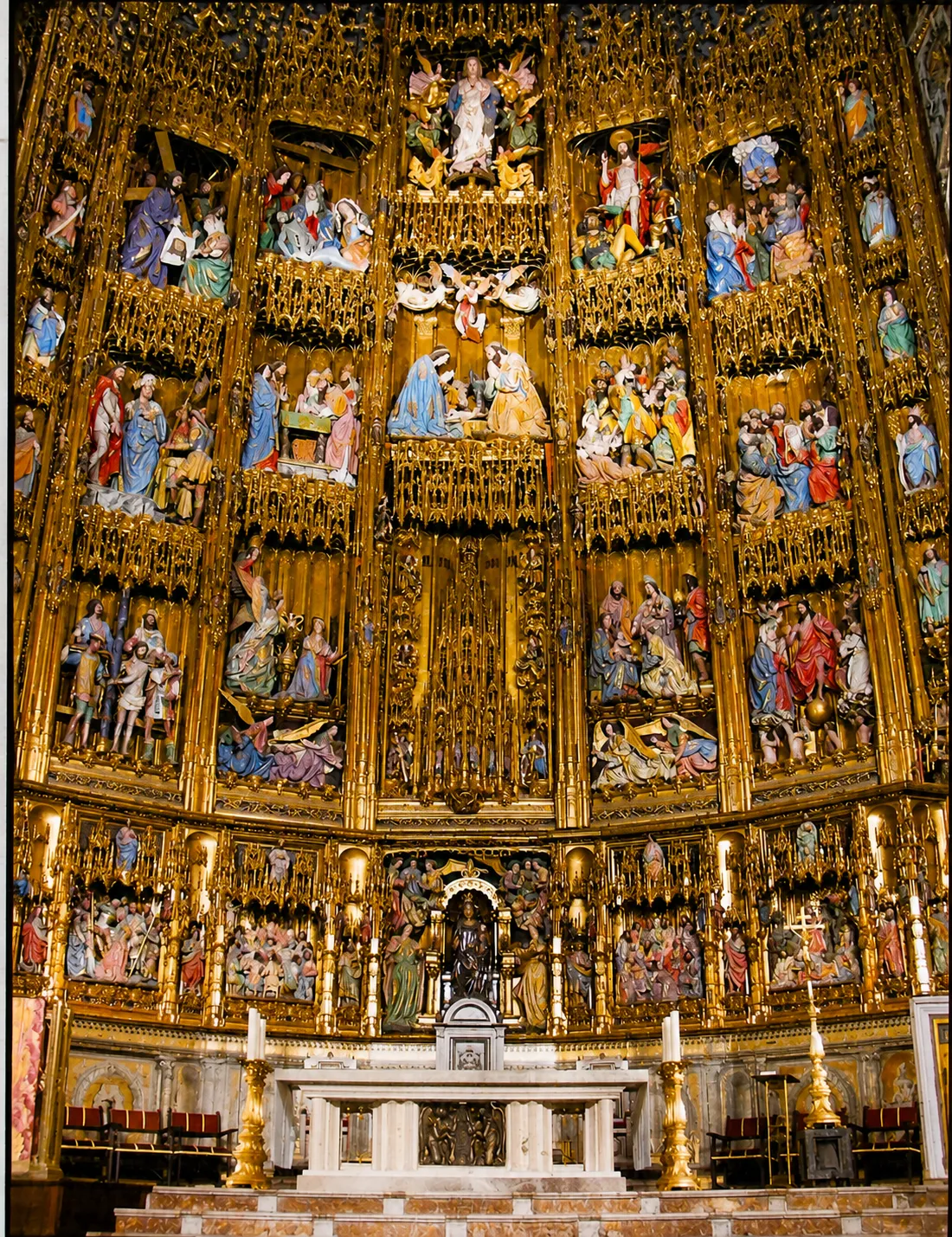
The Gothic cathedral high on a hill features a famous work of art by Greco. The magnificent altarpiece is a wood carving, gilded and painted. It is 5 stories high with life-size figures and summarizes the entire New Testament with Calvary at the top.
SEVILLE
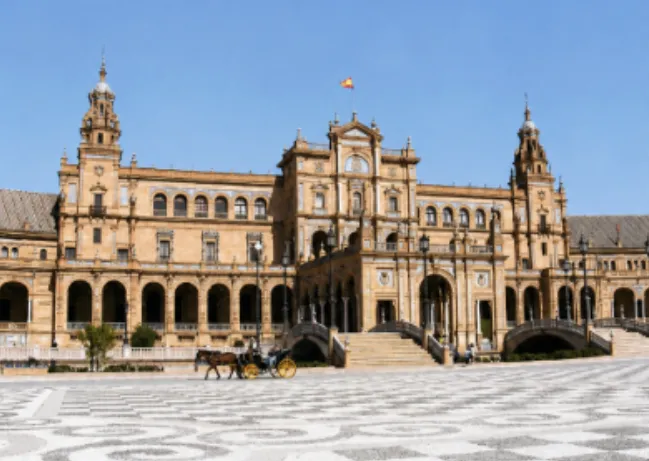
Palace El Española was built around a courtyard with ornate ceramic benches for each county in Spain. There was also a moat with little bridges for the horses and carriages. Beautiful blue and white ceramic tile was used extensively for decoration
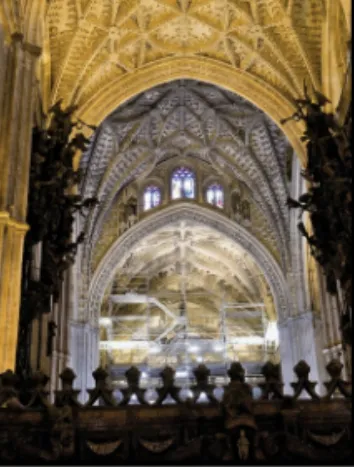
The Seville Cathedral is one of the largest in the world. Construction began in 1402. Five years after it was completed, the dome collapsed, and work started over. The dome again collapsed in 1888 due to an earthquake. It was rebuilt again, and today it is one of the most beautiful cathedrals. The central nave rises to a height of 42 meters and is the longest nave in Spain, lavishly decorated with gold. The altarpiece was the lifetime work of a single craftsman.
LISBON
It has the largest bull ring in Portugal; it holds 10,000 people. The ring is also used for musical concerts, fairs, and exhibitions.
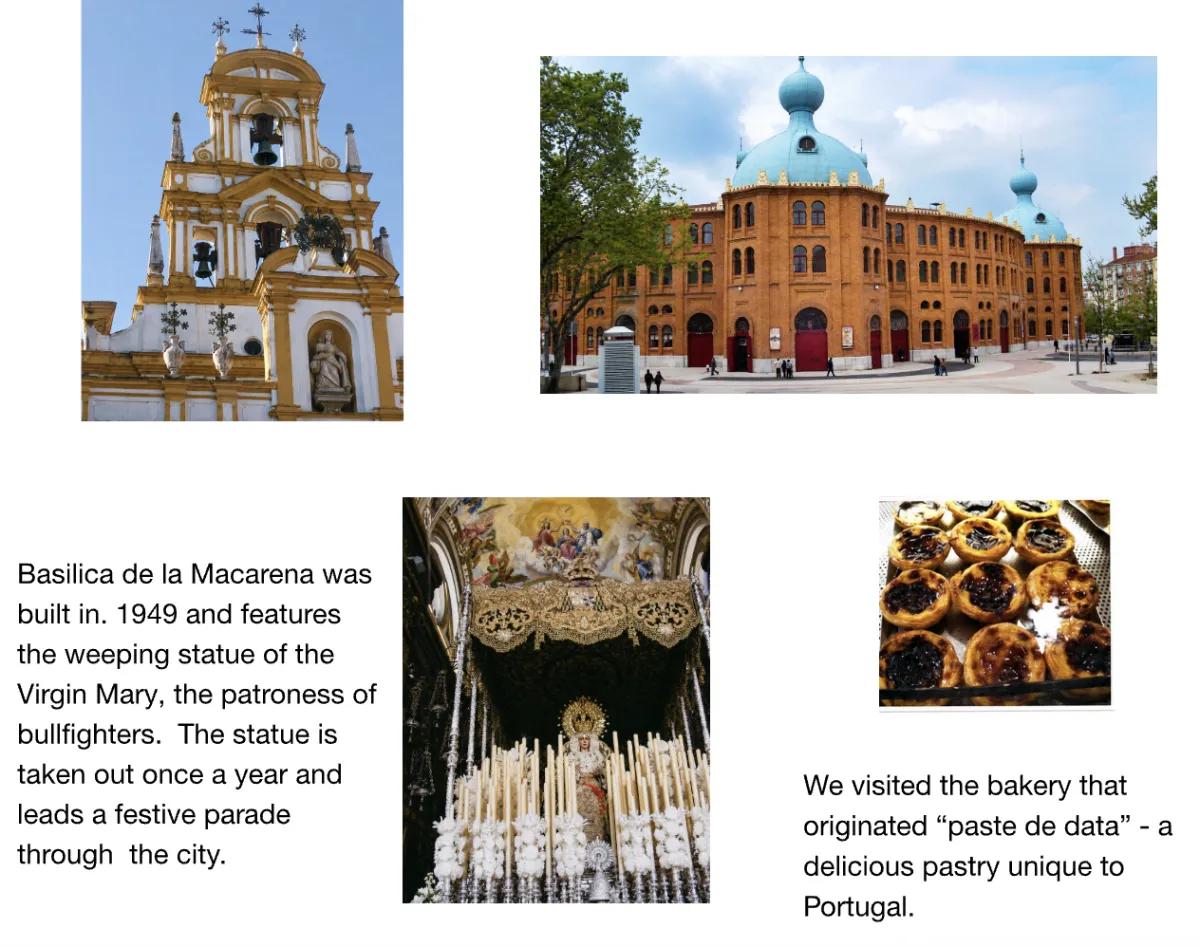
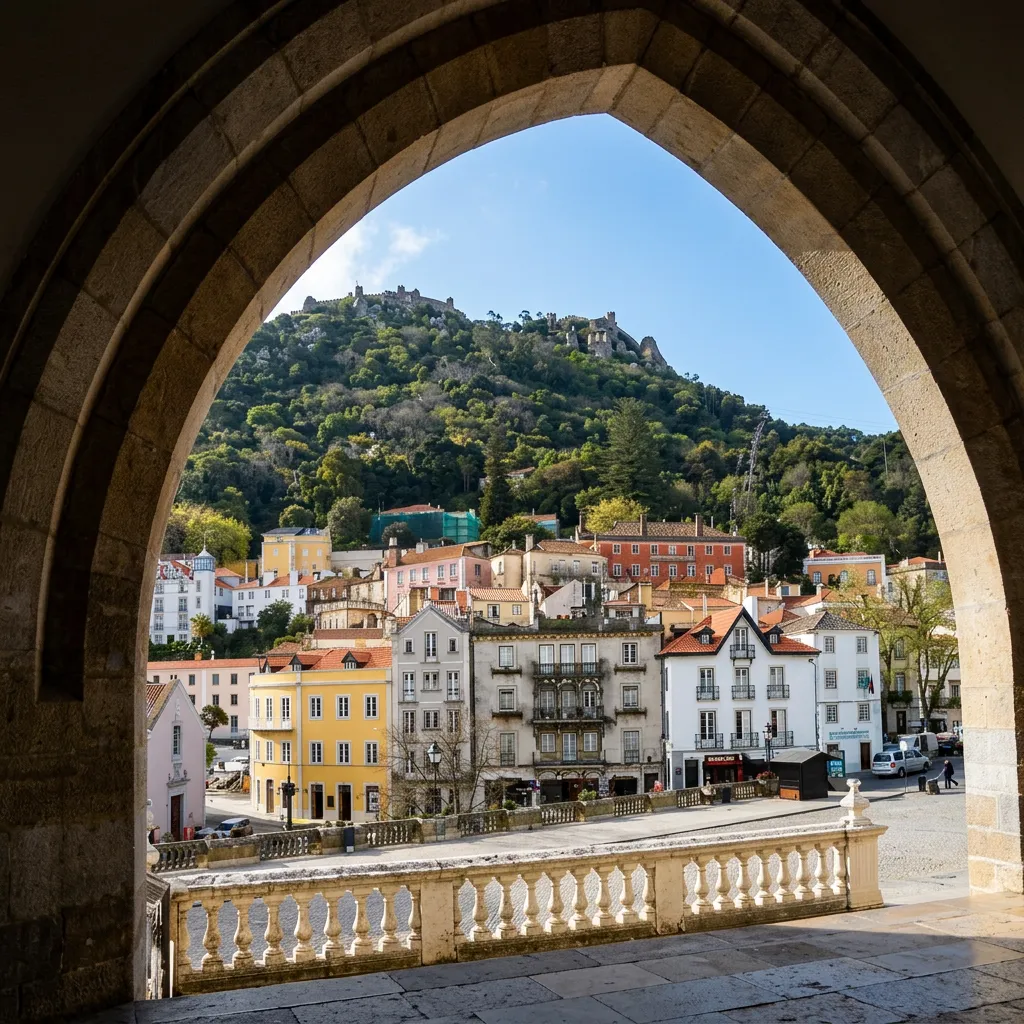
Sintra
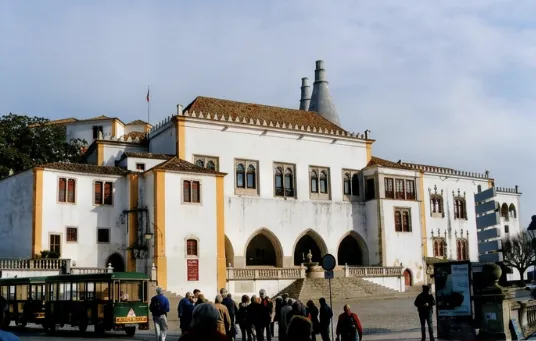
We toured the Royal Residence Palace with a variety of rooms. One had magpies painted on the ceiling. The chimneys towering above the palace are quite famous. They’re directly connected to the kitchen, so all the cooking odors go straight up the chimneys.
Continue Reading!
© Copyright 2026. AEM World Travels - informal entity. All rights reserved.